Showing posts with label Spoiler. Show all posts
Monday, October 26, 2015
Shocktober Review: We are Still Here
Sometimes the tricky thing about your reaction to a movie is timing. For example, if I had chosen to watch We are Still Here before I watched Spring - a movie I'll be reviewing in a few days - I feel like the response to the film would be more favorable than it is. Which is not to say that We are Still Here isn't a good horror movie. It is, but at the time I was still quite impressed with Spring, and by comparison We are Still Here felt a little more, not to be unkind, but run of the mill. It's a ghost story that gets a little too busy towards the end, one that starts out strongly and crescendos into a grand guignol finale without really feeling like it needed to. I've seen a number of really positive reviews for it lately, as well as talking to people who liked it a lot more than I did, and maybe I'm just not giving We are Still Here a fair shake. Well, I'll make my case and let you decide - it still comes recommended and I'm certainly open to revisiting the film.
Anne and Paul Sacchetti (Barbara Crampton and Andrew Sensenig) are moving into a quiet country home outside of Aylesbury, Massachusetts. Still raw from the death of their son Bobby, Anne is convinced that the house is possessed by his spirit. There are unexplainable events early on, like a photo that he never liked being turned over in the night, or a presence in the basement that takes his baseball mitt. Paul doesn't give it much credence, instead attributing her reaction to grief, and is more concerned when he discovers why this house was so inexpensive. When their only neighbors, Dave and Cat McCabe (Monte Markham and Connie Neer) drop in late one night, they explain that the house once belonged to an undertaker who stole bodies and sold them, before he was forced out of Aylesbury. Paul doesn't put much stock in it, but when a repairman (Marvin Patterson) is seriously injured trying to fix the unreasonably hot basement, the Sacchettis become more concerned that there might be more going on than just a broken furnace.
Anne invites Jacob and May Lewis (Larry Fessenden and Lisa Marie) to the house, along with their son Harry (Michael Patrick), who was Bobby's roommate in college. Harry and his girlfriend Daniela (Kelsey Dakota) are arriving later, but Anne is hoping that May will be able to contact the spirit in their house and determine if it's Bobby or not. Despite his good natured appearance, Dave McCabe seems to know more than he's letting on, and Cat tries to warn them to leave the house before they make a hasty exit, mid-cocktails. Paul isn't particularly fond of Jacob and May - they're too "new age" and he doesn't approve of Jacob's fondness for marijuana, but he's willing to go along with it if Anne can find some closure.
If We are Still Here was limited to what was in the house, I might have found it more admirable in its focus. Setting the film in 1979 - although it's really not clear that's the case until well into the film - is an interesting decision on the part of writer / director Ted Geoghegan. It only really settles one question, which is why Harry and Daniela don't make an effort to find their parents or the Sacchettis once they arrive. They find a note and decide to stay at the house, which of course ends as one might expect in this film. Without cellphones, it's obvious why May and Jacob don't investigate much into their non-arrival, but beyond that the film seems to be a throwback mostly for aesthetic purposes. It's not unlike The House of the Devil, but in the ensuing years, making films set in the late seventies or early eighties is suddenly "in vogue." I'm not really holding it against We are Still Here, but at this point I'm not convinced that it services the story in any way.
To say much more about the plot means going into SPOILER territory, so consider yourselves warned. I can't really get into the (mostly minor) issues I have with We are Still Here without discussing the spiritual activity, and the other part of the film, so SPOILERS FROM HERE ON OUT. You have been warned.
So, it turns out that it's not Bobby's spirit, but that of the Dagmars, the undertaker's family who weren't so much run out of town as burned alive in their home by the townsfolk. The Dagmars aren't even really behind the evil, because the house was built over an ancient evil that requires a sacrifice every thirty years or all of Aylesbury will fall into a state of plague. We learn this when Jacob decides to hold a séance without May (she's in town with Anne) and he's possessed by the spirit of Dagmar, which leads to one of the most distracting performances from Larry Fessenden I've seen. From the moment I first saw him in We are Still Here, I wondered why Fessenden was making a conscious effort to physically resemble Jack Nicholson in The Shining. It turns out that's because once he's possessed by the house, Fessenden goes full on Jack Torrance for the remainder of his time in the film, and I'm not convinced that's for the best. He's reasonably subdued earlier in the film, as is the almost unrecognizable Lisa Marie, who I hadn't seen since Tim Burton's Sleepy Hollow. But once Fessenden's resemblance to a famous horror performance becomes a channeling of Nicholson, it began to chip away at the film.
More of an issue is that not only does the house require a sacrifice, but the whole town knows it, and when our central protagonists are in Aylesbury proper, everyone other than the duplicitous Dave McCabe is so hostile towards them that it's impossible not to know something conspiratorial is shaping up. Still, I didn't expect an all-out assault on the house by the townspeople in the climax of the film, which turns We are Still Here from people vs ghosts to people vs people vs ghosts. It's not hard to guess how things are going to play out as a result, but I'm still a little iffy on the confrontation between Dave and Dagmar. What gets lost, mostly, is the significance of the house, and instead the focus shifts to whether the Dagmars (who I thought were supposed to be representing the spirits that require a sacrifice) have some sort of agency to punish the townsfolk for something I thought they wanted - to become part of the house. The whole sequence unnecessarily complicates the lore of the narrative, so while the extra (some might say excessive) gore is appreciated, I think We are Still Here would have worked just as well without the histrionics.
And yet, for the first 2/3rds of the film (at least up until the first séance), I enjoyed the atmosphere of We are Still Here. It loses steam in towards the end, but the slow build up and mystery about what's going on (admittedly spoiled by any synopsis you can find online, including IMDB) is worth investing time in. Crampton, Sensenig, and Lisa Marie are quite good, and Monte Markham seems to be having a great time as the duplicitous McCabe. His scene in downtown Aylesbury with Lisa Marie and Barbara Crampton later in the film is great, and even when things fall apart at the end, he almost holds it together. Since you can see it just about anywhere at a very reasonable price (to rent or own), it's hard to not recommend it, with the caveat that I really only enjoyed the setup. Not so much the payoff. Sometime in the near future, I'll give We are Still Here a second chance, without the unfair comparison to a film I found much more satisfying, and perhaps I'll come around. This has been a good year for horror films flying under the radar, and for that alone, We are Still Here is worth your time.
Labels:
Ghosts,
Haunted Houses,
Shocktober,
Spoiler,
trickery
Wednesday, October 21, 2015
Shocktober Revisited: Carnival of Souls
Is there a statute of limitations on SPOILERS? I feel like if a movie has been out in the world for, oh, say, fifty-two years, that it might maybe be okay to discuss the big "twist" without fear of ruining it for everybody. Particularly a movie like Carnival of Souls, which has been in both the public domain and also the Criterion collection for quite a while. I know that a lot of you have probably heard of the film but maybe haven't seen it, but there's no point in writing about Carnival of Souls this late into the game without discussing what makes it so unique for its time. And that means directly addressing the end of the film, when the creeping sense of unease finally overtakes you.
So here's what I'm going to do: consider this your SPOILER warning, because I'm diving in. The Blogorium has been around too long not to have included Carnival of Souls, and the Cap'n isn't going to shy away from twists and turns. Continue at your own risk if you haven't seen the film (and you should).
Still with me? All right, let's get into it. I've always found Carnival of Souls has a lasting effect particularly because it's such an unorthodox "ghost story." Astute viewers of today can no doubt figure out that there's no way Mary (Candace Hilligoss) survived the car crash and somehow emerges from the river, to the surprise of the rescue crew and onlookers. We know, in fact, that she didn't at the very end of the film when the tow truck pulls the car out and her body is next to the other two girls, but it raises the question: what is the rest of the story? Is it a dream in the moments before death? Does her spirit escape, and try to carry on as before, only to be pursued by the spirits of the dead? She interacts with other people who are very much alive, who have scenes that Mary doesn't appear in, including the next to last moment at the carnival.
In most horror movies - and certainly all of the great ones - atmosphere is key. Carnival of Souls excels at atmosphere, in particular the way that the mundane world Mary settles into is interrupted by phantoms who follow her at every turn. Arguably, the use of organ music is a dead giveaway when the shift is going to happen - which is forgivable, considering that it isn't nearly as egregious as, say the "monster" theme from Creature from the Black Lagoon. The organ music is also unsettling at times, as it too straddles the line between the sacred and profane. That it is Mary's chosen profession is all the more appropriate considering the trajectory of Carnival of Souls.
There's something to the phrase "spiritual insouciance" in the IMDB synopsis - there's something to the idea that Mary refuses to die that makes the deliberately dreamlike second half of Carnival of Souls so alluring. She skips town, takes a job as an organist at another church, but is constantly drawn to the dead, the abandoned, the profane. The moments when she "ceases to exist" are really quite something, especially for 1962 (remember, this only two years after Psycho, and Mary dies even sooner than Marion Crane). Carnival of Souls has an illusory quality, juxtaposed with the very normal world of working and having a landlady and fending off your randy neighbor. Mary is torn between two worlds - one she's desperately trying to avoid - and the matter of fact shift between one and the other gives the film a kind of proto-Lynchian vibe. It's not entirely clear where Herk Harvey and John Clifford are heading with the story.
Many ghost stories have characters who interact with the dead, but the protagonist is often alive or, in the case of something like The Sixth Sense, has a spiritual guide who is alive that introduces them to the world of the undead. Mary is our main character, and most of the film is told specifically from her perspective. She's haunted by the "The Man," (Harvey) who she attempts to avoid everywhere except at the carnival, where she's inexplicably drawn. It's there, after all, that she (and the audience) is revealed the truth - during their dance macabre (sorry, I couldn't help myself), The Man's partner is none other than an equally ghoulish version of Mary. She runs, they pursue her, she disappears.
Which makes sense, but the following scene, when the Minister (Art Ellison), Dr. Samuels (Stan Levitt), and the police go to the carnival the following day and trace her footprints out to the water, where they stop. It's not the first time we've seen Dr. Samuels or John on camera without Mary in the shot, so there's some argument to be made that this represents objective reality, and yet they considered Mary to be a living, breathing person among them. In that respect, Carnival of Souls differentiates itself from films both before and after that deal with ghosts, poltergeists, or the like. It's reminiscent of the story of the woman in white, hitchhiking to the dance she never lived to see, but on a larger scale. This ghost refuses to believe she's dead - not in an ignorant way (like The Sixth Sense), but in a determined sense to stay alive.
On some level, Mary knows she's deceased - her attraction to the abandoned carnival (filmed at the abandoned Saltair Pavilion outside of Salt Lake City) is linked to the idea of something (or someone) existing past their purpose. She intermittently flirts with John Linden (Sidney Berger), her neighbor, alternating between a need for human contact and some distant understanding that he has nothing to offer her. Mary's destiny is with The Man, her partner in the dance of the dead, if I may drop all subtlety. Her at times inexplicable behavior is much clearer at the end, when it's obvious that these are the last whims of a dead woman, one who slipped free from the afterlife. For a little while, anyway.
To this day, Carnival of Souls is best viewed late at night, when the mind begins to wander, and when its dreamlike logic is more effective on viewers. That, at least, is how I prefer to introduce it to people. Its influence stretches far beyond its familiarity with most audiences - one will be hard pressed to find people who haven't heard of it, but many of them still haven't seen it. It's presence in the public domain no doubt muddies the water - along with Night of the Living Dead, Carnival of Souls can be found bundled with any number of cheapie monster flick from the 1950s and 60s, doomed to be downgraded by association, a fate a film this good doesn't deserve. It's somewhat amazing that this is the only feature Herk Harvey ever made, but if you're only going to make one, we should all hope it's a Carnival of Souls.
So here's what I'm going to do: consider this your SPOILER warning, because I'm diving in. The Blogorium has been around too long not to have included Carnival of Souls, and the Cap'n isn't going to shy away from twists and turns. Continue at your own risk if you haven't seen the film (and you should).
Still with me? All right, let's get into it. I've always found Carnival of Souls has a lasting effect particularly because it's such an unorthodox "ghost story." Astute viewers of today can no doubt figure out that there's no way Mary (Candace Hilligoss) survived the car crash and somehow emerges from the river, to the surprise of the rescue crew and onlookers. We know, in fact, that she didn't at the very end of the film when the tow truck pulls the car out and her body is next to the other two girls, but it raises the question: what is the rest of the story? Is it a dream in the moments before death? Does her spirit escape, and try to carry on as before, only to be pursued by the spirits of the dead? She interacts with other people who are very much alive, who have scenes that Mary doesn't appear in, including the next to last moment at the carnival.
In most horror movies - and certainly all of the great ones - atmosphere is key. Carnival of Souls excels at atmosphere, in particular the way that the mundane world Mary settles into is interrupted by phantoms who follow her at every turn. Arguably, the use of organ music is a dead giveaway when the shift is going to happen - which is forgivable, considering that it isn't nearly as egregious as, say the "monster" theme from Creature from the Black Lagoon. The organ music is also unsettling at times, as it too straddles the line between the sacred and profane. That it is Mary's chosen profession is all the more appropriate considering the trajectory of Carnival of Souls.
There's something to the phrase "spiritual insouciance" in the IMDB synopsis - there's something to the idea that Mary refuses to die that makes the deliberately dreamlike second half of Carnival of Souls so alluring. She skips town, takes a job as an organist at another church, but is constantly drawn to the dead, the abandoned, the profane. The moments when she "ceases to exist" are really quite something, especially for 1962 (remember, this only two years after Psycho, and Mary dies even sooner than Marion Crane). Carnival of Souls has an illusory quality, juxtaposed with the very normal world of working and having a landlady and fending off your randy neighbor. Mary is torn between two worlds - one she's desperately trying to avoid - and the matter of fact shift between one and the other gives the film a kind of proto-Lynchian vibe. It's not entirely clear where Herk Harvey and John Clifford are heading with the story.
Many ghost stories have characters who interact with the dead, but the protagonist is often alive or, in the case of something like The Sixth Sense, has a spiritual guide who is alive that introduces them to the world of the undead. Mary is our main character, and most of the film is told specifically from her perspective. She's haunted by the "The Man," (Harvey) who she attempts to avoid everywhere except at the carnival, where she's inexplicably drawn. It's there, after all, that she (and the audience) is revealed the truth - during their dance macabre (sorry, I couldn't help myself), The Man's partner is none other than an equally ghoulish version of Mary. She runs, they pursue her, she disappears.
Which makes sense, but the following scene, when the Minister (Art Ellison), Dr. Samuels (Stan Levitt), and the police go to the carnival the following day and trace her footprints out to the water, where they stop. It's not the first time we've seen Dr. Samuels or John on camera without Mary in the shot, so there's some argument to be made that this represents objective reality, and yet they considered Mary to be a living, breathing person among them. In that respect, Carnival of Souls differentiates itself from films both before and after that deal with ghosts, poltergeists, or the like. It's reminiscent of the story of the woman in white, hitchhiking to the dance she never lived to see, but on a larger scale. This ghost refuses to believe she's dead - not in an ignorant way (like The Sixth Sense), but in a determined sense to stay alive.
On some level, Mary knows she's deceased - her attraction to the abandoned carnival (filmed at the abandoned Saltair Pavilion outside of Salt Lake City) is linked to the idea of something (or someone) existing past their purpose. She intermittently flirts with John Linden (Sidney Berger), her neighbor, alternating between a need for human contact and some distant understanding that he has nothing to offer her. Mary's destiny is with The Man, her partner in the dance of the dead, if I may drop all subtlety. Her at times inexplicable behavior is much clearer at the end, when it's obvious that these are the last whims of a dead woman, one who slipped free from the afterlife. For a little while, anyway.
To this day, Carnival of Souls is best viewed late at night, when the mind begins to wander, and when its dreamlike logic is more effective on viewers. That, at least, is how I prefer to introduce it to people. Its influence stretches far beyond its familiarity with most audiences - one will be hard pressed to find people who haven't heard of it, but many of them still haven't seen it. It's presence in the public domain no doubt muddies the water - along with Night of the Living Dead, Carnival of Souls can be found bundled with any number of cheapie monster flick from the 1950s and 60s, doomed to be downgraded by association, a fate a film this good doesn't deserve. It's somewhat amazing that this is the only feature Herk Harvey ever made, but if you're only going to make one, we should all hope it's a Carnival of Souls.
Labels:
Criterion,
cult movies,
Ghosts,
Reviews,
Shocktober,
Spoiler
Sunday, October 11, 2015
Shocktober Revisited: Don't Go In the Woods
M. Night Shyamalan once famously tried to "re-brand" The Happening as a "B Movie" after audiences (and critics) had a chance to see how terribly inept it was. At one point, I had to prove to a friend of a friend that it wasn't the case by showing them the special features on the Blu-Ray, which has Shyamalan lauding his cast and crew on what a terrifying thriller they were making, one that would open people's eyes. Now, I suppose, it's possible that when he saw the finished cut, he revised his strategy, but given his typical stance of believing his turds are golden eggs, I think it was studio pressure to salvage his eco-disasterpiece. But that's just my theory. The Happening does all of the heavy lifting by itself - you decide if this was supposed to be schlocky or just ended up that way as a result of gross incompetence.
What bearing does this have on Don't Go in the Woods (sometimes with "...Alone!" at the end)? As I learned after watching this 1981 slasher movie, director James Bryan intended the film to be a comedy, and not just a "me too" entry into the subgenre. That would put the film in the same company as Student Bodies, but the problem with this characterization of Don't Go in the Woods is that it's almost impossible to tell while watching the film. Bryan seems (well, seemed - I won't pretend I'm familiar with his filmography) to lack any basic semblance of pacing, editing, or sensible shot composition, and somehow makes a movie that's barely 81 minutes feel twice that long. It doesn't work as a comedy or as a slasher film, and yet, is oddly appealing in fits and (blood) spurts.
One wouldn't be mistaken in assuming there's no plot to be had during the first twenty minutes of Don't Go in the Woods, as Bryan haphazardly jumps from one hastily cobbled together "kill" to the next, in rapid succession. Other than the fact that someone - or some thing - is hunting anyone who wanders into the forest outside of Park City, Utah, there's no connective tissue whatsoever that can be identified. Bryan's notion of setting up a "kill" is to throw a character on screen, without any sense of context, cut to hand-held "POV" shoots of the murderer, and then go straight for the gore. If you get a kick out of seeing the camera run into branches, lose balance, and then unexpectedly cut to a guy losing his arm, Don't Go in the Woods has you covered. We eventually learn that he was an ornithologist (McCormick Dalton), which is relevant in no real capacity, but that is the only one of Bryan's procession of victims we have any sense of back story for.
Also wandering around in the woods, presumably just to be murdered, are a girl running around (Alma Ramos), a newlywed couple in their customized shag van (pun intended) (Carolyn Braza and Frank Millen), an artist (Cecilia Fannon), a tourist (Dale Angell), his mother (Ruth Grose), a fisherman (Hank Zinman), and a guy in a wheelchair (Gerry Klein) who is, inexplicably, slowly rolling himself up a dirt road. His struggle, including at least two times when his chair tips over, are agonizingly cross-cut with the final showdown between our heroes, the police, and the killer. For the record, my favorite theory about the killer prior to discovering it was just a Killbilly was that it was a "bear with a knife," which is really what it looks like when the artist dies and her toddler-aged daughter disappears.
Yes, I did mention "heroes," didn't I? Eventually, in the midst of all of this random killing for killing's sake, we do actually meet the four twenty-somethings that one expects to find in a slasher movie: Craig (James P. Hayden) Ingrid (Mary Gail Artz), Joanne (Angie Brown), and Peter (Jack McClelland). Craig is leading the expedition out to a cabin in the woods - relax, we never see it, and it is never mentioned again once the killer shows up - with the rest in tow. He's the natural leader, Boy Scout type, and Peter is the "tenderfoot" who makes mistakes and resents Craig. Ingrid and Joanne are, um, the girls. One of them has short hair and the other one doesn't. To be honest, without looking at them in the movie, I can't remember which is which, but I think Ingrid is the one who lives at the end (SPOILER). Since I'm SPOILING, this breaks with the at-the-time nascent concept of "Final Girl" theory by also having Peter survive, but Craig and Joanne are long dead. Like the rest of the murders, there's no real rhyme or reason for this decision.
I should mention that in the midst of hiking to a cabin, they spend the night in the woods twice, despite the fact that the cabin is close enough to walk to "by mid-day tomorrow." The killer isn't even stalking them at that point - he's instead murdering another group of campers (Leon Brown, Jr. and Linda Brown, although I could have sworn there were more people). It might have been a clever "bait-and-switch" if it were possible to tell what the hell was going on in Don't Go in the Woods. By that point, Bryan is stretching the story out in all possible directions, also including the morbidly obese Sheriff (Ken Carter). He's responding to the missing ornithologist report, until he just decides to give up in the middle of flying over the woods. No, really, that's what happens. He requests a plane to fly over, in the hopes of seeing, um, something, and then tells the pilot they'll never find the guy, he probably went home. But don't worry, the police and a local militia will be back for the "big" finale.
Perhaps Bryan's notion that Don't Go in the Woods being a "comedy" comes from the sensory overload of ridiculous, bloody murders that make up the first half of the film. If so, he failed miserably, because there's nothing particularly comical about having the tourist's dead body lying on a rock just above two frolicking teenagers - a shot he returns to after killing the mother. There's nothing particularly tragic or ironic about it, either, because the composition is so in-artful. The closest thing to outright comical happens during the honeymoon - and honestly, you can't even tell they're married until you see it on the side of the van - when, after the couple is slashed thoroughly, the killer decides to flip the van over, into a ravine. And it explodes. I laughed at the audacity, and again when somehow nobody noticed that this happened, despite what is clearly a crowded forest.
To be fair, I go into most slasher films with a healthy suspension of disbelief. The ridiculous nature of murder set pieces were part and parcel of the subgenre, even in 1981. I can even put up with sometimes amateurish execution, as long as the payoff is worthwhile. What's difficult to reconcile about Don't Go in the Woods is the stunning lack of tension. We barely have time to register that someone is on camera before they're being stalked and summarily slaughtered, and none of it is done with any degree of flair. There's no suspense in the film because there's no sense of geography for the characters, or any attempt to set up anything. If you'd like to make a case that the killer's M.O. resembles the Texas Chain Saw Massacre (and his cabin is clearly designed to) and therefore is somehow meant to make it "random," I'd listen, but then you'd have to explain the ending as something less coherent than "repeating the cycle." What begins as a slasher film slowly devolves into a mishmash of The Hills Have Eyes, but with random asides not unlike the police subplot in The Last House on the Left. And I somehow doubt that Wes Craven or Tobe Hooper would be happy to have their films compared to Don't Go in the Woods.
And yet, I did say I kind of enjoyed it, didn't I? Well, that is true. It's an excruciatingly boring movie from the halfway point onward, but the random killings at the beginning are amusing in and of themselves. It's a little bit like that DVD, Boogeymen: The Killer Compilation, which was just clips of famous monster movies without any semblance placement within their respective films, crammed together. It's not the ideal way to watch a slasher, but the sheer willingness to throw narrative away and just randomly murder people with no rhyme or reason is amusing. And I reiterate: whether intentional or not, the fact that the killer pushes a van off of a cliff (sideways) is humorous. Some of Don't Go in the Woods is so stupid that you can't help but chuckle. The "score," by H. Kingsley Thurber (Frozen Scream), is a synth-heavy cacophony of "was that the right choice?" Every now and then he provides the punch line for a joke, which is funny in all the wrong ways, especially for the musical "fart" that accompanies Peter soiling himself.
So, in fairness, while Don't Go in the Woods is frequently an interminable bore, there are moments of sheer stupidity, of incompetence in the direction and writing (how could I leave out Garth Eliasson, he who wrote the story and the script?), that will make you chuckle. If it had, oh, a sense of pacing, let alone a better sense of one, I would be inclined to recommend it, because some of the kills are decent, and before you know what the killer is, there's a sense of baffling confusion. As it stands, I would only recommend it to slasher die-hards who have exhausted most of the better offerings. Don't Go in the Woods isn't bottom of the barrel - it is watchable, if nothing else - but you might find yourself struggling against seeing how much time you have left.
What bearing does this have on Don't Go in the Woods (sometimes with "...Alone!" at the end)? As I learned after watching this 1981 slasher movie, director James Bryan intended the film to be a comedy, and not just a "me too" entry into the subgenre. That would put the film in the same company as Student Bodies, but the problem with this characterization of Don't Go in the Woods is that it's almost impossible to tell while watching the film. Bryan seems (well, seemed - I won't pretend I'm familiar with his filmography) to lack any basic semblance of pacing, editing, or sensible shot composition, and somehow makes a movie that's barely 81 minutes feel twice that long. It doesn't work as a comedy or as a slasher film, and yet, is oddly appealing in fits and (blood) spurts.
One wouldn't be mistaken in assuming there's no plot to be had during the first twenty minutes of Don't Go in the Woods, as Bryan haphazardly jumps from one hastily cobbled together "kill" to the next, in rapid succession. Other than the fact that someone - or some thing - is hunting anyone who wanders into the forest outside of Park City, Utah, there's no connective tissue whatsoever that can be identified. Bryan's notion of setting up a "kill" is to throw a character on screen, without any sense of context, cut to hand-held "POV" shoots of the murderer, and then go straight for the gore. If you get a kick out of seeing the camera run into branches, lose balance, and then unexpectedly cut to a guy losing his arm, Don't Go in the Woods has you covered. We eventually learn that he was an ornithologist (McCormick Dalton), which is relevant in no real capacity, but that is the only one of Bryan's procession of victims we have any sense of back story for.
Also wandering around in the woods, presumably just to be murdered, are a girl running around (Alma Ramos), a newlywed couple in their customized shag van (pun intended) (Carolyn Braza and Frank Millen), an artist (Cecilia Fannon), a tourist (Dale Angell), his mother (Ruth Grose), a fisherman (Hank Zinman), and a guy in a wheelchair (Gerry Klein) who is, inexplicably, slowly rolling himself up a dirt road. His struggle, including at least two times when his chair tips over, are agonizingly cross-cut with the final showdown between our heroes, the police, and the killer. For the record, my favorite theory about the killer prior to discovering it was just a Killbilly was that it was a "bear with a knife," which is really what it looks like when the artist dies and her toddler-aged daughter disappears.
Yes, I did mention "heroes," didn't I? Eventually, in the midst of all of this random killing for killing's sake, we do actually meet the four twenty-somethings that one expects to find in a slasher movie: Craig (James P. Hayden) Ingrid (Mary Gail Artz), Joanne (Angie Brown), and Peter (Jack McClelland). Craig is leading the expedition out to a cabin in the woods - relax, we never see it, and it is never mentioned again once the killer shows up - with the rest in tow. He's the natural leader, Boy Scout type, and Peter is the "tenderfoot" who makes mistakes and resents Craig. Ingrid and Joanne are, um, the girls. One of them has short hair and the other one doesn't. To be honest, without looking at them in the movie, I can't remember which is which, but I think Ingrid is the one who lives at the end (SPOILER). Since I'm SPOILING, this breaks with the at-the-time nascent concept of "Final Girl" theory by also having Peter survive, but Craig and Joanne are long dead. Like the rest of the murders, there's no real rhyme or reason for this decision.
I should mention that in the midst of hiking to a cabin, they spend the night in the woods twice, despite the fact that the cabin is close enough to walk to "by mid-day tomorrow." The killer isn't even stalking them at that point - he's instead murdering another group of campers (Leon Brown, Jr. and Linda Brown, although I could have sworn there were more people). It might have been a clever "bait-and-switch" if it were possible to tell what the hell was going on in Don't Go in the Woods. By that point, Bryan is stretching the story out in all possible directions, also including the morbidly obese Sheriff (Ken Carter). He's responding to the missing ornithologist report, until he just decides to give up in the middle of flying over the woods. No, really, that's what happens. He requests a plane to fly over, in the hopes of seeing, um, something, and then tells the pilot they'll never find the guy, he probably went home. But don't worry, the police and a local militia will be back for the "big" finale.
Perhaps Bryan's notion that Don't Go in the Woods being a "comedy" comes from the sensory overload of ridiculous, bloody murders that make up the first half of the film. If so, he failed miserably, because there's nothing particularly comical about having the tourist's dead body lying on a rock just above two frolicking teenagers - a shot he returns to after killing the mother. There's nothing particularly tragic or ironic about it, either, because the composition is so in-artful. The closest thing to outright comical happens during the honeymoon - and honestly, you can't even tell they're married until you see it on the side of the van - when, after the couple is slashed thoroughly, the killer decides to flip the van over, into a ravine. And it explodes. I laughed at the audacity, and again when somehow nobody noticed that this happened, despite what is clearly a crowded forest.
To be fair, I go into most slasher films with a healthy suspension of disbelief. The ridiculous nature of murder set pieces were part and parcel of the subgenre, even in 1981. I can even put up with sometimes amateurish execution, as long as the payoff is worthwhile. What's difficult to reconcile about Don't Go in the Woods is the stunning lack of tension. We barely have time to register that someone is on camera before they're being stalked and summarily slaughtered, and none of it is done with any degree of flair. There's no suspense in the film because there's no sense of geography for the characters, or any attempt to set up anything. If you'd like to make a case that the killer's M.O. resembles the Texas Chain Saw Massacre (and his cabin is clearly designed to) and therefore is somehow meant to make it "random," I'd listen, but then you'd have to explain the ending as something less coherent than "repeating the cycle." What begins as a slasher film slowly devolves into a mishmash of The Hills Have Eyes, but with random asides not unlike the police subplot in The Last House on the Left. And I somehow doubt that Wes Craven or Tobe Hooper would be happy to have their films compared to Don't Go in the Woods.
And yet, I did say I kind of enjoyed it, didn't I? Well, that is true. It's an excruciatingly boring movie from the halfway point onward, but the random killings at the beginning are amusing in and of themselves. It's a little bit like that DVD, Boogeymen: The Killer Compilation, which was just clips of famous monster movies without any semblance placement within their respective films, crammed together. It's not the ideal way to watch a slasher, but the sheer willingness to throw narrative away and just randomly murder people with no rhyme or reason is amusing. And I reiterate: whether intentional or not, the fact that the killer pushes a van off of a cliff (sideways) is humorous. Some of Don't Go in the Woods is so stupid that you can't help but chuckle. The "score," by H. Kingsley Thurber (Frozen Scream), is a synth-heavy cacophony of "was that the right choice?" Every now and then he provides the punch line for a joke, which is funny in all the wrong ways, especially for the musical "fart" that accompanies Peter soiling himself.
So, in fairness, while Don't Go in the Woods is frequently an interminable bore, there are moments of sheer stupidity, of incompetence in the direction and writing (how could I leave out Garth Eliasson, he who wrote the story and the script?), that will make you chuckle. If it had, oh, a sense of pacing, let alone a better sense of one, I would be inclined to recommend it, because some of the kills are decent, and before you know what the killer is, there's a sense of baffling confusion. As it stands, I would only recommend it to slasher die-hards who have exhausted most of the better offerings. Don't Go in the Woods isn't bottom of the barrel - it is watchable, if nothing else - but you might find yourself struggling against seeing how much time you have left.
Tuesday, October 6, 2015
Shocktober Review: Satan's Blade
Satan's Blade is, hrm... it's tricky to really describe this movie because it's not exactly a slasher movie. For most of the mid-section, it follows basic slasher rules, but the beginning and end of the film have this "throw it at the wall and see what sticks" quality. Is it a crime movie? A demonic possession movie? Maybe a "crazy killer in the woods" movie? At first, I thought it was just going to settle down and be a slash and stalk kind of horror film, but then there's an out of left field final scene that confirms a backstory we only half heard, leading to one of the strangest last shots I've seen in a while. It's almost Death Bed-esque in the "what the hell?" randomness. And that's not even taking into account the beginning.
We don't actually start Satan's Blade in the ski lodge where most of the film is set, but instead at a bank somewhere back in town. Two masked robbers force their way in at gunpoint, make the tellers give them all of the money, sadistically cut their clothing off (gotta get in that gratudity early), and then shoot them. It's more than a little unseemly and misogynistic, but oh wait, what a twist, the bank robbers are WOMEN you guys! They go check into the lodge and hide their ill gotten gains, and while they're waiting for "George," their accomplice, it's time to strip down. There's some betrayal, and then a mysterious stalker kills them both and paints a symbol on the wall using their blood. (It does turn out at the end that the hidden money isn't just a MacGuffin, although I won't tell you who comes to collect it).
After that lovely prologue, we meet our overstuffed main cast, consisting of two groups: a group of sorority sisters looking to relax and two couples celebrating one of the husbands passing the Bar Exam. The girls are there to party, the couples are there to relax, maybe do some fishing - it's a slight contrast of age, intermingled with some sexual tension. Oh, plus the story of a giant mountain man who killed people with a weapon from the "evil spirits of the mountain" to kill anyone who came to the mountain, and also kill his family. He had an evil blade and maybe lives in the lake as a monster. But let's not scare the tourists. Also, one of your cabins is where the women from the prologue were killed, but we did our best to clean it up. Enjoy your stay!
For a while, Satan's Blade transitions into a pretty standard slasher, cutting back and forth between the two cabins (well, it might have been one cabin redressed, considering this was a pretty low budget affair). The guys decide to prank the college girls, then they get drunk while their wives justifiably grouse about them hitting on younger women. There's a dream sequence to add an extra level of kills to the proceedings, and also so horror fans don't get too bored while director L. Scott Castillo, Jr. spends a lot of time developing various characters. Did I mention that, not counting the police or the criminals in the prologue, there are 9 protagonists? The lion's share of the storyline is spent with the couple, but you can't wipe out all of the college girls (SPOILER) except one without at least spending a cursory amount of time getting to know them. Of course, the deaths happen in such rapid succession that they barely register. Satan's Blade is the sort of movie that crams in a bunch of kills at once, builds a little bit of tension and then does it again. It's not really surprising that the dream sequence happens, and it actually ends up being more memorable than when they actually die.
Kudos to you, by the way, if you happen to remember the prologue after all of this mayhem, because the "George" - who does comes to pick up the money - is (SPOILER FOR THE END OF THE MOVIE) the Sherriff's Deputy who is also the killer. Yep. Let that sink it, because this is when Satan's Blade also gets even weirder. He's too young to have been the original killer, and the Sherriff was a deputy when the murders happened the first time, but there's an explanation! The story the old lady told is true, and the knife he's using (*coughtitleofthemoviecough*) is possessed, or something. He kills the Sherriff, goes stumbling around in the woods for a while, washes his bloody hands off in a creek, and then throws the knife into the lake we saw earlier. Then, a hand raises up from under the water, holding the knife, and throws it back. It lands in a tree where some unwitting hiker is passing by, who sees the knife and decides to touch it. The cycle begins anew? Uh, maybe?
The demonic possession angle is so briefly touched upon during the Lodge Keeper's story that you wouldn't be blamed for missing it, because it really just seems like a "guy who went crazy and killed everyone, including his family" story. But nope, possessed demonic blade that turns you into a killer with an Excalibur-esque delivery system. It's introduced so quickly and with so little fanfare that my honest first reaction was "what?" To be fair, it is so unexpected that this one plot twist makes Satan's Blade more memorable than it would be otherwise. Between the stilted line delivery and many dead-end subplots, I'd almost forgotten the whole "evil spirits gave him a blade" part. After all, the killer doesn't seem supernatural, just pretty good at slashing. In fact, he tries to keep the murder scene "shut down for a few days" as deputy, presumably so he can get the money and run. So why is any of the "possessed knife" part necessary? It wasn't until I watched the lodgekeeper's mother tell the story again that, oh yeah, I guess they did lay it all out. It's just that Satan's Blade is weird and meandering enough that you'll totally forget it has a plot to begin with.
That and the open-matte Blu-Ray, which about halfway through the film becomes a game of "spot the boom mic". If nothing else, I would recommend Satan's Blade for its inexplicably disjointed twists and turns, held together by only the barest of threads. If you're looking for gore or gratuitous nudity, this is probably not going to scratch your itch. Having a set of (comparatively) older protagonists is a nice contrast to the usual "nubile young college girl" trope, but it doesn't amount to much. Really, it's the last ten minutes that leave you scratching your head giving Satan's Blade an edge over more conventional slasher fare.
Friday, October 2, 2015
Shocktober Revisited: The Mutilator
editor's note: this review originally appeared as part of Horror Fest 7 coverage, but as the film is scheduled for release later this year, it seemed appropriate to include it.
So... The Mutilator. What the hell was that?
I don't know if you remember Sleepaway Camp, or have even seen Sleepaway Camp (which you clearly should, if you haven't), but it has a prologue and some really bizarre flashbacks during the movie that slowly hint that Angela is in fact a dude (SPOILER), something revealed at the very end of the film.
Nothing that outlandish happens in The Mutilator, but it does have an opening every bit as inexplicably odd and an ending that's up there with Pieces in the "Wait! That can't happen! What the hell?" category. Also, I guess it might help to have seen Pieces so that the last sentence was in any way relevant to what I was talking about. Oh well, if you'd been at Horror Fest V, you would have seen Pieces, and if you wanted to watch Sleepaway Camp I can only assume you would have already. If not, I guess you could watch them and then read the rest of this review, even though I'm not really going to mention either film again.
So The Mutilator (written and directed by Buddy Cooper) begins with young Ed Jr. (Trace Cooper) and his mother (Pamela Weddle Cooper) getting ready of Jack Sr. (Jack Chatham - and I know that should say Ed Sr, but I'm sticking with what IMDB says)'s birthday. Ed Jr. decides he's going to clean all of his father's guns while his mother makes a cake, and like the genius he is he also pulls the trigger, accidentally killing his mother. Oh sure, technically it's his father's fault for keeping a loaded rifle in an unlocked cabinet where his kid could accidentally kill his mother, but Ed Jr. is clearly an idiot.
Anyway, so Jack Sr. comes home, tries to kill Ed Jr., then drags his dead wife into the study where his guns are, pours himself a drink, and then pours a drink for his dead wife. He also tapes the "For Your Birthday, All Cleaned By Me" sign that Ed Jr. put on his gun case to her body. Just because, I guess. And then we hear police sirens while the kid stares on (did he call the cops?).
From this promising beginning, we leap forward ten years or so, when college-aged Ed Jr (Matt Mitler) is sitting in the local hangout arcade / pizza joint with his friends, deciding what to do for Fall Break. When his father inexplicably calls him AT THE arcade / pizza joint, to tell him that he has to come to Jack Sr.'s beach condo to "close it up for the winter," Ralph (Bill Hitchcock), Sue (Connie Rogers), Mike (Morey Lampley), and Linda (Frances "related to Claude" Raines) talk him into letting them come along to party for Fall Break. They also bring along Ralph's girlfriend Pam (Ruth Martinez), so everybody can pair up and have sex. Well, almost everybody, anyway.
When they arrive at the beach condo (in Atlantic City, NC, which means the college is probably ECU since they complain about not being close to the beach and they have southern accents that come and go) it's already unlocked. Little do they know that Jack Sr., aka "The Mutilator" is planning on killing all of them, and pretty much anybody else.
This begs the question: was he just planning on killing his son and it's just a bonus that Ed Jr. brought five friends, or was Jack Sr. just insanely over-prepared for his murder rampage. Considering that he never says a word to his son, or really anyone else ever (including at the beginning of the film), it's hard to know what his motives are.
The condo is filled with his trophies of previous kills and Ed Jr. mentions he's hunted everything except for humans (foreshadowing) so we can kind of guess what Jack Sr. is planning, especially since it's not long before we see him hiding in the garage downstairs, cradling his battle axe and dreaming about murdering his son (as a child). He is, however, not much of a mutilator, although there's a reason for that I'll get to in a moment. See, Jack Sr. does drown somebody, and he uses a motor boat to rip someone's guts out, and he also decapitates a police officer ("special appearance by" Ben Moore), but it isn't until much later in the film that he does anything that would qualify as "mutilating." That said, when he does it's a real doozy. I mean, I've seen some creative kills with a hook before, but this one takes the cake by a long shot.
So I mentioned the whole "mutilator" thing, in part because the title of the movie wasn't The Mutilator until it came out on VHS. Prior to that, it was called Fall Break, which explains the lengthy title song that plays over the credits while the gang is driving from unnamed college (ECU) to unnamed beach (Atlantic City, NC) which is also the least slasher movie theme song you're ever going to hear.
So I guess by 1985 maybe Buddy Cooper and company decided that Fall Break wasn't a sufficient holiday to make the title of a slasher flick, so the film was renamed The Mutilator. I can't say for certain whether one is better than the other, but it's a weird movie indeed. In addition to all of the strange dialogue ("you're more likely to get struck by lightning on the beach" while the moon is visible in the background) or the fact that these wild college kids spend most of their time playing Monopoly and a version of Blind Man's Bluff that looks suspiciously like Hide and Seek mashed together with Sardines, interspersed with some gratudity and a killer that unlocks the door to the kitchen so he can sneak back into the condo he has the keys to later that night... look, a lot of The Mutilator doesn't make any sense. And that's part of the charm, even if it isn't very good. I found it strangely entertaining in the same way that Splatter University is. Now that doesn't make it good, but it makes it watchable, and I'll take watchable over Moontrap any day.
Also, the killer is cut in half at the end but still manages to stay alive long enough to chop off a cop's leg before dying, just for kicks. Spoiler.
Thursday, October 1, 2015
Shocktober Review: The Dorm That Dripped Blood
The Dorm That Dripped Blood (aka Death Dorm aka Pranks) came out relatively early in the "slasher" craze (1982), which is why it's often lost in the shuffle. While rough around the edges, first time writer / directors Stephen Carpenter and Jeffrey Obrow do include a few story elements that, even for the time, are novel enough to recommend the film. It's not an excessively violent film, so gorehounds might be frustrated at the amount of time between slashing, but many of the kills are vicious, which makes up for the relatively low body count. Its surprisingly bleak denouement has been repeated, to better effect, in the ensuing years, but it does stand out among its contemporaries for going in a different direction.
On the eve of winter break, students are throwing a party at Dayton Hall, a dormitory designated for conversion into an apartment complex. Once everybody leaves, it's up to a small group of volunteers to inventory, move, and clean up Dayton: Joanne (Laurie Lapinsky), Craig (Stephen Sachs), Patti (Pamela Holland), and Brian (David Snow). Debbie (Daphne Zuniga) was supposed to help out, but her parents are picking her up early. The foursome is staying in Dayton while they clear the desks and furniture out, to be sold to wholesaler Bobby Lee (Dennis Ely). Unfortunately for them, there's also a mad killer somewhere in the building, who we see hacking up some poor guy's hand at the beginning of the film. Could it be the janitor, Bill (Jake Jones)? Could it be major sleazeball Bobby Lee, who tells Joanne he likes to drive by the dorm at night? Maybe it's John Hemmit (Woody Roll), the wiry haired weirdo that digs through garbage and stares at them through windows at night. What's he even doing on campus?
The killer takes advantage of the vast space in Dayton Hall, which is several stories, and the small group's inability to search all of campus at any one point. Debbie (SPOILER) gets knocked off when she finds her parents dead in their car, but since she's leaving, who's going to know anyway? What is the killer after, and who will survive until the end? None of this is really reinventing the wheel for a slasher movie, but Carpenter and Obrow get a lot of mileage out of the seemingly abandoned college campus. The students are basically on their own, and because they've volunteered to handle the busy work of cleaning Dayton Hall out, other than Bill, there's nothing resembling an authority figure to be found. Police aren't a factor until late in the film, in part because the killer is careful who to pick off so that their absence won't be missed. They're also pretty sure that it's just Hemmit, who doesn't speak to anyone and might just be playing pranks.
The Dorm That Dripped Blood specializes in misdirection, although not always to its benefit. There's a lot of time devoted to setting up one story thread and then heading in another direction: at the party in the beginning of the film, we learn that Joanne is hesitant to take her relationship with Tim (Robert Frederick) to the next level. She sidesteps his offer to move in, and has clearly prioritized Dayton Hall over going skiing with Tim. It's not long after this that we meet Brian, who she spends most of the time hanging out with. Is there romantic entanglement? Well, not actually, because it turns out that Patti has a crush on Brian, and Joanne knows it. Where does that leave Craig? Not really clear, but he's kind of the clown of the group, so I can understand why Patti's not that interested. He is the kind of guy who puts a plastic bug on their eggs while Joanne is cooking.
At the risk of going full on SPOILERS, I think it's fairly obvious to most seasoned horror fans that John Hemmit is a red herring, although the degree to which Carpenter and Obrow push him as the killer goes well beyond suspension of disbelief. It's fine to have him in the same room with Brian's body and for Joanne to assume he killed him, but to reduce Hemmit to being unable to even finish a sentence so late in the film is pushing a bit too far. Even though it adds up who the real killer is if you think about it, it's clear who it isn't, and they just keep trying to sell it. Similarly, Bobby Lee isn't just a red herring, he's almost a superfluous character: he makes an inexplicable decision to leave his girlfriend in bed at 2 in the morning to drive to Dayton Hall, for what turns out to be a plot convenience that makes the end of the film possible. He's the perfect scapegoat for the killer, who didn't even know he was coming, but who knows the police are on their way.
I will give The Dorm That Dripped Blood a lot of credit for the way the film ends (SPOILERS, again): while Final Girl theory was still in its evidence gathering stages in 1982, Carpenter and Obrow head in a completely different, more nihilistic direction with their film. It's in keeping with the brutal ways people die in the film - a drill to the head, spiked baseball bats and machetes to body parts, a garrote to the throat, running over people, or boiling them alive - but the brazen way the killer fakes being a victim in order to finish the job is particularly cruel. Joanne does her best to stay alive, so to be knocked out and stuffed into an operating furnace is especially dark. Worse still, the film closes with the still oblivious police commenting on the smell coming out of the furnace. Ouch.
The pacing is, at times, a little lopsided, and the low budget creeps through a few times during The Dorm That Dripped Blood, but overall the Cap'n would put it in the higher end of mid-tier slasher films. It doesn't quite have the atmosphere of a Halloween, or as many inventive kills of something like The Prowler. Its twist isn't as good as Friday the 13th, but the ending is more bleak and downbeat, and it's not as much of a slog as Splatter University or Final Exam. You might even care about the uncharacteristically non-sexualized protagonists; I certainly felt bad when they started dying. It's weird seeing Spaceballs' Daphne Zuniga in her first role, and even though it's clear she won't last long, how she goes is pretty rough. The Dorm That Dripped Blood won't vault itself into your favorite slasher movies, but if you're in the mood to dig deeper into the subgenre, this is a good flick to start with, and a great kick-off to Shocktober.
Labels:
80s Cheese,
extreme violence,
Final Girl,
Shocktober,
Slasher Flicks,
Spoiler,
trickery
Tuesday, March 24, 2015
Blogorium Review: Don't Go in the Woods
M. Night Shyamalan once famously tried to "re-brand" The Happening as a "B Movie" after audiences (and critics) had a chance to see how terribly inept it was. At one point, I had to prove to a friend of a friend that it wasn't the case by showing them the special features on the Blu-Ray, which has Shyamalan lauding his cast and crew on what a terrifying thriller they were making, one that would open people's eyes. Now, I suppose, it's possible that when he saw the finished cut, he revised his strategy, but given his typical stance of believing his turds are golden eggs, I think it was studio pressure to salvage his eco-disasterpiece. But that's just my theory. The Happening does all of the heavy lifting by itself - you decide if this was supposed to be schlocky or just ended up that way as a result of gross incompetence.
What bearing does this have on Don't Go in the Woods (sometimes with "...Alone!" at the end)? As I learned after watching this 1981 slasher movie, director James Bryan intended the film to be a comedy, and not just a "me too" entry into the subgenre. That would put the film in the same company as Student Bodies, but the problem with this characterization of Don't Go in the Woods is that it's almost impossible to tell while watching the film. Bryan seems (well, seemed - I won't pretend I'm familiar with his filmography) to lack any basic semblance of pacing, editing, or sensible shot composition, and somehow makes a movie that's barely 81 minutes feel twice that long. It doesn't work as a comedy or as a slasher film, and yet, is oddly appealing in fits and (blood) spurts.
One wouldn't be mistaken in assuming there's no plot to be had during the first twenty minutes of Don't Go in the Woods, as Bryan haphazardly jumps from one hastily cobbled together "kill" to the next, in rapid succession. Other than the fact that someone - or some thing - is hunting anyone who wanders into the forest outside of Park City, Utah, there's no connective tissue whatsoever that can be identified. Bryan's notion of setting up a "kill" is to throw a character on screen, without any sense of context, cut to hand-held "POV" shoots of the murderer, and then go straight for the gore. If you get a kick out of seeing the camera run into branches, lose balance, and then unexpectedly cut to a guy losing his arm, Don't Go in the Woods has you covered. We eventually learn that he was an ornithologist (McCormick Dalton), which is relevant in no real capacity, but that is the only one of Bryan's procession of victims we have any sense of back story for.
Also wandering around in the woods, presumably just to be murdered, are a girl running around (Alma Ramos), a newlywed couple in their customized shag van (pun intended) (Carolyn Braza and Frank Millen), an artist (Cecilia Fannon), a tourist (Dale Angell), his mother (Ruth Grose), a fisherman (Hank Zinman), and a guy in a wheelchair (Gerry Klein) who is, inexplicably, slowly rolling himself up a dirt road. His struggle, including at least two times when his chair tips over, are agonizingly cross-cut with the final showdown between our heroes, the police, and the killer. For the record, my favorite theory about the killer prior to discovering it was just a Killbilly was that it was a "bear with a knife," which is really what it looks like when the artist dies and her toddler-aged daughter disappears.
Yes, I did mention "heroes," didn't I? Eventually, in the midst of all of this random killing for killing's sake, we do actually meet the four twenty-somethings that one expects to find in a slasher movie: Craig (James P. Hayden) Ingrid (Mary Gail Artz), Joanne (Angie Brown), and Peter (Jack McClelland). Craig is leading the expedition out to a cabin in the woods - relax, we never see it, and it is never mentioned again once the killer shows up - with the rest in tow. He's the natural leader, Boy Scout type, and Peter is the "tenderfoot" who makes mistakes and resents Craig. Ingrid and Joanne are, um, the girls. One of them has short hair and the other one doesn't. To be honest, without looking at them in the movie, I can't remember which is which, but I think Ingrid is the one who lives at the end (SPOILER). Since I'm SPOILING, this breaks with the at-the-time nascent concept of "Final Girl" theory by also having Peter survive, but Craig and Joanne are long dead. Like the rest of the murders, there's no real rhyme or reason for this decision.
I should mention that in the midst of hiking to a cabin, they spend the night in the woods twice, despite the fact that the cabin is close enough to walk to "by mid-day tomorrow." The killer isn't even stalking them at that point - he's instead murdering another group of campers (Leon Brown, Jr. and Linda Brown, although I could have sworn there were more people). It might have been a clever "bait-and-switch" if it were possible to tell what the hell was going on in Don't Go in the Woods. By that point, Bryan is stretching the story out in all possible directions, also including the morbidly obese Sheriff (Ken Carter). He's responding to the missing ornithologist report, until he just decides to give up in the middle of flying over the woods. No, really, that's what happens. He requests a plane to fly over, in the hopes of seeing, um, something, and then tells the pilot they'll never find the guy, he probably went home. But don't worry, the police and a local militia will be back for the "big" finale.
Perhaps Bryan's notion that Don't Go in the Woods being a "comedy" comes from the sensory overload of ridiculous, bloody murders that make up the first half of the film. If so, he failed miserably, because there's nothing particularly comical about having the tourist's dead body lying on a rock just above two frolicking teenagers - a shot he returns to after killing the mother. There's nothing particularly tragic or ironic about it, either, because the composition is so in-artful. The closest thing to outright comical happens during the honeymoon - and honestly, you can't even tell they're married until you see it on the side of the van - when, after the couple is slashed thoroughly, the killer decides to flip the van over, into a ravine. And it explodes. I laughed at the audacity, and again when somehow nobody noticed that this happened, despite what is clearly a crowded forest.
To be fair, I go into most slasher films with a healthy suspension of disbelief. The ridiculous nature of murder set pieces were part and parcel of the subgenre, even in 1981. I can even put up with sometimes amateurish execution, as long as the payoff is worthwhile. What's difficult to reconcile about Don't Go in the Woods is the stunning lack of tension. We barely have time to register that someone is on camera before they're being stalked and summarily slaughtered, and none of it is done with any degree of flair. There's no suspense in the film because there's no sense of geography for the characters, or any attempt to set up anything. If you'd like to make a case that the killer's M.O. resembles the Texas Chain Saw Massacre (and his cabin is clearly designed to) and therefore is somehow meant to make it "random," I'd listen, but then you'd have to explain the ending as something less coherent than "repeating the cycle." What begins as a slasher film slowly devolves into a mishmash of The Hills Have Eyes, but with random asides not unlike the police subplot in The Last House on the Left. And I somehow doubt that Wes Craven or Tobe Hooper would be happy to have their films compared to Don't Go in the Woods.
And yet, I did say I kind of enjoyed it, didn't I? Well, that is true. It's an excruciatingly boring movie from the halfway point onward, but the random killings at the beginning are amusing in and of themselves. It's a little bit like that DVD, Boogeymen: The Killer Compilation, which was just clips of famous monster movies without any semblance placement within their respective films, crammed together. It's not the ideal way to watch a slasher, but the sheer willingness to throw narrative away and just randomly murder people with no rhyme or reason is amusing. And I reiterate: whether intentional or not, the fact that the killer pushes a van off of a cliff (sideways) is humorous. Some of Don't Go in the Woods is so stupid that you can't help but chuckle. The "score," by H. Kingsley Thurber (Frozen Scream), is a synth-heavy cacophony of "was that the right choice?" Every now and then he provides the punch line for a joke, which is funny in all the wrong ways, especially for the musical "fart" that accompanies Peter soiling himself.
So, in fairness, while Don't Go in the Woods is frequently an interminable bore, there are moments of sheer stupidity, of incompetence in the direction and writing (how could I leave out Garth Eliasson, he who wrote the story and the script?), that will make you chuckle. If it had, oh, a sense of pacing, let alone a better sense of one, I would be inclined to recommend it, because some of the kills are decent, and before you know what the killer is, there's a sense of baffling confusion. As it stands, I would only recommend it to slasher die-hards who have exhausted most of the better offerings. Don't Go in the Woods isn't bottom of the barrel - it is watchable, if nothing else - but you might find yourself struggling against seeing how much time you have left.
Friday, February 20, 2015
Cap'n Howdy's Best of 2014: The Guest
Just the other day, I heard someone refer to Adam Wingard's You're Next as "overrated"; it's a sentiment I disagree with, but over the years I have learned that opinions are very hard to change when it comes to movies. Your reaction to a film doesn't exist in a vacuum, no matter how hard you try to "go in blind." There are at least two more movies that will come later in this "Best Of" portion of the recap where I've read reviews that took a film to task for its reputation, rather than the film itself*. It happens, and I'm no different. The Cap'n took a long time to be able to watch Scott Pilgrim vs. the World divorced from fawning internet praise and see on its own merits. I still don't necessarily agree with the notion it's a better movie than Edgar Wright's next film, The World's End, but that's another discussion for another day. I wanted to bring the issue of expectations - justified or not - up because, like You're Next, Wingard's latest film, The Guest, is going to hinge on what you've heard going in.
In many ways, The Guest is a stylistic successor to You're Next, both in execution but also in Wingard's willingness to play with genre expectations. I would venture that it's an improvement on You're Next in that the first act isn't as wobbly, but how he subverts expectations might be a sticking point for you. Personally, I loved it. Every moment of The Guest made me chuckle, or smile, because Wingard is clearly having fun with the story structure. It's a genre that horror / thriller fans know very well: the "stranger arrives who seems nice but is actually very dangerous" is so prevalent that you can spot it right away in a trailer. So it's a pleasant surprise that The Guest is both exactly what you'd expect, but also not quite the movie you think you'll get.
The titular stranger in this instance is David (Dan Stevens), a combat veteran who served in a Special Unit. He arrives at the home of the Peterson family, and informs Laura Peterson (Sheila Kelley) that he served with her son. It was his dying with that David go to their home and inform them that he loved them all. Laura is still pretty broken up, and when she realizes that David doesn't have anywhere to go, she invites him to stay with them. From the first moment we see Stevens as David, it's clear he has an ulterior motive. Wingard isn't even trying to hide it, because he knows what we know: this setup can only end badly. And that's when he starts making subtle shifts.
What I like about The Guest is that, while the family has doubts about David, instead of just insinuating himself and threatening people, he actually does try to help the Petersons improve their lives. Without spoiling too much, David considers it his "mission" to be of assistance to the family, albeit in disproportionately violent ways. The youngest member of the family, Luke (Brendan Meyer), is being bullied by high school jocks, so David follows them to a bar they shouldn't be at and picks a fight. The bullies are grossly outmatched, but they don't know that, and David uses the fact that they shouldn't be there against the bartender calling the cops. Luke is impressed. Similarly impressed is Peterson family patriarch Spencer (Leland Orser), who finds in David a drinking buddy, someone who will listen to his woes about being passed over for a promotion. When the person who got the promotion goes missing, it never even occurs to him the correlation.
There has to be a suspicious member of the family, even in The Guest, and generally speaking it's Anna Peterson (Maika Monroe), Luke's older sister who works at the diner and is dating Zeke (Chase Williamson), a low level drug dealer. She doesn't trust him at first, but David wins Anna over, until she begins noticing the effect he's having on the rest of the family. And friends going missing, like Craig (Joel David Moore), who might have introduced David to Higgings (Ethan Embry) in order to buy guns. Zeke is arrested, and a gun tied to Craig's death is in his car. Hrm, I wonder how that happened?
In order to discuss how The Guest diverts from most "cat and mouse" thrillers, I'm going to have to tread into SPOILER territory, so keep that in mind for the rest of this paragraph. It is true that David is not who he says he is, or even possibly "David," but instead of just being any psychopath, it turns out he's a special forces top secret project psychopath. He's trained to remove any evidence once his cover is exposed, and despite his desire to help the Petersons, he can't disobey his training. Instead of strictly being a horror movie, The Guest takes a hard left turn three quarters of the way into the movie and becomes an action film, with David as a sort of Universal Soldier / Terminator force to be reckoned with. By the time Major Carver (Lance Reddick) enters the film, it's transitioned from thriller to full on action, complete with a guns blazing siege on the Peterson home, car chases, and even the standard "how tough is this guy" speech. It transitions back into a variation of a horror film stalk and slash at the end, with a great last line delivered by Anna about how impossible it is to kill David.
More than the fact that The Guest isn't the movie you thought it was going to be, Wingard makes the film fun. It's much funnier than I was expecting, with more structure than You're Next and a better sense of pacing. There are times when you want David to succeed, in part because it's never clear what he's really up to. Wingard wisely avoids an information dump, so we don't know too much about who he really is or what his long term goals are. Stevens (Downton Abbey) is pitch perfect as the guy who is too good to be true, but even in his misguided, horrible ways, tries to do right by his adopted family until he goes to survival mode. Even at the end, when Anna and Luke manage to overcome him, he tells them not to feel bad about it. He's proud of them. He's a sincere sociopath, and you respect him for that.
I'm not sure that I've ever seen Maika Monroe or Brendan Meyer in anything else before, but they're more believable young adults than you usually get in this sort of movie. It's always nice to see Leland Orser (Very Bad Things), and while his role is small, it's a good juxtaposition to Sheila Kelley (Lost)'s broken Laura. You almost feel bad for the local scumbags that Williamson (John Dies at the End), Moore (Avatar), and Embry (Cheap Thrills), because they're grossly outmatched, but they seem like all right guys. Too bad most of them have to meet bad ends. Lance Reddick (John Wick) doesn't appear until halfway into the film, when Anna calls in to verify David's identity, but he brings the presence of a grizzled commander, the type that would be sent in to calm down John Rambo.
All of this is my way of saying that there's a lot to enjoy about The Guest. By the same token, I think that there's a good chance that people will get over-hyped about the film, think that it's the greatest thing since sliced bread, and then come back and say "you idiot this overrated crap is just a lame action movie horror thing!" Meanwhile I see it as the evolution of Adam Wingard as a director, and a clever twist on a genre so worn that it's largely relegated to DTV. I also thought You're Next was very good, and it's definitely a marked improvement on "home invasion" movies with a highly capable Final Girl. There's some overlap between You're Next and The Guest, so if you didn't like the minimalistic, synth-heavy soundtrack to the former, know that there's more of it in the latter. Again, that doesn't bother me, but Cranpire didn't particularly care for it.
The danger of having "Best Of" lists is that it creates a perception of films that elevate them beyond what I say. It's why I've given up reading festival reviews, and why I might hold back on Nevermore coverage this year - it's a very particular atmosphere that leads to hyperbole. In the age where internet is king, a positive or negative review has to vacillate between "it's the best thing ever" or "what a turd biscuit" with little room for nuance. Point out the flaws in a film and suddenly it's "just okay." Well, I think that The Guest is a very entertaining film, one that aspires to be fun in the same way that 80s action films are without trying to be just like them. If that sounds like your cup of tea, it's definitely worth seeing, but it's not going to make you breakfast in the morning. Like John Wick, another movie I thought stood out in 2014, it's just a movie. Your mileage may vary, but for my money, The Guest is worth it.
* The one I'm thinking of specifically is a review of Birdman that's a mixed-positive, largely because the film wasn't as "smart" as it thought it was. Why? Because the reviewer went to see the film framed by the notion that his friends were raving about how smart it was. Similarly, there's a very negative video review of Inherent Vice I saw where one of the commentators insinuates that anyone claiming to "understand" the movie is lying in order to look "cool."
Labels:
Adam Wingard,
Explosions,
extreme violence,
Final Girl,
Recaps,
Spoiler,
trickery
Wednesday, January 7, 2015
Some Other Movies I Saw in 2014 (Part One: The Less Worse, I Guess)
It's fair to say that you might see the first few movies on this list and say "really, _____ made it on your 'Worst' list, but that didn't?" That's fair, I suppose; I could hide behind the veil of "subjectivity" and argue that this is my list, not yours, but the name of the blog isn't "General Cranpire's Den of Filmduggery" (note to Cranpire - that's a great title and you should use it, post-haste), so that should be obvious who the opinions belong to. Spoiler Alert: The Highest Bidder! But yes, okay, it's under a weird criteria that I determined where to stop the "worst of" without including one of last year's Liam Neeson movies (not the one where he fights vampires, I assume strictly from the title). That's how I roll, kids.

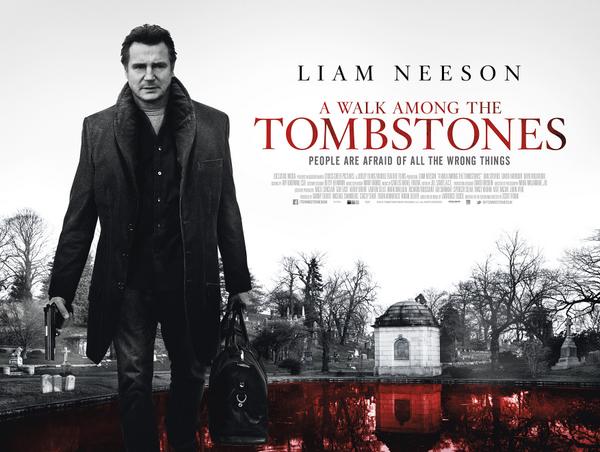
So it makes sense to just get Non-Stop out of the way, and by that I mean mostly just link to my review from earlier this year. It was short enough to sandwich in with Bye Bye Birdie and Die, Monster Die!,
"It's almost ridiculous enough to recommend in and of itself, but the fact that the first half or so is also a decent game of "cat and mouse" works in its favor. In the "Liam Neeson, man of action" genre, it falls somewhere between Taken and Taken 2 - neither as enjoyable stupid as the former, nor as inane and redundant as the second [...] If you're inclined to enjoy movies like this, or saw the poster and said "I'll rent that," you're better off watching Non-Stop than, say, Drive Hard. If you're more predisposed towards, say, Neeson in The Grey, this is not going to be your cup of tea, but if you liked Flightplan... well, um, you liked Flightplan. Congratulations?"
Fading Gigolo is a movie I'm guessing most of you didn't see, because it came out not long after last year's "is Woody Allen a pedophile or not" row that was everywhere between the Golden Globes and the Oscars but was pretty much gone by the time Magic in the Moonlight came out (a movie I'll be discussing in another part of the recap). At this point I'm going to stop talking about that, because I learned what a bad idea it is to mention the words "Woody Allen" or "Roman Polanski" and "controversy" on the internet. But yes, Woody Allen is in Fading Gigolo. He did not direct it - John Turturro did, along with writing and starring as the titular character, Fioravante. He's a florist, and his friend Murray (Allen) just lost his bookstore and needs money. Fioravante agrees to become an escort with Murray as his manager, in the service of eventually fulfilling the fantasy of Murray's dermatologist (Sharon Stone) and her friend (Sofia Vergara) to have a three-way.
That's probably enough of a movie right there, but Turturro also includes an entirely separate plot about an Orthodox Jewish woman named Avigal (Vanessa Paradis) who Fioravante falls in love with, much to the chagrin of Dovi (Liev Schreiber), a community police officer. At some point, a council of Rabbis get involved, and it plays out like a bizarro version of being confronted by the mob, complete with Murray needing his lawyer (Bob Balaban) to save him from charges of being a pimp. It's a mostly harmless and sometimes amusing movie, even sweet sometimes, but not something that stuck with me for very long afterward. There's a better movie with John Turturro that will be showing up later in the recaps, so stay tuned for that.
While we're on the subject of "better movies," I feel like there's a better movie somewhere in Alexandre Aja's Horns. Maybe it got lost in the editing, or maybe it's just inherent in the adaptation of Joe Hill's novel, but the finished product just don't quite work. It's as though Aja made a bitterly funny, black comedy, and also made a more generic, teen-friendly story of good and evil, and then smashed them together at the worst possible junctures. For the opening twenty minutes of Horns, you're probably going to think the movie is great: it has a wicked mean streak, Daniel Radcliffe is spot on as a guy everyone thinks is a murderer, that embraces the horns he grows and the power that comes with it. The way people react, first telling him their darkest fantasies and then acting on them when he says they should, is often hilarious.
And then we hit the first of what turn out to be several, lengthy, flashbacks, giving us the backstory of Ig (Radcliffe) and Merrin (Juno Temple), leading up to her death - the one everyone assumes Ig is responsible for. Everyone, including his family - played by James Remar, Kathleen Quinlan, and Joe Anderson - is positive he did it and that he's lying, with the exception of his friend, Lee (Max Minghella). The "whodunit" is pretty easy to work out for yourself, even if Aja, Hill, and screenwriter Keith Bunin throw in a number of red herrings. I bet, without telling you anything else, you can guess who the real killer is. That's not the problem, so much as the flashbacks that put the mystery together. There's a massive tonal shift from black comedy to slightly tragic story of temptation and of good and evil (on a biblical scale), and for some reason, ne'er the twain shall meet in Horns.
I can understand how it might have worked in Hill's novel - which I haven't yet read, but plan to - but as a film, the structure of the story is at times jarring and disruptive. Maybe there was no way to properly balance the two in a film, because Horns alternates between wicked and bland, between clever and obvious, without ever finding a good middle ground. There are some fantastic moments sprinkled throughout the film, and the cast is game for anything, playing both the best and worst versions of themselves as they encounter "evil" Ig, but Horns gets away from them. It's never quite the movie that it could be, so I'm left feeling ambivalent with the end result.
Speaking of ambivalent, here's a good time to mention Bad Words, a movie people seemed to like a lot more than I did. While it's true that I liked Horrible Bosses 2 less than Bad Words, Jason Bateman is jerk instead of beleaguered everyman was not novelty enough to win me over what is essentially a one-note joke. If Bateman hadn't directed the film and the star was, oh, let's say Billy Bob Thornton, I somehow doubt anyone would even be talking about this, another film in the "bad" series of comedies. (For the record, that review is probably NSFW, just based on the first sentence).
The best thing I can say about Automata is that it's a better version of I, Robot than I, Robot is. Actually, there are a lot of things to like about the film, which is not-so loosely based on I, Robot, but for some reason the film as a whole is underwhelming. There's little doubt in my mind that the film is trying to skirt by under the radar without people noticing the similarities to Alex Proyas', kinda loud, kinda dumb Big Willie Style / Shia LeBouf CGI action fest, including scaling back to rules of robotics from three to two (and changing one of them to suit the narrative - that robots can't self repair). It's a visual feast, for what I have to imagine was not a large budget (director and co-writer Gabe Ibáñez shot the film in Bulgaria).
Stop me if you've heard this before: in the future, there's been a catastrophic global weather shift, which caused most of Earth to be irradiated. People live in cramped cities, with some living in zeppelin-like housing units. Robots help humanity, although they've so permeated the culture that they're considered just as useless as any of the other trash (shades of Elysium, if you remember that movie from, you know, last year). Cop Sean Wallace (Dylan McDermott) finds one repairing itself, and blows it away, causing the ROC Robotics Corporation to send insurance adjuster Jacq Vaucan (Antonio Banderas) to investigate. What he finds could change the ROC corporation forever, as well as endanger his boss, Robert Bold (Robert Forster) and his wife Rachel (Birgitte Hjort Sørensen) and their unborn son.
And what does he discover (SPOILER???): that the robots are evolving, some past the point where they require humans at all. But they just want to be free, man. This doesn't sound familiar or anything, so I'm not going to belabor the comparisons to I, Robot any more. You get it. It's a more visually stylish, more sober approach to the story, after Jacq is rescued by the robots (one voiced by Melanie Griffith, who is also another character in the film, and one voice by Javier Bardem, although I didn't realize that until I saw his name in the credits). The ending is kind of predictable, but it feels like there's more at stake than in I, Robot, and that violent ends can and will come to any character.
So why didn't I like it more? That is an excellent question, and I'm not convinced I can give you a good answer. Despite the fact that it does almost everything I, Robot does, but better, in part by giving is a Neill Blomkamp sheen or grime and decay over everything, there's something strangely inert about Automata. I can't quite put my finger on it, but instead of being invested, I found myself distanced, at times bored. It wasn't that you can see where the movie is going a mile away - that can be said of Horns, too, which is at least partly a fun ride - but that despite all of the effort into making the film look great, Ibáñez never quite makes the humans interesting. Banderas certainly gives it his all, but neither he nor the robots are all that gripping as characters. It's a very nice film to look at, and has a lot of things I would recommend about it, but I hesitate to recommend it over any of the better science fiction films released in 2014. And there were a lot, as you'll see when we get near the top of my list.
There's a degree to which I enjoyed Batman: Assault on Arkham, one of the better DC Animated films that I've seen in a while. Despite the misleading title (this is, make no mistake, a Suicide Squad movie that Batman pops up in periodically), it's fast paced, sporadically funny, surprisingly violent, and pushes the PG-13 as far as they can with animated sideboob. Being that it's a Suicide Squad story - one tied to the Arkham games, and specifically Origins - the death toll is quite high, including many of the main characters. Unless you're a massive DC fan, you probably won't know many more characters beyond Harley Quinn and Deadshot. Maybe Captain Boomerang, and if you didn't, yes, that's a real thing. It has the odd distinction of having Kevin Conroy as Batman but not Mark Hamill as the Joker (although Troy Baker does a fine job) - also odd because Conroy isn't the voice of Batman in Arkham Origins, which ends with the setup for this movie. It's short, and I'm struggling to remember much more than a few offhand references to The Dark Knight and using the layout of the asylum you'll immediately recognize from the first game. So, uh, recommended?
On that decisive note, we'll leave it here for now, but there's more. Next time, I'll move a little farther up the list, to mixed-positives that you might want to check out (with some caveats), although I have the feeling that one of them might be more contentious than anything included in this section. Until then...
Thursday, November 13, 2014
Blogorium Review: Interstellar
Christopher Nolan really does seem to be swinging for the fences with Interstellar, a very ambitious science fiction tale of human exploration beyond the reaches of our own galaxy. To push the baseball metaphor a little further, let's imagine that he's stepping to the plate with bases loaded, hoping to hit a grand slam and end the game in dramatic fashion. Instead of knocking it out of the park, Nolan ends up bouncing the ball off of the top row, resulting in a ground rule double. Two runners still score, and overall he's done a good job for everyone involved, but it's not the statement victory everybody was hoping for. Whether that's a bad thing or not is up to what expectations you bring when you sit down to watch Interstellar.
This is going to be a review with SPOILERS because that can't be helped. Nolan's mostly cryptic trailers tell you very little about what transpires during Interstellar, and while I enjoyed the film overall, two of my biggest problems with the film happen during the third act, and neither of them are addressed at all in the advertising campaign. I would advise you to go in knowing as little as possible, so be aware that past this point I will be discussing Interstellar in its entirety.
To quickly cover the basics, Interstellar is the story of Cooper (Matthew McConaughey), a test pilot who crashed or had some sort of incident at one point that prevented him from being an astronaut. Luckily for the engineer, he also had a farm he could work on, where he lives with his father-in-law Donald (John Lithgow) and two children, Tom (Timothée Chalamet) and Murphy (MacKenzie Foy).
(For the record, Cooper goes by "Coop" and Murphy by "Murph," because I guess monosyllabic names work better in this family).
Mom's out of the picture because we're in the near future, where dust storms have wiped out all but the most rudimentary technology and almost all plants are dead. Coop's farm is growing corn, one of the last holdouts from the new dustbowl (Okra goes early into the movie, which from where I'm sitting is no big problem). There's not a lot of discussion in the film about how this happens, and Interstellar is strictly middle-America and space, so don't ask about what densely populated cities are doing. Nolan and his brother Jonathan keep the script focused specifically on the Earth being unsustainable, but since we've abandoned wasting money on space exploration, what can we do?
Nolan does a pretty good job of setting up the world of the future without showing too much: the beginning of the film is presented like a PBS documentary, with lots of "talking head" shots of old timers telling us what it was like when things changed. At least one of them was way more famous than I'd expected to appear at the beginning of the movie, but it turned out she was a sneaky third version of a character we'd be meeting later. They cover all sorts of things you wouldn't think of but would probably be doing if there was an inch of dust over everything all of the time, like put your dishes out on the table upside down (maybe there are no cabinets in the Midwest?). It gets the job done pretty well.
It's a sparse world that Coop and company live in - other than lots and lots of corn, you don't really see anybody. There are no animals in the film at all, and the town he lives near seems pretty deserted early in the movie. I can't remember seeing any other students at Tom and Murph's school; only the principal and Murph's teacher, who asks Coop to tell her the Moon landing was a hoax (the Room 237'ers win in the future and textbooks are rewritten to talk us out of believing space exploration existed). The only crowd you ever really see is at a baseball game (see what I did there? hint: first paragraph), where John Lithgow complains that popcorn isn't something you should have at a baseball game. He wants hot dogs. Well guess what, corn farmer, you should be grateful people are buying your product - you know, the only available one. The players are wearing Yankees hats, but I don't know if they're supposed to be that Yankees or just some local guys. It doesn't matter, because the game is interrupted by a huge dust storm. There's not crying in baseball, and also no finishing the game because of dust delays.
Coop brings down a drone because he's a mischievous sort, but a strange magnetic incident in the house (Murph calls it her "ghost") leads them to a secret NASA facility where his old mentor, Professor Brand (Michael Caine) is working on humanity's last chance: a ship capable of travelling through a wormhole near Saturn. How or why the wormhole got there is mentioned, but not speculated on, but NASA sent twelve astronauts into another galaxy in the hopes of finding a new home for humans. Three signals (Dr.'s Mann, Edmonds, and Miller) have come back indicating likely candidates, so Brand wants Coop to fly the ship into the wormhole and investigate. The crew of the Endurance also includes Romilly (David Gyasi), Doyle (Wes Bentley), Brand's daughter (Anne Hathaway), and TARS (Bill Irwin), a robot on loan from what's left of the military. One of the first things TARS does during takeoff it to make a joke about shooting Coop out of the airlock, just in case you didn't think Nolan was aware that Interstellar is often reminiscent of Stanley Kubrick's 2001: A Space Odyssey.
That, it turns out, is not a bad thing, at least for the first half of Interstellar. Once we get into space, Nolan stretches out a little bit for some big time spectacle filmmaking, and if you thought you needed to see Gravity on a big screen, Interstellar demands the largest one you can find. Also, one with comfortable chairs, because with the trailers and ads and everything else, you're looking at a three hour minimum investment. But for a lot of the movie, it's worth it. We've seen the vastness of space before, but Nolan's choice to keep the camera attached to the ship most of the time (like we see it in actual NASA footage*) adds a verisimilitude to the proceedings that helps sell the science fiction elements. McConaughey's folksy twang and a more dialed-back than usual Anne Hathaway also help in that regard. They're scientists, but they aren't science types, if that makes sense. They understand the consequences of their actions and have to weigh the adverse effects of their decisions while soaking in the fact they're in another galaxy.
If I'm being honest, I would have liked more of the exploring the other planets instead of the part of Interstellar that you don't necessarily get from the trailers: the back and forth between Coop in space and his family on Earth. Instead of focusing on relativity and black holes, we have to keep jumping back home to see that Murph stills hasn't forgiven her father and now she's grown up and is Jessica Chastain (Tom is now Casey Affleck disguised as Ben Affleck in Argo). Murph is working with Professor Brand on how to save everybody on Earth because they haven't heard from the ship in 23-ish years (2 years to Saturn plus another 21 thanks to a disastrous turn of events on the first world they land on). It's here that the Nolan brothers introduce the theme of Interstellar that isn't about exploration: that love may be a tangible concept that transcends dimensions and we just don't understand it yet. Oddly enough, the internet's least favorite person (Anne Hathaway) delivers the best monologue about it, but it leads Interstellar down a path I maybe could have done without. The space exploration was so much more interesting, and the Earth plot isn't.
Since we've moved to the "gripe" stage, it would be nice, just once, for writers to drop the well worn science fiction trope of "scientist from the previous mission goes insane and nearly ruins the mission." It nearly derailed Sunshine, an otherwise sober, intelligent movie that drastically shifts into a slasher film near the very end, complete with its own Freddy Krueger. The Nolans don't do anything quite so drastic, but it's clear from the moment that Dr. Mann (Matt Damon) wakes up from cryo-sleep that he's not selling Coop, Brand, or Romilly an honest bill of goods about his planet or his agenda. Not only is it predictable what he's eventually going to do, but the "turn" is almost comical as he leads Coop out to the middle of nowhere for a fistfight. Instead of, oh, I don't know, appealing to the team that losing one of the four remaining scientists tasked with keeping the human race alive is detrimental to all of them.
This works to a certain lack of logic that is, I must admit, typically when you think carefully about Christopher Nolan films, from the Batman series to Inception, or even back to Memento. After an impassioned speech by Brand about why they should fly to Edmonds' planet instead of Mann's (they only have enough fuel to pursue one of the remaining leads), Cooper and Romilly reasonably determine that Mann's reports are better than Edmonds'. If we were to approach the same reasoning to Cooper's decision to go back to Earth on the off chance that he can disprove the "Plan A can never work" argument that conveniently surfaces right after they've revived Mann, there's no way the other three would allow him to go back through the wormhole. Ignoring the convenient timing of Murph's message, we already know that there's no guarantee of when Cooper would be returning to Earth, or even if there's enough time to come up with a plan to save humanity.
This brings us to the second part of Interstellar that I can't quite give a pass to: after Mann tries to steal the ship and blows up part of it when he tries to open the airlock without docking, Cooper pulls off a near impossible feat of docking while the wheel is spinning (think of a sped-up version of 2001) and decides to send Brand to Edmond's planet using the black hole's gravitation to slingshot her (remember, not enough fuel). This means that Cooper and TARS have to pilot the other two shuttles and sacrifice themselves by being sucked into the black hole, where we've been continually told is a singularity they really would love to know more about. Invariably, Coop is sucked into the singularity and finds himself outside of the ship, floating in a strange, multidimensional space. Upon further investigation, he realizes he's behind the shelf in Murph's bedroom, and that (wait for it) he can slightly effect physical space around her throughout her timeline. Yes, Coop is his daughter's "ghost," and if he can communicate with her, he'll be able to save humanity where Professor Brand failed.
I wouldn't have so much of a problem with this part of Interstellar were it not for the point when TARS chimes in over the radio and Coop begins explaining what's happening and what he's going to do. Like, out loud, literally explaining to the audience exactly what they're seeing, it's implications, and how he can communicate with grown up Murph (through a watch he left behind, using Morse Code). Nolan takes all of the ambiguity out of the sequence, and flat out tells us (through Coop) that humans evolve to the point where we can see beyond all dimensions and create the wormhole to save ourselves. I'm not spoiling anything because that's what McConaughey says, almost verbatim. At the outset of the "ghost" section, I really thought "he's not going in this direction, is he?" but by the end, when even the cheap seats are being spoon fed the plot, it was almost too much.
And had Interstellar not regained some of its footing at the very end, when Nolan successfully pulls at the heartstrings (at least for the Grinch-like Cap'n), there's a strong possibility I would have come out hating this movie. The emotional manipulation is transparent at the end, and I'm not going to pretend it isn't, but Nolan finds a way to make Cooper meeting the old version of Murphy (Ellen Burstyn, who I did not recognize at all**) poignant enough that I could overlook the Saturn space station that looked like Elysium, dumb baseball callback, and implausible ending where Coop steals a spaceship to go find Brand. Looking back on it, I'm not sure why I'm okay with that, because when you apply logic to it, that's a really stupid way to end a movie that tries hard not to be dumb, scientifically. But that's how Christopher Nolan films are, I guess: they're fun to watch, offer astounding visual spectacle, and make about as much sense as Bazooka Joe gum in retrospect.
The acting is solid all around, and if you're one of those people who inexplicably hate Anne Hathaway, this is not going to be on your "Exhibit A" YouTube videos. On the other hand, if you aren't down with the McConaughnissance, you'll find plenty of "all right, all right, all right" in his sometimes mumbled dialogue. I thought he was fine, but something about his drawl is always going to invite the "he's just stoned" reaction, and this won't change that. Jessica Chastain has a lot of screen time in the second half, but Murph is such a cipher of a character that she doesn't have anything to work with. Casey Affleck gets even less, and he registers about as much as Wes Bentley, who has half as much screen time and dies (hey, I said SPOILERS a long time ago). Nolan sneaks in a bunch of well known actors in small roles, well beyond the "oh, I forgot Matt Damon was in this!": David Oyelowo (Rise of the Planet of the Apes) is Murph's principal, William Devane (Payback) is a member of NASA, and for no discernible reason, Topher Grace (Predators) just appears as Murph's friend late in the film. I guess he's the doctor that she mentions can look at Tom's kids (dust clouds, as it turns out, are bad on the lungs), but he's just suddenly there, and you think, "wait, is that Topher Grace?" Yep, it is. He's in Interstellar. Who knew?
This isn't really a negative review, but I guess it's not quite positive, either. In his filmography, I'm inclined to put Interstellar somewhere in the middle, above Insomnia but not quite near Memento. Visually, I wouldn't hesitate to recommend it, but if you have persistent issues with Nolan (as much of the internet and some of the critical community do), this isn't going to win you over. All of his highs and lows are on display, and it depends on how you weigh them whether that's enough to make Interstellar worth three hours of your time. It falls short of 2001, the film it's trying to come closest to, but I give Nolan a lot of credit for trying to make a movie about ideas, even if some of them are hoary or clumsily handled. This is mass audience entertainment that isn't just going to the lowest common denominator (*coughrobotdinosaurscough*), so that counts for something.
At this point in his career, I imagine most of you know where you fall in the Christopher Nolan spectrum. Through no clear action of his own, he's become a very divisive filmmaker, in part because in a world of increasingly skimpy Hollywood output, he's afforded carte blanche as a filmmaker and every new movie he makes is treated like an event. This seems to magnify both the positives and negatives inherent in his style of filmmaking, and reactions are equal parts "that was great!" and "the emperor has no clothes!" which enter the echo chamber of the internet and are magnified. I don't know that I would have devoted this much time to a review that was this mixed if there wasn't something to Interstellar worth talking about, good or bad. Believe me, there are films I could have reviewed that you'd probably be very surprised to hear I wasn't crazy about (Boyhood, Gone Girl), but that I'm just not sure I have much to add to the discussion. With this film, at least Nolan gave me something to talk about.
Interstellar isn't the best science fiction film I've seen this year, but 2014 has been a surprisingly fertile year for great science fiction. I'm going to go out on a limb and say you should probably see this over Ouija, but I haven't seen Ouija so I could be totally wrong. No, wait, I couldn't. For all of it's faults, there's no way that Interstellar is not way better than Ouija. Cheap shot at Ouija? Easy target? Probably, but I don't know if Interstellar holds its own against something like Snowpiercer, but it was made with a different size audience in mind***. It may not win the game in a grandiose fashion, but Christopher Nolan delivers another solid, mostly impressive film. For some people, that's not going to be enough, but for most it's better by a long shot than most of what passes for "crowd pleasing" movies.
* Unless that is also faked - thanks, future textbook editors. You just gave conspiracy theorists years worth of material...
** All the more confusing, because you can totally tell it's Ellen Burstyn in the "documentary" footage at the beginning. You just don't know she's Murph at that point.
*** Or not, but I guess we'll never know since the Weinstein's sat on Snowpiercer after trying to cut it to pieces, and then half-heartedly dropped it in a few theatres.
Labels:
Bad Ideas,
Christopher Nolan,
In Space,
Matt Damon,
Matthew McConaughey,
Reviews,
Robots,
Spoiler
Subscribe to:
Posts (Atom)