In the last few years, it's become increasingly fashionable on the part of the critical community - not to mention the writers, directors, and producers - to, whenever possible, insist that their film is not a "remake," but instead a re-adaptation of the source material. This is nowhere more evident at this moment in the reactions to Joel and Ethan Coen's version of True Grit. The reviews are split, almost evenly, not along lines of quality, but in what to refer to the film as.
A cursory glance at Rotten Tomatoes provides the following descriptions: " new adaptation of Charles Portis' novel True Grit" (Pete Hammond), "remake of the 1969 classic Western" (Emmanuel Levy), and "the Coen brothers' back-to-the-book remake" (Pete Levy). There are plenty of mentions of John Wayne's Oscar winning* performance as Marshall Reuben "Rooster" Cogburn, but even among those who write about film, there's some debate how to handle remakes vs. re-adaptations. While I begin topically, True Grit exists in this essay to launch a broader discussion about what re-adaptations are, how they discursively differ from "strict" remakes, and the ambivalence surrounding the distinction exists.
From an audience perspective, it's doubtful that any such distinction matters, which further complicates the matter. As far as casual filmgoers are concerned, True Grit - like a number of other films "of the same name" - is merely a remake of the 1969 film, assuming they've seen or heard of the "original" in the first place. From at least one anecdotal case, it's clear that audiences of a certain age are refusing to see True Grit because it draws too strong a comparison to their memories of John Wayne. Trying to explain that a) this is not strictly a remake of that film, and more importantly b) that the "original" was actually based upon a book that this new iteration is drawing from is an exercise in futility.
This does not, however, render the discussion moot; audience reaction is a component of understanding film and film history, but of one steps back further, it is also clear that critics struggle with the dichotomy, one which is harder to ignore when the creative personnel behind any remake, re-imagining**, or re-adaptation insist that their work not be compared strictly to its cinematic ancestor. Why the sudden shift to stress that this "new" film is not merely artistic repetition, but is instead a wholly revised take on the "first" incarnation of the story (which, as a professor of mine was quick to point out at any occasion, was strictly the case with True Grit***).
The answer, functionally, is that the term "remake" has such a negative stigma attached to it that filmmakers feel shoehorned or lessened in their artistic goals by re-making a film. This is not necessarily a new phenomenon: when Steven Soderbergh was interviewed in 1995 during the release of his film The Underneath, based on Criss Cross (a novel by Don Tracy that was adapted in 1949 by Robert Siodmak), he was quick to point out that his version of Criss Cross was not to be viewed as a remake but as a re-adaptation of Tracy's novel for the modern era****. John Carpenter made a similar argument thirteen years earlier with The Thing, which was to be understood as an adaptation of John W. Campbell's short story "Who Goes There" and not a remake of The Thing from Another World.
Until the advent of the "Blockbuster Era" following the success of Steven Spielberg's Jaws, the practice of remaking a film was considered the norm in Hollywood. Studio chiefs thought nothing of the concept of revisiting familiar stories, favoring a style of artistic repetition that mirrored theatre: one story could (and should) be told in varying fashions by differing talents over the years, and very few films were considered sacrosanct or un-remake-able. The Maltese Falcon (adapted three times), Ben-Hur (twice), The Ten Commandments (twice), The Man Who Knew Too Much (twice), The King of Kings (twice), and Gaslight (twice), to name a few. Technically speaking, The Maltese Falcon acknowledged today as the "definitive" version - John Huston's 1941 film - is the third adaptation of Hammett's novel.
After the success of Jaws, one could argue that the rise of "pastiche" cinema - films which borrowed directly from several sources but were not technically remakes (for example, the synthesis of Buck Rogers and Kurosawa's The Hidden Fortress to make Star Wars) - replaced the concept of strict artistic repetition. Films were no longer always directly based on one film, and direct remakes tended to be limited to foreign films re-crafted into English language versions*****. This changed to a large degree in the early twenty-first century, when a wave of remakes of easily recognized horror titles (Dawn of the Dead, The Texas Chain Saw Massacre) were met with success at the box office. Audiences, perhaps unfamiliar with the film but certainly aware of the title, flocked to see remakes, and the floodgates opened.
With success comes excess, and if one remake works, the easiest solution for a studio is to simply green light more remakes, often with little concern to whether the film is any good or not******. However, that excess also draws harsh criticism from audiences who feel an affinity to the original and writers who study film and film history. The discourse becomes something along the lines of "why is this necessary to remake?" or "is this simply artistic laziness on the part of writers, directors, producers, and studios?" which, in the amplified echo chamber of online reviews, blogs, and "instant reaction" websites, is detrimental to any claims of "artistic integrity" on the part of "serious filmmakers", a term I put in quotations because of the ongoing debates by members of the critical community about what that means and who qualifies.
Enter the return of the claim of re-adaptation, a method by which directors like Steven Soderbergh (Solaris), Brian Helgeland (Payback), Steven Spielberg (The War of the Worlds), or Tim Burton (Charlie and the Chocolate Factory) can leapfrog a highly recognized film and instead lay claim to adapting the source material - almost always a novel - without the taint of "remaking" a classic film. This is not to claim any disingenuous-ness on their part, but it does distinguish their attempt at artistic repetition from the highly criticized practice of crassly cashing in on a recognizable title. It's certainly become a way for critics and professors to distinguish a "quality" remake from "standard Hollywood fare."
The problem with using re-adaptation as the preferred discursive term is that it often places a value judgment on "classes" of remakes - i.e., "remakes" are made for commerce and "re-adaptations" deserve serious critical assessment - which is not always the case. It assumes, and not always correctly, that the "auteur" theory is somehow linked to the intent behind artistic repetition, and accordingly some directors ought to be left off the hook or excused when they claim to be re-adapting from the source material whereas others should not. This, I suspect, is the reason that explaining re-adaptations to the broad movie going audience is so difficult for critics: while there is some merit in the distinction, its use discursively is still up for debate, and until the terms are disentangled from value judgments, one continues to see a schizophrenic approach in writing about remakes.
Hopefully, this has been helpful in some capacity, at least in demonstrating that there are differing schools of thought on remakes, both on the part of the people who make films and the people who write about them. If nothing else, it may ease navigating reviews of True Grit, which are likely to continue struggling with the ramifications of arguments listed above.
* His only, by the way, which is why 1969's True Grit casts such a long shadow for many viewers of the Coens' 2010 version.
** This term, while used almost as frequently as re-adaptation in circumventing the term "remake" is nevertheless easier to put aside for the time being. Technically speaking, it's an argument over semantics based on the "intent" of the filmmakers.
*** He also refused to show The Ladykillers during a class on the films of the Coen brothers, arguing that the other "official" remake they've done didn't merit studying.
**** The interview is available in the book "Steven Soderbergh Interviews" from The University of Mississippi press.
***** Another curious practice I'd like to return to at some point, as it replaced the idea of releasing a foreign film to an "art house" audience on its own merits somewhere between Amelie and Let the Right One In, and includes The Ring and The Departed as high profile examples.
****** Perhaps this is a cheap shot, considering that the same argument could be made about ANY film green lit of any medium: 3-D being the latest "gimmick" du jour.
Thursday, December 9, 2010


Tuesday, December 7, 2010
From the Vaults: Remakes
editor's note: this earlier post, while unsophisticated in its writing, sets the stage for an essay scheduled to appear on Thursday.
Last week I was asked how I felt about remakes in general, and to some extent the over-reliance on them to prop up the film industry in the last few years. I thought I'd share my answer with you folks, plus a few other thoughts:
I don't know that I have an opinion on remakes in general, to be honest. I guess it depends on who's remaking the movie, why, and what they're planning to do with it.
The Maltese Falcon, for example, is a remake of a remake of an adaptation, but I really like that movie.
John Carpenter's remake of The Thing is among my favorite of his movies. Remakes of his films haven't been so successful, however (Assault on Precinct 13, The Fog, I'm assuming Halloween, and certainly Escape from New York aren't going to work).
What sets his remake of The Thing apart from The Thing From Another World (or the story both are based on, "Who Goes There?") is that while the plot outline is basically the same, Carpenter does something very different with the movie. It's the same reason I enjoyed Zack Snyder's Dawn of the Dead remake.
It's all the rage to remake horror movies from twenty years ago right now, which I guess isn't anything new (like I said, Falcon had three incarnations before 1945), but sometimes I can't help but think "why remake that?"
There's no reason to remake The Day the Earth Stood Still. I can't see how modern cgi is going to make Gort more imposing, or how the story is going to work considering how much the media and technology have changed in the last fifty years, but there's money to be made from it, so I guess more power to them.
There are some directors I wouldn't mind being able to see remake their own films, like Don Coscarelli. I really would have no problem with him remaking Phantasm, because as much as I like the original, he had very little to work with and the film suffers for it. Not just in the effects, but the editing and the sometimes jagged plot leaps.
But overall, there are some movies that stand well enough alone, and there's no point re-doing them. Remaking The Third Man, which isn't currently happening but certainly could, is an awful idea. I'm so glad the remake of Casablanca with Ben Affleck and Jennifer Lopez fell apart. But I'm not a soulless Hollywood executive looking for a lazy buck, so who knows what's coming next?
Some additional thoughts:
* Part of my reticence to see Rob Zombie's Halloween comes from Zombie's reason for re-making Halloween in the first place: I just don't care how Michael Meyers came to be The Shape, or whatever you want to call him. The thing that's really effective about Carpenter's Halloween is that there is no reason for why he does what he does (or, in several instances, goes out of the means of an average slasher to do it, specifically the way he kills Lynda, but also the drawn out stalking of Annie and Laurie), he just does it. Both times you actually see Michael's face (as a child and again towards the end), he's a blank slate, totally emotionless. I don't need to know that his step father beat him and that his mother was a stripper that didn't love him. Who cares? And one of the things I never really liked about Halloween II that Zombie felt the need to retrofit into his remake was the "Laurie is Michael's sister" angle. The less you know about the killer, the better. Freddy was scarier before he was the "Bastard son of a hundred maniacs"; Jason was more effective as that hillbilly survivalist freak that crept around the woods.
* I realize that several of the movies I mentioned in the initial answer were based on books or stories, and as such it's a little dodgy calling different versions of them "Remakes". I mean, Peter Jackson didn't really remake Ralph Bakshi, did he? Or Rankin and Bass, for that matter. I suppose that's trickier territory, but the film's do have an attachment for people who've seen another version. For example, I think it's fair to assume when the Peter Pan movie came out a few years ago that folks were at the very least thinking of the Walt Disney version while watching it.
* Why are horror remakes so prevalent right now? Well, for one thing, most of them can be made on the cheap. Since the originals weren't made for much, it only stands to reason that you throw a few reasonably recognizable faces on the screen, make it for a few million dollars, market the shit out of it right before it comes out, and turn a profit on opening weekend. It worked for House of Wax. It's working for Halloween. It worked for The Hills Have Eyes, The Texas Chainsaw Massacre, and Dawn of the Dead. Is it going to work for April Fool's Day? Probably not (future Cap'n interjecting here: it didn't), but even if they just barely perform, there's dvd and foreign sales to at least recoup the loss. They're certainly cheaper than something like Escape from New York or The Day the Earth Stood Still, both of which are being remade as I type this, and will no doubt have more substantial budgets than the Troll remake, for example.
* As I've said before, remakes are really nothing new. Go to any place that sells or rents dvds and poke around for a while. How many versions of Ben Hur are there? King of Kings? The Ten Commandments? Other than the name, what's so different about and Double IndemnityBody Heat? How many King Kongs are there (hint: more than two)?
* Hitchcock and Ozu both remade their own films, for instance. This isn't really anything new, it's just easier to pick up on because of the availability of the films being remade nowadays, especially if a particularly savvy (read: greedy) company decides to re-release the film on dvd right before it comes out in theatres.
We don't have to like it, even if it is nothing new, and you can do something about it by not going to see it. Or maybe you do want to. They're not all bad, no matter what the reactionary tells you. And believe it or not, there are some movies that could benefit from a remake. Consciously or not, I believe that when Sam Raimi made The Evil Dead, he did the movie Equinox a great favor, by taking a similar premise and giving it a proper shake. As it is, Equinox is an interesting student film, but The Evil Dead, with almost exactly the same concept, is a cult classic.
Do remakes have their place? Yeah, maybe; just like any other genre of film, there'll be good and bad ones, and accordingly, it's difficult to make blanket statements about them. The ones I like don't replace the originals, they just sit alongside them. The ones I don't just kind of sit off to the side, forgotten with all the bad original movies that clog up the cineplex every year. C'est la vie.
Monday, December 6, 2010
Blogorium Review: Harry Brown
Coming into Harry Brown, I had misgivings that the film was somewhat like Clint Eastwood's Gran Torino, a comparison that popped up repeatedly during the film's brief release. The truth is that Harry Brown is much more Death Wish than Gran Torino; where Eastwood's film is more about stubbornness in the face of change, writer Gary Young and director Daniel Barber's film is akin to Charles Bronson's "this place has gone to hell and somebody has to stand up!" series. A few of the deleted scenes hint at a film more like Gran Torino (particularly a conversation between Brown and a priest after Len's funeral), but Harry Brown is an efficient, well made thriller that manages to add nuance to a normally black and white narrative.
 Michael Caine is Harry Brown, an elderly soon-to-be widower living in a lower class estate (i.e. housing project) besieged by hooligans. Well, hooligans sounds less threatening (thanks in part to Bill Hicks' "there's no crime in England" bit on Arizona Bay), but these young drug runners / rabble rousers / violent gang members - introduced in the film by a cell phone video of initiation by crack pipe, followed by a drive by shooting of a young mother - are a menace to everyone living in the estate, so much so that Brown would rather walk around the neighborhood than pass through the pedestrian tunnel they inhabit.
When Brown's wife Kathy passes, he's left with his friend Leonard Atwell (David Bradley) and bartender Sid Rourke (Liam Cunningham) to keep him occupied, but Len's fear of abuse by the local gang ends tragically, and Harry Brown is left with nothing left but his training in the Marines and an overwhelming urge for justice. Circling his quest for revenge are D.I. Alice Frampton (Emily Mortimer) and D.S. Terry Hickock (Charlie Creed-Miles), local police assigned to Leonard's murder.
Barber and Young find ways to deliver exposition in short, clear bursts, almost entirely with imagery: without saying a word, the film establishes that Harry and Kathy also had a daughter, that she died, and that her death coupled with Kathy's pushes Harry further into a hopeless state, one compounded by Len's ensuing death. Harry Brown is a film abut showing rather than telling, so when bits of exposition (like a story Harry tells to a dying arms dealer about war) appear, they feel organic rather than shoehorned into the plot. Harry's growing disdain for the police investigation compound his grief and bring out a man he "decided never to be again."
We meet the gang in an equally efficient series of police interviews, allowing us enough time to get some idea of who these kids are, what their place is in the gang, and hints at why they have such disdain for the authorities, all in less than ten minutes. I appreciated the fact that the kids in the estate have a good reason for not liking the ineffectual, arrogant local police: Frampton, a transfer to the homicide division, finds herself at odds with S.I. Childs (Iain Glen), a chief more concerned with good publicity and drug busts than working within his community.
When a raid late in the film turns violent, it's clear that police presence in their estate only incites the neighborhood kids to increase the hostility. At the same time, while their motive for hating authority is understandable, Barber and Young never let the central criminals - Noel (Ben Drew), Carl (Jamie Downey), and Marky (Jack O'Connell), and Dean (Lee Oakes) - off the hook for killing Leonard, even if it was in self-defense (as a cell phone video Marky shows Harry proves). Whether or not you agree with their behavior, they believe they have cause for it, creating an interesting struggle in perspective.
It's also important - and rare for this kind of film - to point out that Kathy isn't killed by the gang. Neither is their daughter, who probably died long before the criminals were born. Harry passively watches the kids break into a car and viciously beat its owner into the curb, and initially leaves out the critical detail about who the knife that killed Len belonged to, and his decision to turn violent is calculated, deliberate, and brutal following accidentally stabbing Dean after a drunken night at the pub.
One buys Harry Brown's transformation primarily because Caine straddles the line between old & frail and highly trained assassin with ease. Unlike Eastwood in Gran Torino, you don't initially believe that Harry Brown is a "guy you shouldn't fuck with"; he seems like an old man, just hanging on because he doesn't know how not to. At the same time, this is Michael Caine, and at all times one is aware that he can turn that switch and be the badass these punks can't deal with. And, of course, he does. If it helps, think of your reaction to Liam Neeson in Taken compared to watching the film unfold. Even Charles Bronson, who is supposed to be a "regular guy," still has a face chiseled out of stone in Death Wish. Credit to Michael Caine to believably shifting Harry Brown over the arc of the film.
The rest of the cast is comprised of familiar British faces from TV and cinema, including Mortimer (Elizabeth, Shutter Island, Redbelt), Creed-Miles (The Fifth Element, Nil by Mouth), Glen (Rosencrantz and Guildenstern are Dead, Doctor Who), Cunningham (Dog Soldiers, RKO 281), and particularly David Bradley, who most viewers will recognized as Filch, the eternally suspicious groundskeeper of Hogwarts in the Harry Potter series. It's actually such a shift in character type that I'd daresay that Potter fans will be impressed to see Bradley play a nuanced role.
Harry Brown stumbles a little bit at the end: in an attempt to make the crime more "institutional" outside of the estate, an otherwise minor character is elevated at the eleventh hour to "criminal mastermind" in a way that, while hinted at throughout the film, never quite gels with the revenge narrative. While it is a distraction, I hesitate to say it derails an otherwise fine film, made with care and precision to keep audiences invested throughout. Harry Brown is certainly a breath of fresh air in a genre that appeared to have lost its edge.
 Michael Caine is Harry Brown, an elderly soon-to-be widower living in a lower class estate (i.e. housing project) besieged by hooligans. Well, hooligans sounds less threatening (thanks in part to Bill Hicks' "there's no crime in England" bit on Arizona Bay), but these young drug runners / rabble rousers / violent gang members - introduced in the film by a cell phone video of initiation by crack pipe, followed by a drive by shooting of a young mother - are a menace to everyone living in the estate, so much so that Brown would rather walk around the neighborhood than pass through the pedestrian tunnel they inhabit.
When Brown's wife Kathy passes, he's left with his friend Leonard Atwell (David Bradley) and bartender Sid Rourke (Liam Cunningham) to keep him occupied, but Len's fear of abuse by the local gang ends tragically, and Harry Brown is left with nothing left but his training in the Marines and an overwhelming urge for justice. Circling his quest for revenge are D.I. Alice Frampton (Emily Mortimer) and D.S. Terry Hickock (Charlie Creed-Miles), local police assigned to Leonard's murder.
Barber and Young find ways to deliver exposition in short, clear bursts, almost entirely with imagery: without saying a word, the film establishes that Harry and Kathy also had a daughter, that she died, and that her death coupled with Kathy's pushes Harry further into a hopeless state, one compounded by Len's ensuing death. Harry Brown is a film abut showing rather than telling, so when bits of exposition (like a story Harry tells to a dying arms dealer about war) appear, they feel organic rather than shoehorned into the plot. Harry's growing disdain for the police investigation compound his grief and bring out a man he "decided never to be again."
We meet the gang in an equally efficient series of police interviews, allowing us enough time to get some idea of who these kids are, what their place is in the gang, and hints at why they have such disdain for the authorities, all in less than ten minutes. I appreciated the fact that the kids in the estate have a good reason for not liking the ineffectual, arrogant local police: Frampton, a transfer to the homicide division, finds herself at odds with S.I. Childs (Iain Glen), a chief more concerned with good publicity and drug busts than working within his community.
When a raid late in the film turns violent, it's clear that police presence in their estate only incites the neighborhood kids to increase the hostility. At the same time, while their motive for hating authority is understandable, Barber and Young never let the central criminals - Noel (Ben Drew), Carl (Jamie Downey), and Marky (Jack O'Connell), and Dean (Lee Oakes) - off the hook for killing Leonard, even if it was in self-defense (as a cell phone video Marky shows Harry proves). Whether or not you agree with their behavior, they believe they have cause for it, creating an interesting struggle in perspective.
It's also important - and rare for this kind of film - to point out that Kathy isn't killed by the gang. Neither is their daughter, who probably died long before the criminals were born. Harry passively watches the kids break into a car and viciously beat its owner into the curb, and initially leaves out the critical detail about who the knife that killed Len belonged to, and his decision to turn violent is calculated, deliberate, and brutal following accidentally stabbing Dean after a drunken night at the pub.
One buys Harry Brown's transformation primarily because Caine straddles the line between old & frail and highly trained assassin with ease. Unlike Eastwood in Gran Torino, you don't initially believe that Harry Brown is a "guy you shouldn't fuck with"; he seems like an old man, just hanging on because he doesn't know how not to. At the same time, this is Michael Caine, and at all times one is aware that he can turn that switch and be the badass these punks can't deal with. And, of course, he does. If it helps, think of your reaction to Liam Neeson in Taken compared to watching the film unfold. Even Charles Bronson, who is supposed to be a "regular guy," still has a face chiseled out of stone in Death Wish. Credit to Michael Caine to believably shifting Harry Brown over the arc of the film.
The rest of the cast is comprised of familiar British faces from TV and cinema, including Mortimer (Elizabeth, Shutter Island, Redbelt), Creed-Miles (The Fifth Element, Nil by Mouth), Glen (Rosencrantz and Guildenstern are Dead, Doctor Who), Cunningham (Dog Soldiers, RKO 281), and particularly David Bradley, who most viewers will recognized as Filch, the eternally suspicious groundskeeper of Hogwarts in the Harry Potter series. It's actually such a shift in character type that I'd daresay that Potter fans will be impressed to see Bradley play a nuanced role.
Harry Brown stumbles a little bit at the end: in an attempt to make the crime more "institutional" outside of the estate, an otherwise minor character is elevated at the eleventh hour to "criminal mastermind" in a way that, while hinted at throughout the film, never quite gels with the revenge narrative. While it is a distraction, I hesitate to say it derails an otherwise fine film, made with care and precision to keep audiences invested throughout. Harry Brown is certainly a breath of fresh air in a genre that appeared to have lost its edge.
Friday, December 3, 2010
Blogorium Review: I Love You, Phillip Morris
As I Love You, Phillip Morris is finally opening in theatres (albeit limited release), I was planning on re-posting my original review today... then I realized I never wrote one. I could have sworn that in addition to reviewing Leaves of Grass several months early, I had also covered this based-on-a-true-story Jim Carrey / Ewan MacGregor film, but for the life of me I can't find it. So no apologies for repeating myself; instead you get a fresh review, just in time to see the movie (in select markets).
 Jim Carrey is Steven Russell, a seemingly run-of-the-mill, Bible quoting, Jesus loving American working for the Virginia Beach police force. What his wife Debbie (Leslie Mann) doesn't know is that Russell is a just barely closeted homosexual, and after a traffic accident nearly kills him, he abandons her and movies to Miami, determined to live his life out and proud. The problem for Russell is that he can't afford the lifestyle, so he resorts to conning his way into large cash settlements with bogus injuries, stolen credit cards, and assumed identities. This does, as one would imagine it would, eventually land Steven in jail.
While in prison in Houston, Russell meets and falls in love with Phillip Morris (Ewan MacGregor), and the two use the prison system to circumvent rules and eventually room together, all of which is fine until Morris is transferred, leaving Russell alone. Steven Russell puts his con artist skills into use and in order to reunite with Morris, he goes to great lengths (including posing as a doctor to escape, pretending to be a judge ordering his own release, and ultimately Morris' attorney) and the couple is ultimately free to live together in the outside world.
Providing the "perfect" life for the both of them becomes Russell's mission, and I don't need to tell you it's a true story to figure out where things go. What I am opting not to tell you is a fairly major plot point in I Love You, Phillip Morris because it would alter the way you watch the film from its outset. Normally, with true stories, I tend to defer to the facts and assume that if you wanted to look up Steven Jay Russell, you would, but it's actually better not to for I Love You, Phillip Morris. In this case, what you don't know going in will help with a clever plot conceit built around Carrey's narration at the beginning of the film.
What I will say is that it's nice to see Jim Carrey and Ewan MacGregor in a film that plays to their strengths again. Carrey is vulnerable, goofy, and just a tad devious as Steven Russell, and Ewan MacGregor gives Phillip Morris a pure, grounded, kindness that could be lost if the film drifted too far into strictly comedic territory. Writer(s)/ Director(s) Glen Ficarra and John Requa find a tone in I Love You, Phillip Morris that's somewhere between Frank Capra's filmography and Steven Soderbergh's The Informant!, and while the offbeat love story takes a moment to adjust to, I enjoyed the film a great deal the first time I saw it.
So there you have it; my very late yet seemingly quite timely review of I Love You, Phillip Morris, a film that hasn't had much press to my knowledge. Like Leaves of Grass, I'm not sure that it's going to appeal to everybody (and it's certainly going to ruffle some feathers with homophobic audiences expecting a "typical Jim Carrey" movie) but I Love You, Phillip Morris is worth checking out if you live in any of the cities that qualify as "limited release," and absolutely worth renting if you can't see it in theatres.
 Jim Carrey is Steven Russell, a seemingly run-of-the-mill, Bible quoting, Jesus loving American working for the Virginia Beach police force. What his wife Debbie (Leslie Mann) doesn't know is that Russell is a just barely closeted homosexual, and after a traffic accident nearly kills him, he abandons her and movies to Miami, determined to live his life out and proud. The problem for Russell is that he can't afford the lifestyle, so he resorts to conning his way into large cash settlements with bogus injuries, stolen credit cards, and assumed identities. This does, as one would imagine it would, eventually land Steven in jail.
While in prison in Houston, Russell meets and falls in love with Phillip Morris (Ewan MacGregor), and the two use the prison system to circumvent rules and eventually room together, all of which is fine until Morris is transferred, leaving Russell alone. Steven Russell puts his con artist skills into use and in order to reunite with Morris, he goes to great lengths (including posing as a doctor to escape, pretending to be a judge ordering his own release, and ultimately Morris' attorney) and the couple is ultimately free to live together in the outside world.
Providing the "perfect" life for the both of them becomes Russell's mission, and I don't need to tell you it's a true story to figure out where things go. What I am opting not to tell you is a fairly major plot point in I Love You, Phillip Morris because it would alter the way you watch the film from its outset. Normally, with true stories, I tend to defer to the facts and assume that if you wanted to look up Steven Jay Russell, you would, but it's actually better not to for I Love You, Phillip Morris. In this case, what you don't know going in will help with a clever plot conceit built around Carrey's narration at the beginning of the film.
What I will say is that it's nice to see Jim Carrey and Ewan MacGregor in a film that plays to their strengths again. Carrey is vulnerable, goofy, and just a tad devious as Steven Russell, and Ewan MacGregor gives Phillip Morris a pure, grounded, kindness that could be lost if the film drifted too far into strictly comedic territory. Writer(s)/ Director(s) Glen Ficarra and John Requa find a tone in I Love You, Phillip Morris that's somewhere between Frank Capra's filmography and Steven Soderbergh's The Informant!, and while the offbeat love story takes a moment to adjust to, I enjoyed the film a great deal the first time I saw it.
So there you have it; my very late yet seemingly quite timely review of I Love You, Phillip Morris, a film that hasn't had much press to my knowledge. Like Leaves of Grass, I'm not sure that it's going to appeal to everybody (and it's certainly going to ruffle some feathers with homophobic audiences expecting a "typical Jim Carrey" movie) but I Love You, Phillip Morris is worth checking out if you live in any of the cities that qualify as "limited release," and absolutely worth renting if you can't see it in theatres.
Thursday, December 2, 2010
Blogorium Review: Singles
I have a pet theory about Cameron Crowe's Singles, a movie the Cap'n initially avoided in the wave of "90s movies about 20-something existential angst" - a list which includes, but is not limited to, Slacker, Reality Bites, Before Sunrise, Clerks, Empire Records, and, even though it doesn't directly address "Generation X," Dazed and Confused. The theory goes like this: Singles is Crowe's attempt to replicate French cinema from the 1960s, creating a sort of "Grunge New Wave."
Upon first viewing, it's immediately apparent how "not" like other Cameron Crowe films Singles is: Most of his films (before and after Singles) focus on a single character - Lloyd Dobler, William Miller, and, well, Jerry Maguire. Each protagonist navigates their way through life, and generally finds "the one" early in the film. By comparison, the sprawling, interconnected storyline of Singles deviates from Crowe's body of work.
 There are, arguably, four main characters in Singles: Linda Powell (Kyra Sedgwick), Steve Dunne (Campbell Scott), Janet Livermore (Bridget Fonda), and Cliff Poncier (Matt Dillon). Their interactions with each other forms the core of the film, and while Crowe begins the film with one character and ends with another, it's easy to see that one could say Singles is, in fact, a film about the travails of two couples. But where does one draw the line with story lines being "less" important.
For example, is Debbie Hunt (Sheila Kelley)'s story less important because it occupies the middle of the film? Debbie's quest for love through video dating happens during a segment while Janet and Cliff and Linda and Steve are on rocky territory, but its resolution seems no less important to Crowe's overall exploration of single life. Is Andy (James LeGros) any less important to Linda's story than Steve is? Does Dr. Jeffrey Jamison (Bill Pullman) factor into the decision Janet makes to break up with Cliff?
How do we factor in the many (many) cameos in Singles: Eric Stoltz (The Mime), Jeremy Piven (Doug Hughley), Tom Skerrit (Mayor Weber) Paul Giamatti (Kissing Man), Xavier McDaniel (Himself), Debi Maza (Brenda), Soundgarden's Chris Cornell (Guy Listening to Cliff's Stereo), Pearl Jam's Stone Gossard, Jeff Ament, and Eddie Vedder (Cliff's "Citizen Dick" band members), or my personal favorite Tim Burton (Brian, the Dating Video director), identified as "the next Martin ScorSAYZ."
Singles is filled with overlapping story lines, characters who hover in an out of the narrative, and while the Steve and Linda plot adheres closely to the standard "romantic comedy" tropes we're used to, it also retains much of Crowe's layered, relatable, human characters. Even if audiences can see where Singles is going, the film is imbued with heart and never rings a false tone.
But all of these elements still don't meet the "Grunge New Wave" descriptive I suggested at the outset. What does is a number of small, relatively unorthodox - even for 1992 American cinema - storytelling techniques that echo various entries from the French New Wave. To begin with, let's address the way Crowe tells the story of Singles, or rather the way his characters do. Cast members (specifically the "central four") at times speak directly to the camera, as though the audience is a participating observer in the story. It disappears for a while in the movie, but returns near the end when Dillon's Cliff begins tying ancillary stories up, and provides us with insight into the mind of the film's least developed character*. When characters don't directly break the "fourth wall," audiences are privy to non-omniscient voice-over narration, limiting our access to our immediate protagonist. But still, this doesn't point us directly to the French New Wave. Let's push further...
I draw my curious theory from two specific elements of the film, both of which seem to derive from specific Jean-Luc Godard films: dialogue often begins in one scene and continues into another**, reminiscent of Breathless. The more direct reference is based in the way Crowe punctuates Singles - with title cards loosely (or specifically) related to the vignette to follow, which seems to me to be directly lifted from Vivre Sa Vie's "12 Tableaus." Since Crowe directly references Breathless, Truffaut's Jules and Jim and Resnais' Last Year at Marienbad in Vanilla Sky, I don't think my instincts are far off.
The "Grunge" element, if not already evident, comes from the film's setting (Seattle in 1992), the soundtrack (featuring Mother Love Bone, Pearl Jam, Alice in Chains, Soundgarden, Screaming Trees, Mudhoney, and Tad) and featuring a score by Paul Westerberg with additional music by Chris Cornell (including an early version of what would become "Spoonman"). My only impression of Singles prior to seeing the film was "that's the grunge movie," one that seemed to be tapping into the Generation X zeitgeist, and 18 years later, while it's not just a "grunge" movie, it certainly feels like Crowe's take on New Wave cinema through a distinctly American lens.
If you've never seen Singles, or avoided it for reasons similar to mine, I hope this review / critical analysis helps dissuade your misgivings. To this point I'd only ever missed two Cameron Crowe films (the other being Elizabethtown), and in many respects, it's better that I waited so long. A little perspective goes a long way, and if the film holds up on its own, then the experience is that much richer.
* Cliff is nearly a caricature of "grunge" culture for most of the film, and I feel like Crowe makes the right decision in handing the closing exposition to him, paving the way for reconciling with Janet. ** I saw at least two reviews of Scott Pilgrim vs. the World that cited this exact technique as proof that the film was "ground breaking," which even without Breathless and Singles sounded absurd.
Upon first viewing, it's immediately apparent how "not" like other Cameron Crowe films Singles is: Most of his films (before and after Singles) focus on a single character - Lloyd Dobler, William Miller, and, well, Jerry Maguire. Each protagonist navigates their way through life, and generally finds "the one" early in the film. By comparison, the sprawling, interconnected storyline of Singles deviates from Crowe's body of work.
 There are, arguably, four main characters in Singles: Linda Powell (Kyra Sedgwick), Steve Dunne (Campbell Scott), Janet Livermore (Bridget Fonda), and Cliff Poncier (Matt Dillon). Their interactions with each other forms the core of the film, and while Crowe begins the film with one character and ends with another, it's easy to see that one could say Singles is, in fact, a film about the travails of two couples. But where does one draw the line with story lines being "less" important.
For example, is Debbie Hunt (Sheila Kelley)'s story less important because it occupies the middle of the film? Debbie's quest for love through video dating happens during a segment while Janet and Cliff and Linda and Steve are on rocky territory, but its resolution seems no less important to Crowe's overall exploration of single life. Is Andy (James LeGros) any less important to Linda's story than Steve is? Does Dr. Jeffrey Jamison (Bill Pullman) factor into the decision Janet makes to break up with Cliff?
How do we factor in the many (many) cameos in Singles: Eric Stoltz (The Mime), Jeremy Piven (Doug Hughley), Tom Skerrit (Mayor Weber) Paul Giamatti (Kissing Man), Xavier McDaniel (Himself), Debi Maza (Brenda), Soundgarden's Chris Cornell (Guy Listening to Cliff's Stereo), Pearl Jam's Stone Gossard, Jeff Ament, and Eddie Vedder (Cliff's "Citizen Dick" band members), or my personal favorite Tim Burton (Brian, the Dating Video director), identified as "the next Martin ScorSAYZ."
Singles is filled with overlapping story lines, characters who hover in an out of the narrative, and while the Steve and Linda plot adheres closely to the standard "romantic comedy" tropes we're used to, it also retains much of Crowe's layered, relatable, human characters. Even if audiences can see where Singles is going, the film is imbued with heart and never rings a false tone.
But all of these elements still don't meet the "Grunge New Wave" descriptive I suggested at the outset. What does is a number of small, relatively unorthodox - even for 1992 American cinema - storytelling techniques that echo various entries from the French New Wave. To begin with, let's address the way Crowe tells the story of Singles, or rather the way his characters do. Cast members (specifically the "central four") at times speak directly to the camera, as though the audience is a participating observer in the story. It disappears for a while in the movie, but returns near the end when Dillon's Cliff begins tying ancillary stories up, and provides us with insight into the mind of the film's least developed character*. When characters don't directly break the "fourth wall," audiences are privy to non-omniscient voice-over narration, limiting our access to our immediate protagonist. But still, this doesn't point us directly to the French New Wave. Let's push further...
I draw my curious theory from two specific elements of the film, both of which seem to derive from specific Jean-Luc Godard films: dialogue often begins in one scene and continues into another**, reminiscent of Breathless. The more direct reference is based in the way Crowe punctuates Singles - with title cards loosely (or specifically) related to the vignette to follow, which seems to me to be directly lifted from Vivre Sa Vie's "12 Tableaus." Since Crowe directly references Breathless, Truffaut's Jules and Jim and Resnais' Last Year at Marienbad in Vanilla Sky, I don't think my instincts are far off.
The "Grunge" element, if not already evident, comes from the film's setting (Seattle in 1992), the soundtrack (featuring Mother Love Bone, Pearl Jam, Alice in Chains, Soundgarden, Screaming Trees, Mudhoney, and Tad) and featuring a score by Paul Westerberg with additional music by Chris Cornell (including an early version of what would become "Spoonman"). My only impression of Singles prior to seeing the film was "that's the grunge movie," one that seemed to be tapping into the Generation X zeitgeist, and 18 years later, while it's not just a "grunge" movie, it certainly feels like Crowe's take on New Wave cinema through a distinctly American lens.
If you've never seen Singles, or avoided it for reasons similar to mine, I hope this review / critical analysis helps dissuade your misgivings. To this point I'd only ever missed two Cameron Crowe films (the other being Elizabethtown), and in many respects, it's better that I waited so long. A little perspective goes a long way, and if the film holds up on its own, then the experience is that much richer.
* Cliff is nearly a caricature of "grunge" culture for most of the film, and I feel like Crowe makes the right decision in handing the closing exposition to him, paving the way for reconciling with Janet. ** I saw at least two reviews of Scott Pilgrim vs. the World that cited this exact technique as proof that the film was "ground breaking," which even without Breathless and Singles sounded absurd.
Tuesday, November 30, 2010
From the Vaults: Blogorium Review - Kiss Kiss Bang Bang
editor's note: apparently, I never re-posted this review of Shane Black's Kiss Kiss Bang Bang which, in retrospect, was probably a good idea. Don't get me wrong - I stand by my endorsement of the film and you'll find Kiss Kiss Bang Bang mentioned frequently in the Blogorium, but it's only fair to add my initial reactions, as inarticulate as they may be. Additionally, I have no idea what's going on in the last paragraph.
I never understood what the big deal was about Shane Black; I mean, I like Lethal Weapon, and I never saw The Last Boy Scout but I did also like The Long Kiss Goodnight, but not in the kind of way you'd ever say "holy crap! you need to see those movies!!!" and I thought it was cool that he was in Predator, but then again what about Predator isn't cool? (that's not a question I intend for you to answer because the answer is nothing about predator isn't cool. period end of discussion) but I never got the whole deal about him being this big time Hollywood script writer who was envied in the same was Joe Ezsterhas was until Jade came out.
also, we'll just ignoreLast Action Hero, eh? I remember as a youngster that something was wrong with a 90% empty theater on opening night, let alone the sheer awfulness that is Last Action Hero)

That was, until I saw Kiss Kiss Bang Bang. Now I understand what all the fuss was about, and why it's such a damned shame that he's been MIA for 9 years in Hollywood. See, it has to do with all the legions of idiot script doctors hired to make a script more "palatable to the idiots in middle america" (and yes, that does include Joss Whedon who contributed the most groan-worthy line of ALL TIME to X-Men because even though Arnold's puns in Batman and Robin sucked it was still Arnold so you were expecting it) and as I'd never read Shane Black's drafts for Lethal Weapon or The Long Kiss Goodnight, I was judging his work based on the movie up on the screen. However, Kiss Kiss Bang Bang is Black unfiltered, without any of those idiots who "punch up" a draft (*cough*toadstruckbylightning*cough*) and accordingly, it's one seriously subversive mystery-comedy-action-thingy ever to be released in too few theaters and accordingly forgotten about two weeks later. Which makes sense. This is the kind of movie where someone hands you a copy and says "holy crap! you need to see this movie!" and you don't believe them because they told you to watch Junebug and The Chumscrubber and you think maybe their threshold for good movies is a little more lax than yours but you watch it anyway and holy crap, they're right. It's about time Robert Downey Jr and Val Kilmer got their chance to shine and by gawd not drop the ball, and sure as shit they run with it.
Anyway watch it and if you disagree and think it's overcooked and too self aware then whatever because I still like Junebug and I still like the fuckin' Chumscrubber and Joss Whedon should've known better than to stick a Buffy joke into an X-Men movie. Otherwise I'm cool with him except for Speed which would've tanked and tanked hard were it not for his contributions, and then maybe just maybe those pieces of shit Matrix movies never would've happened.
I never understood what the big deal was about Shane Black; I mean, I like Lethal Weapon, and I never saw The Last Boy Scout but I did also like The Long Kiss Goodnight, but not in the kind of way you'd ever say "holy crap! you need to see those movies!!!" and I thought it was cool that he was in Predator, but then again what about Predator isn't cool? (that's not a question I intend for you to answer because the answer is nothing about predator isn't cool. period end of discussion) but I never got the whole deal about him being this big time Hollywood script writer who was envied in the same was Joe Ezsterhas was until Jade came out.
also, we'll just ignore

Anyway watch it and if you disagree and think it's overcooked and too self aware then whatever because I still like Junebug and I still like the fuckin' Chumscrubber and Joss Whedon should've known better than to stick a Buffy joke into an X-Men movie. Otherwise I'm cool with him except for Speed which would've tanked and tanked hard were it not for his contributions, and then maybe just maybe those pieces of shit Matrix movies never would've happened.
Monday, November 29, 2010
Unrelated (as much as possible)
I've been racking my brains trying to find something to write about other than the bizarre trifecta of celebrity deaths - Ingrid Pitt, Leslie Nielsen, and Irvin Kershner - because I just don't have enough anecdotes beyond repeating "The Empire Strikes Back was the first movie I saw" or "The Naked Gun was a movie we watched during the first sleep over birthday party I remember" or "Ah, Ingrid Pitt. Where Eagles Dare and The Wicker Man, and oh yeah, Doctor Who*." That's really what I've got.
Other being enthused at the combination of James Franco and Anne Hathaway (who are consistently excellent hosts on Saturday Night Live) hosting the Academy Awards, I don't have much to add to that. Awards Season has been more of a Neil thing over the last few years, and I often find myself missing out on theshameless Oscar bait high profile end of year films. Yes, it's true: I'm more focused on Tron Legacy and True Grit than... well, that should give you some idea of how out of it I am. I'll be lucky to catch Get Low before the Oscar ceremonies, and I really want to see Get Low.
While toying around with ways to approach the forthcoming "Retro Reviews" column - which replaces "From the Vaults" in January - I found myself torn between reviewing films from my perspective now, or when I first saw them. During high school and early years in college, I saw perhaps more films than any other period save for 2007-2010. Many of the films I watched then I've never seen since (Lost in Space, Godzilla, The In Crowd), but some, like The Fifth Element, were revisited, and when I think about what I thought of Luc Besson's film the first time I saw it compared to the second, a review from that first experience might be as entertaining as a critical synopsis from today.
If I can make time in the next few weeks, I really hope to have reviews up for Harry Brown, I'm Still Here, the complete Metropolis, The Magician, Head, and possibly a revisiting of The Expendables outside of the sphere of that other movie opening the same day. And yes, I might look into Scott Pilgrim vs. the World. That being said, I'm torn between Metropolis, I'm Still Here, and Harry Brown, which are sitting on the table with Ratatouille, Grindhouse, 12 Monkeys, Fight Club, The Wizard of Oz, and Best Worst Movie.
That being said, I have a sudden, pressing urge to watch The Wicker Man, Forbidden Planet, and The Empire Strikes Back...
* The Warriors of the Deep, if you were wondering.
Other being enthused at the combination of James Franco and Anne Hathaway (who are consistently excellent hosts on Saturday Night Live) hosting the Academy Awards, I don't have much to add to that. Awards Season has been more of a Neil thing over the last few years, and I often find myself missing out on the
While toying around with ways to approach the forthcoming "Retro Reviews" column - which replaces "From the Vaults" in January - I found myself torn between reviewing films from my perspective now, or when I first saw them. During high school and early years in college, I saw perhaps more films than any other period save for 2007-2010. Many of the films I watched then I've never seen since (Lost in Space, Godzilla, The In Crowd), but some, like The Fifth Element, were revisited, and when I think about what I thought of Luc Besson's film the first time I saw it compared to the second, a review from that first experience might be as entertaining as a critical synopsis from today.
If I can make time in the next few weeks, I really hope to have reviews up for Harry Brown, I'm Still Here, the complete Metropolis, The Magician, Head, and possibly a revisiting of The Expendables outside of the sphere of that other movie opening the same day. And yes, I might look into Scott Pilgrim vs. the World. That being said, I'm torn between Metropolis, I'm Still Here, and Harry Brown, which are sitting on the table with Ratatouille, Grindhouse, 12 Monkeys, Fight Club, The Wizard of Oz, and Best Worst Movie.
That being said, I have a sudden, pressing urge to watch The Wicker Man, Forbidden Planet, and The Empire Strikes Back...
* The Warriors of the Deep, if you were wondering.
Saturday, November 27, 2010
Troncanny
This may feel like an insubstantial post, for which I offer no real defense, but after seeing a trailer for Tron Legacy in front of Faster (a trailer that, strangely, followed True Grit), I was overcome with an uncanny feeling from staring at the digitally young-ified Jeff Bridges as CLU. Before I go any further, it might be best to show you what I'm talking about:

It's Jeff Bridges... but it isn't. Something is "off": his skin is a little too smooth, his features seem to be painted on. Which they are. Jeff Bridges - as he appears in Tron Legacy (as Flynn) - has roughly the same features from the nose upward, but graying hair and a beard, better defined wrinkles on his forehead, accurately replicating what Bridges looks like now. This is what he looked like in Tron:

So on a cognitive level, I understand that the effects crew on Tron Legacy couldn't make Jeff Bridges look like he did almost thirty years ago. I get that, and I understand that effects can accomplish the de-aging process (see the X-Men 3 or Wolverine), but it doesn't prevent me from having the visceral reaction of a Bridges that is simultaneously real and unreal (which is the case considering that he filmed the CLU performance). How do I reconcile this cognitive dissonance?
Okay, if you aren't interested in reading Freud's entire essay breaking down "the uncanny," the working definition that most people know is a sensation of something familiar and yet unfamiliar simultaneously, creating unease that is often difficult to describe. Following the first Tron Legacy trailer to show the completely de-aged Flynn, I had such a sensation and failed to articulate it in a way that registered beyond "weird."
I had a similar reaction to Brad Pitt and Cate Blanchett in The Curious Case of Benjamin Button, but for no particular reasons I never connected the waxy, slightly unrealistic yet hyper-realistic digital versions of actors with the uncanny situation I studied (and, in fact, lectured on during a class about German literature). Other than feeling a bit embarrassed to let a bit of scholarly knowledge fall by the wayside, my reaction is to feel a bit more comfortable in reacting to faux-Bridges and reconciling what I know and my visceral response to seeing something so familiar and yet so alien on TV and projected in theatres.
Whether this affects my ability to watch Tron Legacy remains to be seen, because knowing the root cause of this uncanny reaction doesn't necessarily diminish its impact. I'm working on that, but it's tricky.
Thursday, November 25, 2010
So You Won't Have To: Faster
Here's a general rule of thumb for action writers, directors, and editors: if you're going to have a revenge movie named Faster, it's best not to pace the film in such a lifeless, plodding manner. You might want to seriously re-consider the "Slow Justice is No Justice" tagline if your film takes place over the course of five days during which the police never consider putting an APB out on a 1970s Chevelle with a driver who looks suspiciously like WWE Superstar The Rock. It might not hurt to drop the totally unnecessary third protagonist who, as it turns out, exits the film with about as much impact as he does entering the film.
The protagonists are, for the record: Jake Collum (Dwayne Johnson), anti-hero heist driver seeking revenge on his brother's killers; Slade Humphries (Billy Bob Thornton), anti-hero cop with a heroin addiction and one week left until retirement; Killer (Oliver Jackson-Cohen), an anti-hero assassin who is willing to give up his murdering ways in order to be with Lily (Maggie Grace), his girlfriend. If you really feel like it, throw in Carla Gugino as Cicero, a detective investigating Collum's revenge killings.
(In almost every review, Johnson and Thornton are listed as "Driver" and "Cop", because of their respective job descriptions and, well, that's the name credited to them, but if you take the time to actually look at the screen, you'll notice print-outs with their actual names on them - Thornton's more than once)
 Faster desperately wants to blend the aesthetics of the Crank films with the neo-noir storytelling of Point Blank, but fails on both counts. If writers Tony and Joe Gayton or director George Tillman, Jr. had stuck with the simple "revenge" story, then Faster may well have been a gritty, efficient thriller with some noir-ish overtones, but the film is over cluttered with main characters, all of whom are jockeying for the position of "person we're supposed to care about." After spending the first fifteen minutes with Johnson, setting up why he wants revenge and his no-frills style of murder, Faster abruptly jumps into introducing Gugino, Thornton, Jackson-Cohen, and Grace.
From that point on, the audience spends inordinate amounts of time watching Killer talk to his therapist over the phone, wax philosophic about "giving up the job" and marrying Lily, or with Humphries ("Cop") as he tries to win back his former Criminal Informant / Junkie wife Marina (Blogorium favorite Moon Bloodgood) and son Tommy (Aedin Mincks). So much of the film is spent with Thornton's Slade Humphries that I re-titled the film "Bad Santa: Port of Call Bakersfield," which is surprising appropriate considering how reminiscent his story is of other Thornton roles (specifically Bad Santa and The Bad News Bears) and my most recent favorite Nicolas Cage film.
Mind you, this is the movie without the central premise of Faster, the one they've been advertising, where Dwayne Johnson hunts down and kills the four (?) people responsible for his brother's death. It doesn't account for minor characters like Mike Epps' private investigator Roy Grone or Xander Berkeley's Sergeant Mallory, or Dexter's Jennifer Carpenter, who plays... well, I'm guessing "Driver"'s ex-girlfriend, or it might be Driver's Brother's (Matt Gerald) ex. We're already needlessly convoluted, and that's not even taking into account the "twists" of who hired Killer or what "Cop" has to do with any of this.
To cram all of this into a 98 minute movie seems like it should leave audiences breathless, or trying to keep up with the story, but Faster makes every effort to over-explain plot points, to the point where it becomes redundant. If you needed the "twist" to be explained to you (as it is, twice) before Faster gets to the end, I'm sorry, but movies might be a little too much for you to deal with. However, there's no excuse for showing a car-chase flashback that demonstrates Johnson's "driver" abilities, only to follow it with the line "they got away" by Cicero. It's embarrassing; there's no other way for me to describe it, and Faster is full of "no kidding!" lines.
After spending some self-imposed time in Disney purgatory, it was nice to see Dwayne Johnson return to the "tough guy" role he seemed primed for in The Rundown and Walking Tall. He has the build, the charisma, and yes, even the chops for it, but Faster does him a great disservice. Johnson becomes a second fiddle in his own movie for most of the second half of the film, and if Faster's writers or director had the discipline to focus the film to be something more like Point Blank (and yes, the echoes are apparent throughout), this review might be something else. I'm really not that hard to please with action films: give me something with a sense of momentum, some nice fight scenes, a charismatic lead, and a plausible story. Faster could have easily fulfilled that request, but it didn't: Faster is overwritten, cluttered, turgid, and lacks momentum that even its pluses feel neutered.
The only positive thing I came out of seeing Faster was to learn two of the three characters' names, something most critics can't seem to be bothered with.
The protagonists are, for the record: Jake Collum (Dwayne Johnson), anti-hero heist driver seeking revenge on his brother's killers; Slade Humphries (Billy Bob Thornton), anti-hero cop with a heroin addiction and one week left until retirement; Killer (Oliver Jackson-Cohen), an anti-hero assassin who is willing to give up his murdering ways in order to be with Lily (Maggie Grace), his girlfriend. If you really feel like it, throw in Carla Gugino as Cicero, a detective investigating Collum's revenge killings.
(In almost every review, Johnson and Thornton are listed as "Driver" and "Cop", because of their respective job descriptions and, well, that's the name credited to them, but if you take the time to actually look at the screen, you'll notice print-outs with their actual names on them - Thornton's more than once)
 Faster desperately wants to blend the aesthetics of the Crank films with the neo-noir storytelling of Point Blank, but fails on both counts. If writers Tony and Joe Gayton or director George Tillman, Jr. had stuck with the simple "revenge" story, then Faster may well have been a gritty, efficient thriller with some noir-ish overtones, but the film is over cluttered with main characters, all of whom are jockeying for the position of "person we're supposed to care about." After spending the first fifteen minutes with Johnson, setting up why he wants revenge and his no-frills style of murder, Faster abruptly jumps into introducing Gugino, Thornton, Jackson-Cohen, and Grace.
From that point on, the audience spends inordinate amounts of time watching Killer talk to his therapist over the phone, wax philosophic about "giving up the job" and marrying Lily, or with Humphries ("Cop") as he tries to win back his former Criminal Informant / Junkie wife Marina (Blogorium favorite Moon Bloodgood) and son Tommy (Aedin Mincks). So much of the film is spent with Thornton's Slade Humphries that I re-titled the film "Bad Santa: Port of Call Bakersfield," which is surprising appropriate considering how reminiscent his story is of other Thornton roles (specifically Bad Santa and The Bad News Bears) and my most recent favorite Nicolas Cage film.
Mind you, this is the movie without the central premise of Faster, the one they've been advertising, where Dwayne Johnson hunts down and kills the four (?) people responsible for his brother's death. It doesn't account for minor characters like Mike Epps' private investigator Roy Grone or Xander Berkeley's Sergeant Mallory, or Dexter's Jennifer Carpenter, who plays... well, I'm guessing "Driver"'s ex-girlfriend, or it might be Driver's Brother's (Matt Gerald) ex. We're already needlessly convoluted, and that's not even taking into account the "twists" of who hired Killer or what "Cop" has to do with any of this.
To cram all of this into a 98 minute movie seems like it should leave audiences breathless, or trying to keep up with the story, but Faster makes every effort to over-explain plot points, to the point where it becomes redundant. If you needed the "twist" to be explained to you (as it is, twice) before Faster gets to the end, I'm sorry, but movies might be a little too much for you to deal with. However, there's no excuse for showing a car-chase flashback that demonstrates Johnson's "driver" abilities, only to follow it with the line "they got away" by Cicero. It's embarrassing; there's no other way for me to describe it, and Faster is full of "no kidding!" lines.
After spending some self-imposed time in Disney purgatory, it was nice to see Dwayne Johnson return to the "tough guy" role he seemed primed for in The Rundown and Walking Tall. He has the build, the charisma, and yes, even the chops for it, but Faster does him a great disservice. Johnson becomes a second fiddle in his own movie for most of the second half of the film, and if Faster's writers or director had the discipline to focus the film to be something more like Point Blank (and yes, the echoes are apparent throughout), this review might be something else. I'm really not that hard to please with action films: give me something with a sense of momentum, some nice fight scenes, a charismatic lead, and a plausible story. Faster could have easily fulfilled that request, but it didn't: Faster is overwritten, cluttered, turgid, and lacks momentum that even its pluses feel neutered.
The only positive thing I came out of seeing Faster was to learn two of the three characters' names, something most critics can't seem to be bothered with.
Tuesday, November 23, 2010
From the Vaults Double Feature: Hostel II and Ocean's Thirteen (?)
editor's note: To give you some idea of how much older Blogorium entries drop off as "From the Vaults" winds down, I present a double review of two sequels. I'd be willing to bet that no other reviewer ever mentioned them in the same post, nor should they. That being said, I believe that both films a (under) represented fairly.
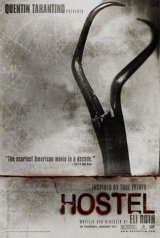 I've attempted to get people I know who like horror movies to at least watch Hostel, but for many of them, it got caught up in the wave of post-Saw garbage and they consider it to be as crappy, and to some of you, it might be. From where I'm sitting, Hostel is light years better than Saw, and this is coming from someone who grew to HATE Cabin Fever for it's inconsistency in tone and inability to end. Eli Roth made a giant leap forward with Hostel, and it really is a more mature picture than anyone will ever believe it to be.
That being said, if I can't convince you all to watch Hostel, then there's no chance you're going to see Hostel Part II, which from everything I've read is at least tonally a departure from the original, and plays familiar notes in unexpected ways. So yes, I do want to see Hostel Part II, without the trepidation I approached the first film with.
 On the other hand, I've totally given up trying to convince people to see the Ocean's movies. Again, it's an issue of people already making up their minds about a sequel to a sequel of a remake that many of you probably didn't like anyway. That Ocean's Twelve was Steven Soderbergh's ode to European films of the sixties is beside the point, because you either want to see them or you don't. I remember when I saw Ocean's Twelve with Jenn she enjoyed it, and I think Andrea fell asleep during Ocean's Eleven. Call me crazy, but I really like the group of actors who come together to hang out, and that easygoing vibe permeates the screen and in turn makes for two hours of harmless fun. Is it going to improve your quality of life? Probably not, but it is a good time.
The decision to see Ocean's Thirteen turned out to be both necessary and serendipitous; when I called Liz to follow up on a raincheck for last weekend's movie, it turned out she hadn't seen Hostel or either of the Ocean's movies, and since it wasn't imperative to see Ocean's Twelve or Ocean's Eleven in order to watch Thirteen (whereas it seemed pretty necessary to have seen Hostel), that's what we went to see.
Earlier in the evening, Adam called to give me his two cents on Hostel Part II, and as the conversation went on, it became abundantly clear that his minor problems with the movie were actually HUGE problems and he came to the realization that he really wasn't going to ever see it again, which didn't give me much hope. I saw Hostel because he recommended it, and we have a similar taste when it comes to horror movies. If he truly recommends something (not like when he says "go see *snicker* Venom") then it's worth seeing to me, but his problems with Hostel Part II echo our problems with Cabin Fever, and apparently the plan to replace the more lurid aspects of Hostel to make things creepier may not quite work. He said it was a better rental, so I'll probably do that.
However, Ocean's Thirteen was perfectly enjoyable, as I expected it would be, and easy enough to acclimate to that Liz didn't have a problem keeping up with the who's who. It doesn't hurt that the films all rely on certain key elements: dialogue which is short handed to the point of being impossible to decipher, characters double and triple switching plans, and surprise twists near the end, so that if you're willing to keep up with the movie itself then knowing the character connections isn't crucial. I'm curious why neither Julia Roberts or Catherine Zeta Jones weren't available for even a cameo, but there was more than enough fun in adding Al Pacino, Ellen Barkin, David Paymer, Julian Sands, Bob Einstein (aka Super Dave Osborne), and nice repeat performances from Vincent Cassel and Eddie Izzard (who has a MUCH larger role than in Ocean's Twelve).
Again, I know I'm not going to change many minds here, but I still say Ocean's Thirteen is as good as any of them, and I'm sure it'll fund the next three or four oddball Steven Soderbergh film projects.
Monday, November 22, 2010
Plans for the Year(s) to Come
As promised last week, here is an excerpt from my "personal statement" designed to lay out some research plans for the future. Additionally (and because you're such nice people), I'm going to include some extra "deleted" ideas, along with plans for the Blogorium in the coming year:
Intertextuality in film has always fascinated me; following the connective tissue from one film to another - homage, imitation, discursive elements, or direct references – I followed the influences of Fritz Lang on Ridley Scott or of Preston Sturges on Joel and Ethan Coen, developing a lexicon to express trends apparent in my research. Accordingly, I consider furthering the development of intertextuality in film history to be a crucial component in my graduate studies.
I'd also like to invite readers to help pick a section tentatively called "Best of the Blogorium," built from your suggestions, votes, and picks for favorite reviews, features, essays, and other random posts. The "Best of the Blogorium" would then appear as a tab on the right side of the screen, allowing new readers to see the Cap'n at his best without being overwhelmed by the sheer number of posts to wade through.
Down the line, I might consider adding direct links to help readers find copies of Thankskilling, Coen brothers text books, and other horror films featured during Horror and Summer Fest, but that's a bit off yet.
That's what I've been working on, and hopefully the first signs of new directions in the Blogorium will appear in the coming months and years. Keep reading, and I'll keep writing.
* It turns out that most of the "reviews" in the old Blogorium were barely a paragraph and only gave the tiniest amount of information possible, something I feel I can adjust.
Intertextuality in film has always fascinated me; following the connective tissue from one film to another - homage, imitation, discursive elements, or direct references – I followed the influences of Fritz Lang on Ridley Scott or of Preston Sturges on Joel and Ethan Coen, developing a lexicon to express trends apparent in my research. Accordingly, I consider furthering the development of intertextuality in film history to be a crucial component in my graduate studies.
I am also interested in pursuing research into theories of authorship, particularly in the “post-auteur” and “anti-auteur” positions taken by filmmakers like Steven Soderbergh and the Coen brothers. The development of the term auteur and its subsequent backlash is a movement within film theory that is fascinating to me, and exploring the usefulness of “director as author” in a contemporary setting - one removed from “auteur” as catch-all phrase in the 1980s – seems to have been largely abandoned in the twenty-first century. Is the auteur theory still valid? Has the term lost all meaning, or has its mutation rendered directors afraid of being “branded” the author of their films? Alternately, there are a number of “authorless” or minimized directorial presences in cinematic “mash-ups” like Miike’s Sukiyaki Western Django.
One field of research that appeals to me is the idea of artistic repetition; this is not limited to direct remakes (although the trend towards those merits investigation), but also the presence of virtually identical stories that appear persistently over a period of time – Yojimbo / Fistful of Dollars / The Warrior and the Sorceress / Last Man Standing – and the differences between recurring themes in literature and film compared to direct repetition of title, plot, and marketing. For example, how is does the 2009 remake of The Last House on the Left differ from the intertextual relationship between The Virgin Spring and Wes Craven’s The Last House on the Left?
The horror genre, which is often considered a barren field for critical study, remains a point of focus I hope to expand on during my studies. Over the last five years, I made a concerted effort to collect and research the various theoretical approaches to horror, from Carol Clover to David Skal to Robin Wood and Barbara Creed. I am particularly interested in the way that gender and violence are portrayed in horror, from the “slasher” era to the present, with particular focus on the way that “Final Girl” variations are portrayed in French horror films like High Tension, Martyrs, Them, and Frontier(s).
Horror films are often undervalued in critical theory because the volume of low quality releases often overwhelms films with something to say. Does a high profile flop like Cursed overshadow a feminist reinterpretation of werewolves like Ginger Snaps? In order to combat the assertion the genre is “lacking,” I have hosted annual horror festivals in the summer and autumn to expose audiences to films lost in the “white noise” of aggressive marketing for sequels, remakes, and gimmick releases.
With regards to film history as a social movement, I have a long-standing desire to pursue the history of independent cinema from the 1950s to the 1980s through the venue of the Drive-In, where distributors showcased non-studio pictures outside of major cities. Until the advent of home video effectively killed the Drive-In, I suspect one can trace the movement of independent cinema from smaller territories across the U.S. by following Drive-In “culture,” despite James Naremore’s doubts that such a thing ever existed (based on a passage in More Than Night: Film Noir in its Contexts).
---
I'd also like to invite readers to help pick a section tentatively called "Best of the Blogorium," built from your suggestions, votes, and picks for favorite reviews, features, essays, and other random posts. The "Best of the Blogorium" would then appear as a tab on the right side of the screen, allowing new readers to see the Cap'n at his best without being overwhelmed by the sheer number of posts to wade through.
Down the line, I might consider adding direct links to help readers find copies of Thankskilling, Coen brothers text books, and other horror films featured during Horror and Summer Fest, but that's a bit off yet.
That's what I've been working on, and hopefully the first signs of new directions in the Blogorium will appear in the coming months and years. Keep reading, and I'll keep writing.
* It turns out that most of the "reviews" in the old Blogorium were barely a paragraph and only gave the tiniest amount of information possible, something I feel I can adjust.
Friday, November 19, 2010
Winnebago Man vs. Best Worst Movie
As I alluded to yesterday in my review of Ben Steinbauer's Winnebago Man, I'm slightly perplexed why none of the reviews I've seen have compared the documentary to another, very similar type of film, Michael Stephenson's Best Worst Movie. While they differ in the medium addressed, Best Worst Movie and Winnebago Man are functionally about the same thing: a long-forgotten piece of media has taken on a new life, separate from the people principally involved with it, and a filmmaker sets out to connect with one specific person and build a documentary around their reaction to new-found fame (or infamy).
 Both films begin with an introduction to the "cult" following, including interviews with critics, media personalities, other people involved with the production, and then set about focusing the film on one person who the director feels is impacted most. Both films feature directors who are personally involved in the narrative of the documentary and both feel they have a stake in their subject. Best Worst Movie and Winnebago Man also deal in the culture of "to be laughed AT," a relatively popular phenomenon in the age of the internet and of "viral videos," where the subject(s) of mockery are largely removed from their audience, especially in the case of Troll 2 and Rebney's Winnebago outtakes.
Where they differ is on two key distinctions: the type of media (and the way it is /was disseminated) and the reaction of the film's "subject" (in Winnebago Man, Jack Rebney; in Best Worst Movie, George Hardy). These differences are critical in the success or failure of each film, in part because they frame the "subject" of the film and their audience well before the two ever meet on camera.
The first distinction is an important one, and it explains to some extent why Winnebago Man stumbles in its mid-section. The "viral video," and specifically Rebney's outtakes, are generally speaking viewed on an individual level. One person watches the video on Youtube (or videocassette, as is explained in the film), and passes it on to someone else. We watch them alone, we enjoy them alone, and don't tend to think of these videos as a truly "shared" experience. Gatherings to view the footage, like the Found Film Festival which is featured in Winnebago Man, are fairly rare events.
Troll 2, on the other hand, expanded from an initial home video run to appear regularly in theatres as a "midnight movie" like The Rocky Horror Picture Show. The experience of Troll 2, unlike the Winnebago outtakes, is inherently communal. In nearly every instance during Best Worst Movie, it's clear that fans enjoy watching the film together, laughing at the film together, and sharing the experience of Troll 2. The audiences also seem much more invested in the idea of meeting a George Hardy or a Michael Stephenson than a Jack Rebney, who the founders of the Found Film Festival assumed was dead.
This brings us to our second distinction, and the one that benefits one film and seriously undermines the other: the subject(s). I understand why Ben Steinbauer was interested in finding Jack Rebney: it's a fascinating project to track down the "lost" star of one of YouTube's most popular videos, and to find out how he feels about his indirect fame. The problem is that once it is apparent Rebney has no desire whatsoever to interact with Steinbauer on those terms, Winnebago Man struggles to move forward. Jack Rebney offers no insight into the questions Steinbauer hoped to answer, and moreover, he refuses to interact with the fan base the director planned on connecting him to for almost three years.
 George Hardy, on the other hand, is a relatively benign subject who has fond memories of making Troll 2 and an inkling that people seem to like the film now, partly because Stephenson was also in the film. Michael Stephenson lucked out, in some ways, by choosing Hardy to expose to the screenings of Troll 2 he'd been observing prior to making Best Worst Movie. Hardy is easygoing, gregarious, and clearly a little struck by the sudden popularity he encounters, and he has the benefit of knowing the director as they experience Troll 2's resurgence together. Best Worst Movie can then accordingly document Hardy's rise and fall as a quasi-celebrity, complete with a narrative arc right out of classic Hollywood: the humble hero who brushes with fame, becomes consumed with it, and then realizes that it isn't all it's cracked up to be. Stephenson has a willing participant and Best Worst Movie becomes something more than a document of a twenty-year-old stinker's "cult" status, and as luck would have it, no one needs to be prodded to make it happen*.
Trying to manufacture an event with the mercurial Rebney moves the film out of the realm of "what would happen if" and make it a "let's see what happens when I drag someone who clearly isn't interested in what I want to do out of his comfort zone and put him face to face with people he doesn't want to meet for reasons he has every right to express. It reminded me of something that hasn't happened yet - but could - tied to Best Worst Movie.
During a post-screening Q&A, one of the producers indicated that Fragasso wanted to make a Troll 2: Part 2 (in 3-D), and if that were to happen, they would certainly document it for a Best Worst Movie 2. And that's a horrible, misguided idea, I have to say. It's not simply trying to catch lightning in a bottle again; the concept as presented is trying to create it, and that never works. Troll 2 isn't the endearing train wreck it is because the writer, director, cast, and crew set out to make the "best worst movie": it was simply the accidental byproduct of their efforts.
By making a Troll 2: Part 2, everyone involved (and especially the people making Best Worst Movie 2) is going to have the reputation of Troll 2 in their minds, and many of them will be trying to replicate it - or worse, play it up. The documentary crew is certainly hoping for this (and if you doubt me, they also expressed hopes for a reality series with George Hardy and The Room's Tommy Wiseau that fortunately never came to pass) and the result will be a film trying so hard to be bad (on a conscious level or not) that it lacks the necessary "it" that makes Troll 2 the "best worst movie." It's like expecting Jack Rebney to show up at a screening of his Winnebago outtakes ready to spew profanity and swat at flies.
Winnebago Man dances around the nature of Rebney's "fans" by portraying them exactly as he suspected while waiting in line but then soft-pedaling the Q&A and post-screening. Only one person expressly states their perception of the "Angriest RV Salesman in the World" was way off, while other people exiting the theatre substitute for earlier interviews (who sometimes appear taking pictures with him but saying nothing, thereby neither asserting or refuting their earlier opinions). Best Worst Movie doesn't directly address the fan reaction with Stephenson, but the film certainly shows you the ugly side of how the "laughing AT" audiences regard Fragasso, Hardy, and Troll 2 in general. The fans move from genuinely enthusiastic near the beginning to partially hostile (or at least incredibly judgmental, as with the case of the "how come it's called Troll 2 when there are no trolls?" question) to the people involved. There's an ugly undercurrent to the fan relationship in Best Worst Movie that Steinbauer avoids addressing during the second half of Winnebago Man**, much to the latter's disadvantage, in part because the film struggles to find its footing at that point.
I do feel that Best Worst Movie is successful in ways that Winnebago Man is not, but I would like to point out that this is not the fault of Ben Steinbauer: he found himself in the unenviable position of changing a documentary midway through his search with a subject that continued to throw him curveballs and refuse to meet him halfway on almost every decision. Winnebago Man is a well constructed documentary that lost its sense of purpose and has to push onward. Best Worst Movie has the tremendous benefit of everything falling into place in a compelling manner, but this is not to belittle or undermine Stephenson, who put together a consistently entertaining, endearing, funny, and disturbing documentary. It takes just as much work to make either film, and I think they both handle their subject manner in the best way possible. One has a better go at it for me, but I understand why the other one exists, and more importantly, deserves to be seen.
* It doesn't hurt that Best Worst Movie is also populated with a host of interesting supporting characters, from the rest of the cast of Troll 2 to its egotistical director, Claudio Fragasso. Winnebago Man ultimately rests on Jack Rebney's shoulders, and he's clearly less interested in being the subject of that particular documentary than anyone in Best Worst Movie.
** Early in the film, he interviews two hosts of a "found video" cable access show that state upfront they have no interest in ever meeting Rebney or anyone else in the tapes they receive. To meet the person associated with the injury or embarrassment would remove any joy taken from their suffering, they explain, which is a telling comment the film never again explores.
 Both films begin with an introduction to the "cult" following, including interviews with critics, media personalities, other people involved with the production, and then set about focusing the film on one person who the director feels is impacted most. Both films feature directors who are personally involved in the narrative of the documentary and both feel they have a stake in their subject. Best Worst Movie and Winnebago Man also deal in the culture of "to be laughed AT," a relatively popular phenomenon in the age of the internet and of "viral videos," where the subject(s) of mockery are largely removed from their audience, especially in the case of Troll 2 and Rebney's Winnebago outtakes.
Where they differ is on two key distinctions: the type of media (and the way it is /was disseminated) and the reaction of the film's "subject" (in Winnebago Man, Jack Rebney; in Best Worst Movie, George Hardy). These differences are critical in the success or failure of each film, in part because they frame the "subject" of the film and their audience well before the two ever meet on camera.
The first distinction is an important one, and it explains to some extent why Winnebago Man stumbles in its mid-section. The "viral video," and specifically Rebney's outtakes, are generally speaking viewed on an individual level. One person watches the video on Youtube (or videocassette, as is explained in the film), and passes it on to someone else. We watch them alone, we enjoy them alone, and don't tend to think of these videos as a truly "shared" experience. Gatherings to view the footage, like the Found Film Festival which is featured in Winnebago Man, are fairly rare events.
Troll 2, on the other hand, expanded from an initial home video run to appear regularly in theatres as a "midnight movie" like The Rocky Horror Picture Show. The experience of Troll 2, unlike the Winnebago outtakes, is inherently communal. In nearly every instance during Best Worst Movie, it's clear that fans enjoy watching the film together, laughing at the film together, and sharing the experience of Troll 2. The audiences also seem much more invested in the idea of meeting a George Hardy or a Michael Stephenson than a Jack Rebney, who the founders of the Found Film Festival assumed was dead.
This brings us to our second distinction, and the one that benefits one film and seriously undermines the other: the subject(s). I understand why Ben Steinbauer was interested in finding Jack Rebney: it's a fascinating project to track down the "lost" star of one of YouTube's most popular videos, and to find out how he feels about his indirect fame. The problem is that once it is apparent Rebney has no desire whatsoever to interact with Steinbauer on those terms, Winnebago Man struggles to move forward. Jack Rebney offers no insight into the questions Steinbauer hoped to answer, and moreover, he refuses to interact with the fan base the director planned on connecting him to for almost three years.
 George Hardy, on the other hand, is a relatively benign subject who has fond memories of making Troll 2 and an inkling that people seem to like the film now, partly because Stephenson was also in the film. Michael Stephenson lucked out, in some ways, by choosing Hardy to expose to the screenings of Troll 2 he'd been observing prior to making Best Worst Movie. Hardy is easygoing, gregarious, and clearly a little struck by the sudden popularity he encounters, and he has the benefit of knowing the director as they experience Troll 2's resurgence together. Best Worst Movie can then accordingly document Hardy's rise and fall as a quasi-celebrity, complete with a narrative arc right out of classic Hollywood: the humble hero who brushes with fame, becomes consumed with it, and then realizes that it isn't all it's cracked up to be. Stephenson has a willing participant and Best Worst Movie becomes something more than a document of a twenty-year-old stinker's "cult" status, and as luck would have it, no one needs to be prodded to make it happen*.
Trying to manufacture an event with the mercurial Rebney moves the film out of the realm of "what would happen if" and make it a "let's see what happens when I drag someone who clearly isn't interested in what I want to do out of his comfort zone and put him face to face with people he doesn't want to meet for reasons he has every right to express. It reminded me of something that hasn't happened yet - but could - tied to Best Worst Movie.
During a post-screening Q&A, one of the producers indicated that Fragasso wanted to make a Troll 2: Part 2 (in 3-D), and if that were to happen, they would certainly document it for a Best Worst Movie 2. And that's a horrible, misguided idea, I have to say. It's not simply trying to catch lightning in a bottle again; the concept as presented is trying to create it, and that never works. Troll 2 isn't the endearing train wreck it is because the writer, director, cast, and crew set out to make the "best worst movie": it was simply the accidental byproduct of their efforts.
By making a Troll 2: Part 2, everyone involved (and especially the people making Best Worst Movie 2) is going to have the reputation of Troll 2 in their minds, and many of them will be trying to replicate it - or worse, play it up. The documentary crew is certainly hoping for this (and if you doubt me, they also expressed hopes for a reality series with George Hardy and The Room's Tommy Wiseau that fortunately never came to pass) and the result will be a film trying so hard to be bad (on a conscious level or not) that it lacks the necessary "it" that makes Troll 2 the "best worst movie." It's like expecting Jack Rebney to show up at a screening of his Winnebago outtakes ready to spew profanity and swat at flies.
Winnebago Man dances around the nature of Rebney's "fans" by portraying them exactly as he suspected while waiting in line but then soft-pedaling the Q&A and post-screening. Only one person expressly states their perception of the "Angriest RV Salesman in the World" was way off, while other people exiting the theatre substitute for earlier interviews (who sometimes appear taking pictures with him but saying nothing, thereby neither asserting or refuting their earlier opinions). Best Worst Movie doesn't directly address the fan reaction with Stephenson, but the film certainly shows you the ugly side of how the "laughing AT" audiences regard Fragasso, Hardy, and Troll 2 in general. The fans move from genuinely enthusiastic near the beginning to partially hostile (or at least incredibly judgmental, as with the case of the "how come it's called Troll 2 when there are no trolls?" question) to the people involved. There's an ugly undercurrent to the fan relationship in Best Worst Movie that Steinbauer avoids addressing during the second half of Winnebago Man**, much to the latter's disadvantage, in part because the film struggles to find its footing at that point.
I do feel that Best Worst Movie is successful in ways that Winnebago Man is not, but I would like to point out that this is not the fault of Ben Steinbauer: he found himself in the unenviable position of changing a documentary midway through his search with a subject that continued to throw him curveballs and refuse to meet him halfway on almost every decision. Winnebago Man is a well constructed documentary that lost its sense of purpose and has to push onward. Best Worst Movie has the tremendous benefit of everything falling into place in a compelling manner, but this is not to belittle or undermine Stephenson, who put together a consistently entertaining, endearing, funny, and disturbing documentary. It takes just as much work to make either film, and I think they both handle their subject manner in the best way possible. One has a better go at it for me, but I understand why the other one exists, and more importantly, deserves to be seen.
* It doesn't hurt that Best Worst Movie is also populated with a host of interesting supporting characters, from the rest of the cast of Troll 2 to its egotistical director, Claudio Fragasso. Winnebago Man ultimately rests on Jack Rebney's shoulders, and he's clearly less interested in being the subject of that particular documentary than anyone in Best Worst Movie.
** Early in the film, he interviews two hosts of a "found video" cable access show that state upfront they have no interest in ever meeting Rebney or anyone else in the tapes they receive. To meet the person associated with the injury or embarrassment would remove any joy taken from their suffering, they explain, which is a telling comment the film never again explores.
Thursday, November 18, 2010
Blogorium Review: Winnebago Man
Editorial Introduction: Maybe there should be a new category of documentaries, called "personal essays" or something to that effect: over the last ten years or so, we've seen more documentaries where the creative force behind the film becomes the subject of their own investigation. Documentaries like Super Size Me, Religulous, This Film is Not Yet Rated, Bowling for Columbine, Best Worst Movie, The Kid Stays in the Picture, Don't You Forget About Me, and now Winnebago Man certainly qualify (in varying degrees) as documentaries told from a considerably more subjective viewpoint than, say, films by the Maysles brothers.
Winnebago Man is a well made documentary that suffers from one major problem: in the end, it's very difficult to answer the "so what?" question. During undergraduate, I was continually faced with writing papers where the stakes weren't clear enough, and more often than not, the best argument against the topics in question were "so what?" This is not to say Winnebago Man isn't worth watching, or that writer/director/producer Ben Steinbauer didn't set out to make a movie that feels superfluous, but I have a hard time giving the film an unequivocal recommendation.
 Steinbauer's documentary, about Jack Rebney, the "angriest RV Salesman on Earth": in 1989, Rebney was filming an industrial video for Winnebago RV's, and due to the heat, humidity, and flies in rural Iowa, coupled with an inability to remember his lines, Rebney unleashed a litany of expletives and blowups. The crew edited these outtakes, showed them to Winnebago, and Rebney was fired. That should have been the end of the story, but videotapes of the outtakes started circulating, and five years ago they made their way to Youtube*, turning Rebney into a short-fused joke. Steinbauer, who had seen the tape, wanted to know what happened to the man behind the profanity, what he thought about the tape / Youtube, and how he would approach his audience.
The answer, it turns out, is that Rebney is living a reclusive life in Northern California, doesn't care much for the tape and even less for the people he perceives to be its audience (Jack describes his expectations of "room temperature IQ's" and even when they aren't, he professes he can't understand why intelligent people would watch the Winnebago video). Rebney initially dupes Steinbauer into believing he's a kindly old man who put that anger behind him, but then admits it was all a charade**, and decides he'd like to ask Steinbauer to provide him with a platform for his political, philosophical, and cultural positions. When the director assumes Rebney means his audience on Youtube, the curmudgeon bristles and becomes combative, and Steinbauer leaves, reaches out to his friend Keith Gordon, and eventually coaxes Jack into attending a special Found Film Festival as the Guest of Honor.
Winnebago Man reminds me most of Best Worst Movie - a comparison that, strangely, I haven't seen anywhere - and I'll deal with comparing the films in greater depth tomorrow, but Steinbauer starts the documentary strong with a history of viral videos, including their pre-internet incarnations through events like the Found Footage Festival. His personal involvement in the narrative of Winnebago Man is going to remind audiences of Michael Moore, and to that end I'm willing to overlook some of the "recreations" (like footage of Steinbauer talking to Jack over the phone after their first encounter).
In fact, Steinbauer is as much of a character in Winnebago Man as Rebney, and his constant involvement in prodding the reclusive ex-newsman into opening up or addressing his fans hurts the film the most. Rebney's disinterest in being more of the story leaves the documentary spinning its wheels for far too long, and the exasperated Steinbauer doesn't have much to work with when his subject is wholly disinterested.
Another component that really doesn't help Winnebago Man is that it's very easy to forget that Steinbauer spent three years getting Rebney to come out of seclusion and bring him to San Francisco for the Found Film Festival. The film begins with an argument between the director and subject, then inserts a "three years earlier" card before introducing the viral video. After that, there are periodic, incremental ".... later" cards, and then vanishes for the bulk of the film. Steinbauer and editor Malcom Pullinger collapse the time between meeting Rebney and everything that happens afterward, ultimately hurting the film at the point the "narrative" most needs it.
I also wonder how Rebney would have responded if he knew that the audience he reconsidered after the Found Film Festival Q&A were on camera openly wishing that he'd show up at the theatre angry, cursing, and that "maybe there will be some flies," everything he assumed people watched the video for. The disconnect between what the audience was assuming they'd see, what Rebney assumed he would see***, and the lasting impression he had of his "fans" closes the film on a somewhat sweet, uplifting note, but like Best Worst Movie, the audience members outside were hoping for someone to laugh AT, not with. While at least one attendee admits how wrong their perceptions were coming out of the Q&A, I have my doubts that most people at the showing saw past the grouchy, profanity spouting Rebney**** they expected to see.
There are moments that make Winnebago Man worth seeing, mostly related to Gordon's friendship with Rebney and Jack's dog, Buddha. The DVD includes Rebney's finished Winnebago industrial film, which provides context lacking from only watching the YouTube video. Yes, there's actually a successful flip-side to the outtakes, and I'd argue that it makes the profanity and frustration worth it, as would anyone who seriously struggled to put something good out there. In the "premiere" feature, Steinbauer suggests that Winnebago Man is ultimately about the "human condition," an argument I don't necessarily buy. What Winnebago Man, ultimately, "is", is a documentary about looking for something, not finding what you expected, and making a film out of what's left. It's worth watching once, but I don't know that I'll be revisiting Winnebago Man in the future.
* If you haven't seen the video, then go to YouTube. I'm not putting the link up for reasons outlined in the review. ** I don't want to put this in the body of the review, but the whole "bait and switch" component of Winnebago Man really strikes me as dubious considering how uninterested Rebney is in collaborating with Steinbauer. That many of the film's "re-enactments" happen during this point in the documentary doesn't help matters. *** There's not a good place to put this in the review, but Rebney begins going blind from glaucoma during the film, leaving Gordon and Steinbauer to lead him around. **** Speaking of which, I sometimes wonder how much of the "grumpy" and the cursing is part of what Rebney expects will keep Steinbauer around, as it increases exponentially as the film goes on.
Winnebago Man is a well made documentary that suffers from one major problem: in the end, it's very difficult to answer the "so what?" question. During undergraduate, I was continually faced with writing papers where the stakes weren't clear enough, and more often than not, the best argument against the topics in question were "so what?" This is not to say Winnebago Man isn't worth watching, or that writer/director/producer Ben Steinbauer didn't set out to make a movie that feels superfluous, but I have a hard time giving the film an unequivocal recommendation.
 Steinbauer's documentary, about Jack Rebney, the "angriest RV Salesman on Earth": in 1989, Rebney was filming an industrial video for Winnebago RV's, and due to the heat, humidity, and flies in rural Iowa, coupled with an inability to remember his lines, Rebney unleashed a litany of expletives and blowups. The crew edited these outtakes, showed them to Winnebago, and Rebney was fired. That should have been the end of the story, but videotapes of the outtakes started circulating, and five years ago they made their way to Youtube*, turning Rebney into a short-fused joke. Steinbauer, who had seen the tape, wanted to know what happened to the man behind the profanity, what he thought about the tape / Youtube, and how he would approach his audience.
The answer, it turns out, is that Rebney is living a reclusive life in Northern California, doesn't care much for the tape and even less for the people he perceives to be its audience (Jack describes his expectations of "room temperature IQ's" and even when they aren't, he professes he can't understand why intelligent people would watch the Winnebago video). Rebney initially dupes Steinbauer into believing he's a kindly old man who put that anger behind him, but then admits it was all a charade**, and decides he'd like to ask Steinbauer to provide him with a platform for his political, philosophical, and cultural positions. When the director assumes Rebney means his audience on Youtube, the curmudgeon bristles and becomes combative, and Steinbauer leaves, reaches out to his friend Keith Gordon, and eventually coaxes Jack into attending a special Found Film Festival as the Guest of Honor.
Winnebago Man reminds me most of Best Worst Movie - a comparison that, strangely, I haven't seen anywhere - and I'll deal with comparing the films in greater depth tomorrow, but Steinbauer starts the documentary strong with a history of viral videos, including their pre-internet incarnations through events like the Found Footage Festival. His personal involvement in the narrative of Winnebago Man is going to remind audiences of Michael Moore, and to that end I'm willing to overlook some of the "recreations" (like footage of Steinbauer talking to Jack over the phone after their first encounter).
In fact, Steinbauer is as much of a character in Winnebago Man as Rebney, and his constant involvement in prodding the reclusive ex-newsman into opening up or addressing his fans hurts the film the most. Rebney's disinterest in being more of the story leaves the documentary spinning its wheels for far too long, and the exasperated Steinbauer doesn't have much to work with when his subject is wholly disinterested.
Another component that really doesn't help Winnebago Man is that it's very easy to forget that Steinbauer spent three years getting Rebney to come out of seclusion and bring him to San Francisco for the Found Film Festival. The film begins with an argument between the director and subject, then inserts a "three years earlier" card before introducing the viral video. After that, there are periodic, incremental ".... later" cards, and then vanishes for the bulk of the film. Steinbauer and editor Malcom Pullinger collapse the time between meeting Rebney and everything that happens afterward, ultimately hurting the film at the point the "narrative" most needs it.
I also wonder how Rebney would have responded if he knew that the audience he reconsidered after the Found Film Festival Q&A were on camera openly wishing that he'd show up at the theatre angry, cursing, and that "maybe there will be some flies," everything he assumed people watched the video for. The disconnect between what the audience was assuming they'd see, what Rebney assumed he would see***, and the lasting impression he had of his "fans" closes the film on a somewhat sweet, uplifting note, but like Best Worst Movie, the audience members outside were hoping for someone to laugh AT, not with. While at least one attendee admits how wrong their perceptions were coming out of the Q&A, I have my doubts that most people at the showing saw past the grouchy, profanity spouting Rebney**** they expected to see.
There are moments that make Winnebago Man worth seeing, mostly related to Gordon's friendship with Rebney and Jack's dog, Buddha. The DVD includes Rebney's finished Winnebago industrial film, which provides context lacking from only watching the YouTube video. Yes, there's actually a successful flip-side to the outtakes, and I'd argue that it makes the profanity and frustration worth it, as would anyone who seriously struggled to put something good out there. In the "premiere" feature, Steinbauer suggests that Winnebago Man is ultimately about the "human condition," an argument I don't necessarily buy. What Winnebago Man, ultimately, "is", is a documentary about looking for something, not finding what you expected, and making a film out of what's left. It's worth watching once, but I don't know that I'll be revisiting Winnebago Man in the future.
* If you haven't seen the video, then go to YouTube. I'm not putting the link up for reasons outlined in the review. ** I don't want to put this in the body of the review, but the whole "bait and switch" component of Winnebago Man really strikes me as dubious considering how uninterested Rebney is in collaborating with Steinbauer. That many of the film's "re-enactments" happen during this point in the documentary doesn't help matters. *** There's not a good place to put this in the review, but Rebney begins going blind from glaucoma during the film, leaving Gordon and Steinbauer to lead him around. **** Speaking of which, I sometimes wonder how much of the "grumpy" and the cursing is part of what Rebney expects will keep Steinbauer around, as it increases exponentially as the film goes on.
Tuesday, November 16, 2010
From the Vaults: Guest Blogger - The Cranpire
Our "From the Vaults" for the third Tuesday in November is a compilation of Cranpire-riffic guest spots on the Blogorium. If you've never had the experience of meeting Mr. Patrick Cranpire, this will give you a taste:
Today I think I'll let Mr. Cranpire take care of business. That dude knows way more about movies than I do. Here he is:
It takes dirt and sun to make the shit grow. It takes mutha fuckin' Cranpire to start the show. The Cap'n is now "sleeping" and may not wake for some time. So I will tell you his lies. He changes the time stamp on his blogs so that it appears that he wrties a blog each and every day or normal 24 hour period.
Tonight I am going to be Patrick not Cranpire. This is a side many of you do not see very often.
The Dark Knight was awesome, Heath Ledger was awesome. But here is my point. While filming this movie and after filming ended Ledger was supposedly "haunted by the Joker". So does that make Heath Ledger a bad actor. Yes. I am not saying that his performance was poor, I am saying that he was bad at being an actor. He should have been able to separate himself form the character. There have been many intense, demented and horrifying roles played by many and actor. I can not think of another instance of this happening. If you can let me know. Thank you for your time.
Before I took out the Cap'n he requested that I speak about movies, specifically Death Race. We just finished it and is good. All the things that were said about this film are true. You will not be bored, your questions will be answer and yes people drive cars with the intention of both winning and killing the fellow races. That is all I will say about this movie other than you should watch it.
The Cap'n just briefly woke up and mentioned a conversation about an actor we had. His name is Lochlyn Munro. You more than likely do not know who he is and therefore can not appreciate his talent. Dead Man on Campus is the easiest way for me to get you on ball. He is the crazy guy who, well, goes crazy. That is your starting point and you better pick up the scent and follow it till it goes cold.
I am going to finish this shit up. But I will lead you with this. Do not let stupidity stand.
Today I think I'll let Mr. Cranpire take care of business. That dude knows way more about movies than I do. Here he is:
It takes dirt and sun to make the shit grow. It takes mutha fuckin' Cranpire to start the show. The Cap'n is now "sleeping" and may not wake for some time. So I will tell you his lies. He changes the time stamp on his blogs so that it appears that he wrties a blog each and every day or normal 24 hour period.
Tonight I am going to be Patrick not Cranpire. This is a side many of you do not see very often.
The Dark Knight was awesome, Heath Ledger was awesome. But here is my point. While filming this movie and after filming ended Ledger was supposedly "haunted by the Joker". So does that make Heath Ledger a bad actor. Yes. I am not saying that his performance was poor, I am saying that he was bad at being an actor. He should have been able to separate himself form the character. There have been many intense, demented and horrifying roles played by many and actor. I can not think of another instance of this happening. If you can let me know. Thank you for your time.
Before I took out the Cap'n he requested that I speak about movies, specifically Death Race. We just finished it and is good. All the things that were said about this film are true. You will not be bored, your questions will be answer and yes people drive cars with the intention of both winning and killing the fellow races. That is all I will say about this movie other than you should watch it.
The Cap'n just briefly woke up and mentioned a conversation about an actor we had. His name is Lochlyn Munro. You more than likely do not know who he is and therefore can not appreciate his talent. Dead Man on Campus is the easiest way for me to get you on ball. He is the crazy guy who, well, goes crazy. That is your starting point and you better pick up the scent and follow it till it goes cold.
I am going to finish this shit up. But I will lead you with this. Do not let stupidity stand.
Saturday, November 13, 2010
How Little Does It Take to Expose an MST3k Nerd?
Just ask him "do you have any first season episodes on VHS?" and let him go. From an actual correspondence with regular reader the Cranpire earlier today:
I do have a lot of early MST3k episodes on video, but the box marked "VHS" is literally the cornerstone on which my furniture is built on in the storage facility. It's actually the hardest box to get to, as it's covered by shelves, plastic bins, other boxes, and dvd racks.
If the "first season" is the one I'm guessing you looked at on IMDB, then that's the KTMA Public Access episodes they did before going to the Comedy Channel. If you're lucky, you can find one or two on YouTube, but there's almost no chance they're coming out because a) half of them are Gamera films, or b) they're licensed by Sandy Frank, who hates Joel Hodgson for making fun of his movies.
Season two, which includes Robot Monster, The Crawling Hand, The Crawling Eye, Mad Monster, and The Corpse Vanishes, are kinda / sorta on various MST3k collections. I have 18 of the 19 boxed sets (waiting on that new one for Christmas) and all of the individual releases, but as it's the only thing I've ever collected in its entirety (to date), I'm reticent to loan them out (they're often VERY expensive to replace and unless I absolutely have to I'll never sell them).
To your Crow question, it's explained in the MST3k Amazing Colossal Episode Guide that he's actually facing forward, but that the basket creates an optical illusion that makes it look like he could be facing forward. If I had the book here, I'd happily scan the picture in (because try as I might, I can't find it online), but here's a link to back me up:
http://www.mst3kinfo.com/mstfaq/bots.html
You can check YouTube; I've seen KTMA clips on there (and the occasional episode), but when a compilation of "Host Segments" from KTMA was on the Twentieth Anniversary boxed set, that pretty much spelled out that they'd never hit DVD. As you can guess from the season two stuff, the show is very much in its formative stages, and they don't really riff much. The show didn't really hit its stride until seasons three, four, and five.
---
So yeah, you can see why I had to share that; clearly, I know way too much about a long-canceled series off of the top of my head than any person ought to. But now I have some small satisfaction in knowing that you too have that knowledge.
Your reward? part two of "Last of the Wild Horses," where a mirror-universe puts Dr. Forrester and TV's Frank in the experiment:
I do have a lot of early MST3k episodes on video, but the box marked "VHS" is literally the cornerstone on which my furniture is built on in the storage facility. It's actually the hardest box to get to, as it's covered by shelves, plastic bins, other boxes, and dvd racks.
If the "first season" is the one I'm guessing you looked at on IMDB, then that's the KTMA Public Access episodes they did before going to the Comedy Channel. If you're lucky, you can find one or two on YouTube, but there's almost no chance they're coming out because a) half of them are Gamera films, or b) they're licensed by Sandy Frank, who hates Joel Hodgson for making fun of his movies.
Season two, which includes Robot Monster, The Crawling Hand, The Crawling Eye, Mad Monster, and The Corpse Vanishes, are kinda / sorta on various MST3k collections. I have 18 of the 19 boxed sets (waiting on that new one for Christmas) and all of the individual releases, but as it's the only thing I've ever collected in its entirety (to date), I'm reticent to loan them out (they're often VERY expensive to replace and unless I absolutely have to I'll never sell them).
To your Crow question, it's explained in the MST3k Amazing Colossal Episode Guide that he's actually facing forward, but that the basket creates an optical illusion that makes it look like he could be facing forward. If I had the book here, I'd happily scan the picture in (because try as I might, I can't find it online), but here's a link to back me up:
http://www.mst3kinfo.com/mstfaq/bots.html
You can check YouTube; I've seen KTMA clips on there (and the occasional episode), but when a compilation of "Host Segments" from KTMA was on the Twentieth Anniversary boxed set, that pretty much spelled out that they'd never hit DVD. As you can guess from the season two stuff, the show is very much in its formative stages, and they don't really riff much. The show didn't really hit its stride until seasons three, four, and five.
---
So yeah, you can see why I had to share that; clearly, I know way too much about a long-canceled series off of the top of my head than any person ought to. But now I have some small satisfaction in knowing that you too have that knowledge.
Your reward? part two of "Last of the Wild Horses," where a mirror-universe puts Dr. Forrester and TV's Frank in the experiment:
Subscribe to:
Posts (Atom)