Showing posts with label Patton Oswalt. Show all posts

Tuesday, October 21, 2014

Shocktober Revisited: Death Bed - The Bed That Eats

 This review originally appeared in 2010. Death Bed: The Bed That Eats is also currently available on Blu-Ray from Cult Epics, with some nice supplementary features.

 Tonight I watched Death Bed: The Bed That Eats. This film, shot in 1972, finished in 1977, and never officially released until 2002, is by no means a "good" film. What it is, however, is a film that manages to combine woeful ineptitude with a handful of inventive - albeit stupid - tricks to create a film that, while awful, is imminently watchable.

 To set the stage, listen to this portion of Patton Oswalt's cd "Werewolves and Lollipops" and join the Cap'n on the other side:


Are we all back? Cool.

 The first thing I need to mention is that despite what Oswalt says, the movie is actually not titled "Death Bed: The Bed That Eats People", because the Death Bed eats a lot more than people. In fact, because the Death Bed enjoys toying with its victims so much, it will often eat anything on the bed before it eats a person.

 For example, in the opening scene, the Death Bed eats an apple, drinks a bottle of wine, and then empties a bucket of fried chicken in order to confuse the couple making out next to their food. No, really. Then the death bed closes its curtains and kills the couple off screen, just so we don't quite know what happens to people.

 What we do know is that the Death Bed eats in a way I was not expecting. Yes, it's true, when I saw the name "Death Bed: The Bed That Eats," I just kind of assumed that it created a mouth out of the mattress and baseboard or something like that. Oh no, not this Death Bed. Writer / Director George Barry had a much better idea: digestive fluids.

 That's right; when the Death Bed starts eating something, the person / food object / luggage is covered with yellow bubbles, and then falls into the bed, where the camera cuts to one of two tubs behind yellow glass. This is the clever part: sometimes what we're seeing is food dropped into acid, so that you can clearly see it eating away.

 Other times, we just see skeletons, people, blood, or other objects in regular water. Either way, we're meant to assume this is the inside of the Death Bed. The other clever thing Barry does is to design a bed that has a mattress clearly two or three feet above the floor, so that audiences would theoretically be confused as to how the Death Bed worked.

 Believe me, that's not what's confusing about Death Bed: The Bed That Eats. Everything else is confusing: almost every character narrates part of the film, and there are flashbacks within flashbacks that span.... maybe hundreds of years? It's hard to say. Basically, this demon has sex with a girl on some bed in the middle of a field, but she lives and the demon bleeds on the bed. The demon goes to sleep inside of a tree and the girl dies but doesn't really die, so she's just lying half dead / half alive in a grave that's waaaaayyy to close to a lake.

 Meanwhile, the Death Bed moves into a mansion, then out of a mansion, then back in the mansion, and then to the cellar. Then at some point the mansion is destroyed and only the cellar remains. According to a newspaper - and the narration of a dead artist who lives behind his painting and talks to the Death Bed (don't ask) - thousands (THOUSANDS) of people are killed by the Death Bed between when the girl dies in 1897 and 1977 when I guess the movie takes place.

 But mostly we're asked to follow these three girls who apparently have the property for the weekend (or something). One of them is kinda loopy and is quickly eaten by the Death Bed; the other scares the Death Bed so it holds her prisoner; the last girl uh... well, let's just say she's there to explain how the Death Bed grabs a suitcase earlier in the film.

 Actually, the first girl isn't really "quickly" eaten by the Death Bed, because first it decides to play some dumb "choking game" involving her crucifix necklace, then her skull magically appears outside of the cellar underground and sprouts a rose bush. No, really.

 I'd say more than half of the film's 77 minute running time is devoted to the history of the Death Bed, the demon, the dead girl who isn't dead, or the stupid artist that hates the Death Bed but benefits from it murdering people. I don't really know why; maybe because he painted the Death Bed before letting it eat him...

 When that isn't going on, the brother of one of the girls (you kinda assume it's the loopy one who dies first, but then it turns out to be the one the Death Bed is scared of) shows up in time to be trapped in the cellar.

Oh, and this happens:


 I know it sounds like the Cap'n spoiled practically everything in the movie, but I can't begin to tell you how weird Death Bed: The Bed That Eats gets. This synopsis doesn't come close to capturing how bizarre and arbitrary this movie is, and I didn't even get to the why the Death Bed eats the suitcase (hint: there's Pepto Bismol in the suitcase. Seriously.).

 George Barry recorded a comparably arbitrary and inane introduction to Death Bed: The Bed That Eats, which ends with him essentially saying "go ahead and watch it because it's too late to return the movie," but he doesn't need to do that. Patton Oswalt might sell you on checking it out, but Death Bed will keep you watching well beyond the opening credits. Oh crap, I didn't even mention how it's broken up (by screen titles) into meals of the day.

See Death Bed: The Bed That Eats as soon as you can, and with as many people as you can find. I assure you it's worth your time.

Tuesday, September 11, 2012

Retro Review: Sex and Death 101


editor's note: In his continuing quest to re-post older reviews that never made it from the old Blogorium to its present home, Cap'n Howdy has been delivering piles of digital bits to me in the hopes I know what to do with it. Some movies are older than others, but most of these come from a period between 2006 and 2009, when the move took place. Enjoy

---

It seems fitting that almost twenty years after his first screenplay, Heathers, writer Daniel Waters would return with a kind-of-sort-of sequel. Oh, I'm sorry; did you not hear about this? Sex and Death 101? Well, I won't lie to you and say "oh I followed it from day one", because it was a surprise to me too. The good news is that this kind of surprise is the good one.

    Roderick Blank (Simon Baker of Land of the Dead) is a normal guy living a normal life, about to be engaged when he receives an anonymous email. This email has the name of every woman he's ever slept with, and it turns out his fiance is number 29. On a list of 101. You can imagine where this is going, but you might be surprised where it ends up. The list comes from... well, I won't spoil that. Let's just say it involves Patton Oswalt and a white room. Again, that's only giving you part of the scenario.

    First things first: don't expect an actual sequel to Heathers with any of the characters or story returning. Sex and Death 101 is more of a thematic sequel to Heathers (if you want to even call it that). I bring it up only because much of the film is going to remind you of the dream sequences in Heathers, and in a good way. Much of the tone of Sex and Death 101 is bizarre but inspired black comedy, and more than a few times I laughed as hard as "I love my dead gay son!" in this film.

    The catch, and there is one, is that the movie is slow to get going. It wasn't until probably twenty minutes in or so that Baker really settles into the role and the film gets fun. In the meantime, there's the weird presence of Mindy Cohn (The Facts of Life) as his assistant and a supporting cast that includes "oh! that guy" or "hey, why do I know her?". Everything seems a little forced early on and I really thought I wasn't going to like this movie.

    But the Heathers connection gets a little clearer when Winona Ryder enters the story as Death Knell, a not-acutally-a-serial-killer who beds sleazy guys and puts them in comas. Her first real scene in the movie, involving a newstand owner, hints at where Waters actually wants to go with this premise, and things only get better from there.

    Waters wrote and directed Sex and Death, so much like Shane Black's Kiss Kiss Bang Bang, this is his undiluted vision. Every step of the story is filled with double-backs, fake outs, tricksy narration, and some really clever in-camera trickery (watch that bar scene about three quarters of the way in). His writing is still as sharp as ever, and for the first time in years you'll hear an actually clever OJ Simpson joke. Oh, and Patton Oswalt is in the movie, and a lot more than I thought he would be.

    Ultimately what compels me to recommend the movie is that it frequently zigs when you expect it to zag. The writing is clever, the casting at times inspired, and even though it starts and ends a little shaky, there's more than enough in between that you haven't seen in a long time, if at all.

    Sex and Death 101 isn't going to blow you away like Heathers, but it will amuse you. I get why it didn't have larger press, because this is the kind of movie that's a little too weird for the Superhero Movie crowd and more subversive than the "quirky" comedy fans are interested in. If you're willing to let the film settle in, you'll be in for a pleasant surprise, which is exactly what we hope for in "lost" movies.

Monday, June 25, 2012

Blogorium Review: Young Adult

 Young Adult, the fourth film from Jason Reitman (Thank You for Smoking, Up in the Air), is also the re-teaming of Reitman with Diablo Cody (Jennifer's Body, The Evil Dead) after their successful pairing on Juno. Long time readers of the Blogorium are probably aware that I don't like Juno. In fact, I hate Juno, find the movie to be obnoxious. Fortunately, Young Adult is not Juno. It's not anything like Juno, or anything about Juno that I found grating. What's funny is that I think you're supposed to dislike Mavis Gary and to pull for Juno MacGuff, but to be honest, I sort of feel the other way. It's tied to parts of Young Adult hitting home for the Cap'n, and I'll get to that in a bit.

 Mavis (Charlize Theron) is a semi-successful ghost writer for the Waverly Prep young adult novels. She's divorced, lives in a disheveled apartment with her dog and sleepwalks through one night stands in the aftermath of her divorce. The Waverly Prep series is coming to an end and her publisher needs Mavis to finish the last book, but she's more interested in a birth announcement from her high school sweetheart. Mavis decides to drive from Minneapolis to her hometown of Mercury to split up his marriage and live happily ever after.

 It's the funhouse mirror version of every romantic comedy ever (even The Baxter), but Mavis isn't exactly a likeable protagonist. Other than being perpetually drunk and belligerent, Mavis is delusional to the point she's willing to destroy every relationship she comes into contact with, lie to family members, and exaggerate passing glances or pauses in conversation into professions of love from Buddy Slade (Patrick Wilson), despite the fact that he seems uncomfortable (at best) with him Mavis ingratiates herself into his life with Beth Slade (Elizabeth Reaser). The problem is that because Mavis left Mercury to live in "the big city" and to be a famous writer, most of her fellow high school alumni defer to her judgement to a fault, even when it's clear she's back for purely selfish and destructive reasons.

 Young Adult's "voice of reason," Matt Freehauf (Patton Oswalt), immediately and continually calls out Mavis as a horrible person. They nevertheless become kindred spirits, both emotionally stunted from high school (Mavis emotionally and Matt quite literally rendered to walking with a crutch after being attacked by homophobic jocks), and she's willing to overlook his frankenstein-ed super hero action figures because he also makes homemade bourbon. Matt overlooks Mavis' selfish ploy to woo a married man away from his newborn child because she hates everything about Mercury that he hates. High school opposites come together out of mutual disdain for small town Minnesota.

 In a normal romantic comedy I suppose that Mavis and Buddy would realize something important about each other and then Beth would do something horrible and they'd run off together to Minneapolis. Appropriately, this is exactly how Mavis imagines things should happen, so we should expect the opposite - Mavis fails spectacularly and learns a lesson about the downward spiral her life is taking, and then leaves to start life anew (or stays and ends up with Matt, maybe). But Cody and Reitman choose to do something a little trickier, something that apparently does not endear audiences to Young Adult in the way that Juno or Up in the Air do.

 Mavis does fail spectacularly, and as her delusional state crumbles, she heads over to Matt's, and they do in fact sleep together, but it's more as a last act of desperation for acceptance before she leaves. In fact, Mavis seems to be on the path of self awareness the next morning, when Matt's sister Sandra (Collette Wolfe) offers her some coffee. Sandra was one of the many Mercury High School students in awe of Mavis, and she mistakes a moment of clarity in her hero's mind for weakness. At the exact moment audiences expect Young Adult to go one way, Sandra Freehauf nudges it the other, by insisting to Mavis that she's better than everybody in Mercury, that she's better because she left, and that nothing that happened when she came back should even matter. And Mavis believes her, leaving Mercury once and for all convinced her delusions were justified and that Buddy is at fault that it failed. Sandra, trying to help Mavis feel better, has her idol drinking the "Mavis is Better Than Us" Kool Aid in no time.

 There's a little more going on beyond the reductive ending I mentioned, including emotional trauma on Mavis' part that cut as deep as Matt's physically abused body, and while it doesn't justify what she does, it hints at a firmer foundation of her illusory vision of "true love" gone wrong. Young Adult does, in some ways, feel anti-climactic because the main character doesn't learn anything despite the best efforts of almost everyone, but it's more appropriate considering how easy it seems for Hollywood narratives to turn a life around in ninety minutes. Beyond Reitman and Cody, Charlize Theron is fearless as the anti-social, condescending, and emotionally manipulative Mavis. She drinks herself into oblivion, abuses anyone who gets near her, and vicariously lives through her Waverly Prep characters (delivered in narration throughout the film). So I get that people wouldn't be happy that Mavis "wins" in the end.

 Strangely, I didn't dislike Mavis the way I think you're supposed to. It seems clear that Matt is probably the audience surrogate (and Oswalt does a spectacular job as the guarded geek man-child) and while it's an inevitable course, we hope that Freehauf and Mavis don't have sex because he succumbs to her magnetic (if toxic) personality. To be fair, I understand the Matt Freehauf character, but the reason I don't hate Mavis is because some of how she sees herself reminds me of where I'm at. Let's take a brief look, with as little navel-gazing as humanly possible.

 While I don't feel, like Mavis does, that I "peaked" in high school and everything went downhill after that, I totally relate to her feeling of not being where she wants to be in life. The characters are roughly the same age (probably two or three years older tops) to where I am, and the Cap'n definitely isn't pleased with where I find myself. Thankfully (I guess), most of the people I went to high school with don't idolize me, so there's no risk of delusions of grandeur beyond "internet movie blogger," but I can relate a little bit. When I look back at old yearbooks, it's clear that people expected big things from the Cap'n, things that didn't materialize. As a result, I'm more comfortable with most high school peers not knowing where I am or what I'm doing. Like Mavis, I prefer an illusion to the reality, even if our reasons are different.

 Anyway, so Young Adult worked for me, even with the "unsatisfying" ending. Nobody gets off the hook, and Mavis Gary and Matt Freehauf will in all likelihood go back to their lives of desperate solitude. Not a happy ending, but a believable one. Reitman's direction is assured and improving with every subsequent film. My concerns that Young Adult might be like Juno because of the presence of Cody were ill-founded - other than a nickname for the combination Pizza Hut / Taco Bell / KFC's, there isn't much of the "clever" dialogue that had me gritting my teeth last time around. The Young Adult screenplay feels more reflective, more self-deprecating, but that may just be me projecting the character of Mavis onto the screenwriter. That may not be fair, but whatever the reason, Young Adult feels more rounded as a film than Juno. I can't say you'll like how it ends - you might even feel cheated - but the film is worth investing in on the off chance you don't. I wouldn't be surprised if more people in their thirties related to Mavis Gary than they'd think.

Monday, October 10, 2011

A So You Won't Have To Special: Defending the Indefensible

 I still feel pretty bad about being so mean to Blood Runs Cold on Friday. Sure, it's not a good movie, but the people who made it clearly were doing the best they could to make a horror movie that offered something new. I happened to think that what they did really didn't work in the second half of the film, and yeah I maybe was a little hung up on the "we're trying to fool you and make you think this isn't a Swedish film" angle, but they gave it a go.

 While it's in no way comparable (and probably even less fair), the Cap'n thought he might stand up for some movies that totally don't deserve it. Like in a million years don't deserve having anyone go to bat for them, but that's what I do. I'll defend these pieces of shit So You Won't Have To. You can continue hating on them, disparaging them, and feel confident that Cap'n Howdy took the "Devil's Advocate" argument - and probably lost.

 Speaking of which, let's start with

 The Devil's Advocate - It's a study in methods of over and under acting. Maybe even extreme over and under acting on the part of the film's two leads - Al Pacino and Keanu Reeves. People tend to remember Pacino hamming it up more from Scent of a Woman, but he's so far over the top by the end of The Devil's Advocate that one is willing to overlook the fact that Keanu Reeves' southern accent has completely disappeared. Oh, and there's the wall of writhing naked people and Reeves blowing his brains out. What's not to love, right?

 Shit Coffin -Okay, so let's ignore everything that the writers, producers, and director have to say about this brainless remake of Friday the 13th. Instead of listening to their idiotic explanations of why Shit Coffin is scary or paying homage or any of that crap, let's try Professor Murder's explanation of the film. Shit Coffin is a comedic deconstruction of slasher movie stereotypes wrapped in a slick exterior designed to trick modern horror audiences into thinking they aren't watching subversive entertainment. Yeah, that's the ticket. If you squint and turn your head juuuuust the right way, it almost makes sense.

 Horror of the Blood Monsters - So what if the Cap'n has never finished Horror of the Blood Monsters (also known as Vampire Men from the Lost Planet). That doesn't mean that something REALLY AMAZING is waiting just beyond the twenty minute mark. In fact, I bet there is, and shame on me for depriving myself of that experience. Shame on me indeed.

 Blade Trinity - Heh, well, the thing is, you see... there's Triple H flipping the bird at the sun. That's something, right? And Ryan Reynolds is constantly cracking jokes, well after they're funny to anyone in the film or the audience. And for some reason people speak Esperanto and watch Incubus and Patton Oswalt plays basketball. That all happens. Blade? Who's Blade? Wesley Snipes is in that movie? No way!

 Resident Evil - Well... there wouldn't be a Resident Evil Apocalypse without it. That's as far as I'm willing to go.

 Night of the Living Dead 3-D - Sid Haig gotta eat. In 3-D if possible.

 The Exorcist II: The Heretic - Okay, you got me. I have nothing. There's nothing in this film I can really apologize for, or make a case for, or anything that isn't just weird for the sake of weirdness. Go ahead, explain to me what James Earl Jones is doing in this film. Please.

Saturday, July 9, 2011

Two Reasons I Don't Always Understand Geek Culture

 The Cap'n is, unavoidably, a geek. While I don't always identify as such, it's hard to write on a blog where you adopt the moniker of a demon from The Exorcist and plaster artwork of Dr. Re-Animator and The Werewolf vs. the Vampire Woman on the page. I try to mix up the content, but let's be honest here: after devoting a weekend to a "virtual" version of a horror film festival I usually host in person, I bounced back with a documentary about what Conan O'Brien did after NBC dropped him for Jay Leno. While I haven't read many comic books in the last year, I still watch movies about them, and am looking forward to Joss Whedon's The Avengers.

 However, I don't always understand my geek brethren; there are things about the internet in particular - the nesting place of the "geek" - that seem counter-intuitive to what people claim they want. Today I'll take a look at two things that don't really make sense to me, especially in a time when "geek" culture seems to be getting everything they want from major studios and television networks. I'd normally do four, but the first two were so long that I thought I'd cut it in half.

 1. "We want to see it, but we're not going to go see it!" - I call this the Scott Pilgrim vs. the World effect, although you could just as easily replace that with Kick-Ass, Serenity, Your Highness, or a dozen or so other movies designed specifically for a geeky demographic. You can't throw a rock without hitting someone complaining about how Hollywood is constantly recycling, remaking, or re-imagining something from the 1980s. Now, it is true that this happens with increasing regularity, in part because people go see these remakes. I mean, why not? They already know the title, vaguely remember the story, and it beats going to see something else.

 The chatter is loud and not necessarily without cause, but then when a project that comes out that ISN'T a remake, re-adaptation, retooling of something we've already seen, or even just not another "reboot" of a series we're invested in, the same geeks crying out suddenly get very quiet about putting their money where their mouths are. I was very, VERY hard on Scott Pilgrim fans in particular because instead of going to see the movie they constantly hyped as "finally, something that isn't like everything else," they instead stayed home and complained about how stupid it was that people went to see The Expendables instead. It's not Sylvester Stallone's fault that you didn't go see you new favorite movie, nor is it Julia Robert's fault with Eat, Pray, Love. I have tried to move away from using Box Office figures as a barometer for anything, but if you read "geek" coverage of Scott Pilgrim vs the World after the first two weeks, you'd think that it was hovering right below the aforementioned films. Nope. Scott Pilgrim vs the World came in behind The Expendables, Eat, Pray, Love, The Other Guys, and Inception. Inception is, by the way, an exception to the rule, although the "it was overrated" chants are getting louder every week.

 Mind you, it's not just Scott Pilgrim: Sucker Punch, a film that caters to geek fetishes, was also widely ignored by its target audience. Serenity, a film based on Joss Whedon's short-lived Firefly, apparently had a legion of fans called "Browncoats" who went to the free screenings the summer before the film came out, and then were so enthusiastic that they didn't go see it again. Or tell their friends to see it. Or tell anyone to see it, even though you'll be hard pressed to find a Firefly fan who won't talk about Serenity until they're blue in the face. So if you're this enthusiastic about a film, this excited for an alternative to the "same old thing," something directed to the very vocal internet, why is it you're happy to let the film die a lonely death in theatres, complain about the films people went to see while you stayed home, and then wait for the Blu-Ray? Eventually they'll stop listening to your pleas, stop catering to your whims, and then you're left with the same old thing.

 Don't believe me? Look at Universal: they're smarting from the Scott Pilgrim debacle, coupled with big losses for Your Highness and modest returns for Paul. Now that Comcast bought the company, they've already put Guillermo Del Toro's At the Mountains of Madness on indefinite hold, and have delayed further development of Ron Howard's adaptation of The Dark Tower series. These are two highly sought-after geek adaptations, and considering how much muscle they have behind them, the reason they've been put into development hell has a lot to do with the "We want to see it, but we're not going to see it" precedent.

Normally, when Guillermo Del Toro wants to adapt H.P. Lovecraft in a big budget, R rated horror film in 3D with the backing of James Cameron and star Tom Cruise, a studio isn't going to say "no" to that. Del Toro is the only "x" factor there, with his critically popular but financially modest films, including Universal's disappointing Hellboy II: The Golden Army. The argument was that Universal was concerned about the "R" rating, but it's not as though high profile projects with an "R" rating haven't performed well for them. The concern seems to be that the geeks clamoring for this film might not bother showing up (again), so why invest that kind of money when the precedent says there's no good reason to?

 The Dark Tower series is even more ambitious: Howard wants to adapt the entire series, split up between films and a running TV series that would bridge the movies. Javier Bardem is virtually a lock for Roland, and yet Universal is hedging about "the budget." Why? Again, because even with someone as reliable as Ron Howard and his long time producer Brian Glazer, there's concern that the people who claim to want to see this (the geeks) might be so fickle that they just won't show up. It's killed potential series before: just look at The Golden Compass, or Push, or Jumper, or I Am Number Four. Relative quality aside, those were designed to be "first chapters" in longer narratives, and they probably will never be. Even the geekiest of all geek properties, Tron Legacy, was met with derision by geeks and Disney is debating how much of a budget cut a third Tron will get, if they make it at all.

 It turns out that "if they build it," geeks won't come. Even if they love it. That boggles my mind. The negativity surrounding "bad" films is understandable to a point, but if you're just going to blow off genuine olive branches from people who speak your language, what exactly do you expect to be on the big screen next time?

2. TV Wasteland...? - We live in a time where television is littered with "geek" friendly shows: zombies, alien invasions, dinosaurs, time travel, super heroes, galactic battlestars, and even a "monster of the week show" that's really just about monsters. Oh yeah, and Doctor Who is back. So is Futurama. And yet, week after week, I come away enthusiastic from another episode of a show I enjoyed only to find the internet is littered with nit-pickers complaining about how that great episode was actually "underwhelming" or "lame." I was just looking to see if I missed some small detail, but instead have to wallow through criticism of the "revelation" that ended season six of Doctor Who (okay, the first half). How The Walking Dead is "boring" or "not what we wanted," etc.There was a television show about THE TERMINATOR, and all people did was complain about it.

 I'll freely admit that the ending of The X-Files and Lost disappointed me, and I've made it clear why, but one of the reasons I try really hard not to critique individual episodes before the show is over is because I like to give the creators the benefit of the doubt. Maybe they are making it up as they go along, maybe not. Thanks to the internet, I now know that by the time I get to the end of Battlestar Galactica, more likely than not I'll feel cheated. I didn't want to know that, but shy of never visiting any "geek" site and totally avoiding my friends, it's almost impossible not to be inundated with negativity during a period where networks are actually catering to the audience that shouts the loudest. It's no surprise that shows don't last long when the feedback they see is negative. I'm already worried about Torchwood: Miracle Day, the return of a series I thought was really finding its footing, because the buzz around the first few episodes is not good. Ugh.

 This is hard for me, because I realize that I am essentially complaining about complaining. I'm throwing my two cents into a bottomless pit of negativity, but I just don't understand what's going on here. This is as good of a time to be a geek as humanly possible, and instead of celebrating it, there's a ceaseless echo chamber of backhanded compliments and outright hostility directed at people like us, who grew up watching the same movies we did, and are now trying to represent that point of view for the rest of the world. Now we're at a point where Patton Oswalt (perhaps with tongue in cheek) is suggesting that geek culture "needs" to die so that we can learn to appreciate our roots. The relative quality of films and shows are no longer important, because they all "suck" to people who can shout the loudest. When asked for an alternative, they ask for something and then blithely ignore the result.

 I don't understand you, geeks. I am trying. I thought I was one of you, and I tried to make my own rules clear: there are movies I am interested in and ones I'm not. I'll try to branch out every now and then, and whenever possible not look at gift horse in the mouth. I know that movies like Machete and Black Dynamite and Hobo with a Shotgun were catered to my demographic, and while I maybe didn't love everything about all of them, I try to be clearer than "it just sucks and you suck if you like it." I genuinely wanted to understand what it was about the Saw films that people gravitated towards - it didn't work for me, but obviously they have a strong following. I will ceaselessly sound the horn for films that I think people would really like; films you might not see or know about otherwise. I didn't ask for Scott Pilgrim, so I didn't see it, but I sure as hell was enthusiastic about Tron Legacy and I sure as hell saw it in 3D on an IMAX screen. I backed that geekdom up, and I need to do the same for The Tree of Life soon.

 To close, I don't want to criticize the internet critics, the home of geekdom in its many forms. I just want to understand what's going on here: it's an almost unprecedented time to enjoy having geeky interests, so why is the target audience ignoring it in droves, flooding message boards, and unleashing on people for not doing it for them? 

Friday, March 11, 2011

Cinephilia: Meme Without a Cause

Before the internet made (no pun intended) virtually everything accessible, I used to wonder how it was that knowledge of the obscure, the forgotten, or the "cult" films came from. The information seemed to travel like a meme; no one could pinpoint exactly where they heard it from, or declare with any certainty that this knowledge originated from any source more reliable than a "friend of a friend told me." It just appeared - one day you didn't know about these movies, and the next you did.

Voracious readers experience a similar phenomenon, one that provides a gateway into the experience I'm talking about: at a certain point in time, almost invariably high school, some students clue in to "alternative" literature, seemingly without a point of reference. The only point of entry that makes sense is the one student that always seems to carry around The Portable Beat Reader, but how one makes the leap from Jack Kerouac to Aldous Huxley or Philip K. Dick, H.P. Lovecraft, William Gibson, or Hunter S. Thompson, I can't say. If my library had a copy of Fear and Loathing in Las Vegas, I didn't know it. I don't even remember how I knew the book existed: I just did. Ironically, years before I had been reading issues of Rolling Stone that Thompson wrote essays for (the one that springs to mind is "Polo is My Life," which became the book he never released between Better Than Sex and Kingdom of Fear), but I didn't read those articles. In retrospect, I wish I had, but the literary "virus" infects without warning.

The same is applicable to film, even if there are a few more tangible sources to point towards. Most film "geeks" spend (spent? considering current trends) hours poring through the titles at video stores, attracted to lurid cover art or titles that confound the mind. The video store clerk, not always the stereotypical "comic book guy" from The Simpsons, was handy in offering suggestions. True story: while applying for a job at a local video store (a job I did not end up getting because I was too young), the manager interviewing me suggested that I watch Swimming with Sharks because I really enjoyed Kevin Spacey in The Ref. Had she not suggested I rent Swimming with Sharks, I may have missed out on the film entirely for years.

Looking back on the job I did get, a seasonal shift working for Suncoast Video (now FYE), the root cause for the cinephile "meme" still remains elusive: aside from a friend asking me to find Sid and Nancy*, much of my time working there wasn't spent combing through titles I didn't recognize or hadn't heard of. To be fair, it was the holiday season and I was only sixteen, but both prime opportunities to identify an originating "there" for the cinematic virus both come up blank.

The truth is that I don't know who told me that The Evil Dead was a film to see. Maybe it was The Video Movie Guide by Mick Martin and Marsha Porter - that was, I recall, the first time I ever heard that Evil Dead 2: Dead by Dawn was practically a "remake of the first film" - then again, maybe it was a review of Army of Darkness in the local newspaper. I didn't see Army of Darkness at the time, but I knew it existed, and with a bit of diligent investigation, it's possible I traced the sequel back to Sam Raimi's debut. The problem is that you always seem to be telling other people about these films, but can never suss out how you knew about them. Nobody told me about The Rocky Horror Picture Show; it just always seemed to be there, a midnight listing for The Rialto every week. One week, we decided to go, not really knowing much more about the film or the rules than when we didn't want to go.

Once the meme reaches you, infects you, the information and the desire to learn more increases exponentially. One film leads to another, that leads to another, that leads to a dead end, a rumor, a film no one can find: the Cannibal Holocaust's, the "director's cut" of Dawn of the Dead, a "workprint" cut of Alien 3, the "five hour" Dune. At the time, with limited resources, these seem like impossibilities. They have to be "out there" because you read some arcane reference to the fact, or saw a discrepancy in the running time** somewhere.

Now, things are a little different: the internet leveled out much of the conjecture, many of the second or third-hand sources, and the growing availability of DVDs have, in many ways, altered the landscape permanently. Access is different, although surprisingly as vague as the meme was before an era of instant availability. While it's much, much easier to find out about apocryphal "geek" trivia, like what's missing in different versions of a film (see Movie-Censorship dot com), the paper trail is nevertheless no more definite. The availability of information is more prevalent; it's source remains nearly as ethereal.

Apropos to this discussion is the fact that I don't consider the internet to have "ruined" geek culture: Patton Oswalt made several salient (if tongue in cheek) points in a Wired article titled "Wake Up, Geek Culture: Time to Die" and maybe the "cult" aspect of fandom is vanishing thanks to over-saturation. We live in an age when the random, the lost-in-the-shuffle, the marginal can not only be found on the Internet Movie Database, but the poster is only a Google Image Search away (often linked to a page where it's for sale), has at least one link on Amazon***, and if an industrious pirate has enough perseverance, the film itself is floating somewhere in the digital cloud.

The digital cloud, so to speak, has become another fold in which the film meme hides itself. What's different is that the limited resources of fifteen or twenty years ago have, for the most part, disappeared. People visit this blog as a result of image searches for films like Monsturd, a movie I can't imagine is really that widely discussed. Still, someone heard the title from a friend of a friend (or from Netflix), and plugged the title in. They ended up here, and I take great pride in being a source that passes on the film meme, or Cinephilia as I like to classify it. Maybe I can tell you where I heard about these films from, but I'll be more than happy to pass them on if they're worth your while.


* True story - Sid and Nancy was, at that point, not available on VHS. I jokingly suggested she buy a sixty dollar Laserdisc copy of the film. The laserdisc's publisher? Criterion.
** This continues to be a point of curiosity among friends: when Artisan released The Ninth Gate, the Spanish running time was fifteen minutes longer than the American version, which I have never found any accounting for, or if a longer cut even exists.
*** Take, for example, Five Minutes to Live, also known as The Door-to-Door Maniac: a Johnny Cash and Ronnie Howard vehicle from the 1960s that most Cash fans don't even know exists. Seven Amazon listings for the DVD as of five minutes ago.

Saturday, April 17, 2010

Blogorium Review - Death Bed: The Bed That Eats

Over the next few days, I'm going to focus on a handful of REALLY bad movies. In lieu of a "Bad Movie Night", I'm going to take a look at some real winners. Yesterday's Troll 2 compendium was the first salvo, and believe me, it only goes downhill from there.

For example, tonight I watched Death Bed: The Bed That Eats. This film, shot in 1972, finished in 1977, and never officially released until 2002, is by no means a "good" film. What it is, however, is a film that manages to combine woeful ineptitude with a handful of inventive - albeit stupid - tricks to create a film that, while awful, is imminently watchable.

To set the stage, listen to this portion of Patton Oswalt's cd "Werewolves and Lollipops" and join the Cap'n on the other side:


Are we all back? Cool.

The first thing I need to mention is that despite what Oswalt says, the movie is actually not titled "Death Bed: The Bed That Eats People", because the Death Bed eats a lot more than people. In fact, because the Death Bed enjoys toying with its victims so much, it will often eat anything on the bed before it eats a person.

For example, in the opening scene, the Death Bed eats an apple, drinks a bottle of wine, and then empties a bucket of fried chicken in order to confuse the couple making out next to their food. No, really. Then the death bed closes its curtains and kills the couple off screen, just so we don't quite know what happens to people.

What we do know is that the Death Bed eats in a way I was not expecting. Yes, it's true, when I saw the name "Death Bed: The Bed That Eats," I just kind of assumed that it created a mouth out of the mattress and baseboard or something like that. Oh no, not this Death Bed. Writer / Director George Barry had a much better idea: digestive fluids.

That's right; when the Death Bed starts eating something, the person / food object / luggage is covered with yellow bubbles, and then falls into the bed, where the camera cuts to one of two tubs behind yellow glass. This is the clever part: sometimes what we're seeing is food dropped into acid, so that you can clearly see it eating away.

Other times, we just see skeletons, people, blood, or other objects in regular water. Either way, we're meant to assume this is the inside of the Death Bed. The other clever thing Barry does is to design a bed that has a mattress clearly two or three feet above the floor, so that audiences would theoretically be confused as to how the Death Bed worked.

Believe me, that's not what's confusing about Death Bed: The Bed That Eats. Everything else is confusing: almost every character narrates part of the film, and there are flashbacks within flashbacks that span.... maybe hundreds of years? It's hard to say. Basically, this demon has sex with a girl on some bed in the middle of a field, but she lives and the demon bleeds on the bed. The demon goes to sleep inside of a tree and the girl dies but doesn't really die, so she's just lying half dead / half alive in a grave that's waaaaayyy to close to a lake.

Meanwhile, the Death Bed moves into a mansion, then out of a mansion, then back in the mansion, and then to the cellar. Then at some point the mansion is destroyed and only the cellar remains. According to a newspaper - and the narration of a dead artist who lives behind his painting and talks to the Death Bed (don't ask) - thousands (THOUSANDS) of people are killed by the Death Bed between when the girl dies in 1897 and 1977 when I guess the movie takes place.

But mostly we're asked to follow these three girls who apparently have the property for the weekend (or something). One of them is kinda loopy and is quickly eaten by the Death Bed; the other scares the Death Bed so it holds her prisoner; the last girl uh... well, let's just say she's there to explain how the Death Bed grabs a suitcase earlier in the film.

Actually, the first girl isn't really "quickly" eaten by the Death Bed, because first it decides to play some dumb "choking game" involving her crucifix necklace, then her skull magically appears outside of the cellar underground and sprouts a rose bush. No, really.

I'd say more than half of the film's 77 minute running time is devoted to the history of the Death Bed, the demon, the dead girl who isn't dead, or the stupid artist that hates the Death Bed but benefits from it murdering people. I don't really know why; maybe because he painted the Death Bed before letting it eat him...

When that isn't going on, the brother of one of the girls (you kinda assume it's the loopy one who dies first, but then it turns out to be the one the Death Bed is scared of) shows up in time to be trapped in the cellar.

Oh, and this happens:


I know it sounds like the Cap'n spoiled practically everything in the movie, but I can't begin to tell you how weird Death Bed: The Bed That Eats gets. This synopsis doesn't come close to capturing how bizarre and arbitrary this movie is, and I didn't even get to the why the Death Bed eats the suitcase (hint: there's Pepto Bismol in the suitcase. Seriously.).

George Barry recorded a comparably arbitrary and inane introduction to Death Bed: The Bed That Eats, which ends with him essentially saying "go ahead and watch it because it's too late to return the movie," but he doesn't need to do that. Patton Oswalt might sell you on checking it out, but Death Bed will keep you watching well beyond the opening credits. Oh crap, I didn't even mention how it's broken up (by screen titles) into meals of the day.

See Death Bed: The Bed That Eats as soon as you can, and with as many people as you can find. I assure you it's worth your time.

Coming next week: Bionic Ninja, The Wrong Side of Town, The Phantom Menace, and some other surprises...

Thursday, January 28, 2010

Video Daily Double Plus A DVD Cover Gripe

I'm not really sure why I'm so irked by this, but the DVD for Big Fan arrived yesterday, and I have to say it has one of the worst covers for a movie, especially considering the subject matter. Allow the picture to speak a thousand words, followed by a few of mine:


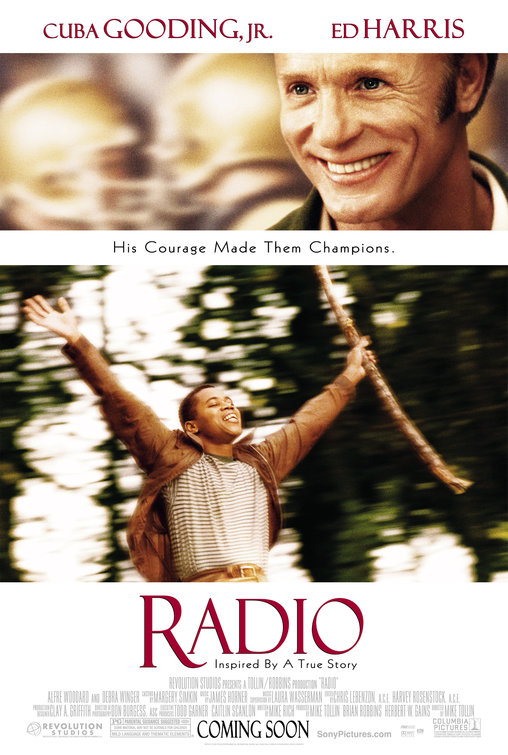
Okay, so anybody who's seen Big Fan will notice immediately that the DVD cover makes the film look like some kind of inspirational sports film starring Patton Oswalt as a mentally handicapped NY Giants fan. Seriously. That's what the juxtaposition of the picture of Oswalt to the cheering fans at the game suggests. It's very Radio-esque. That is not what Big Fan is. In an odd and pathetic way, it is uplifiting at the end, but not even close to the way that cover makes it look.

To wit, here's the theatrical poster:

First off, I will openly admit that it's less aesthetically pleasing than the stupid DVD cover, but as unmarketable as this image is, it perfectly conveys the tone of the film. This is the story of Paul Aufiero, this total loser that gives no positive impression on you and who would let a football player beat the shit out of him and do nothing. Not the chubby man-child who loves football and finally goes to the big game where the Giants win and give him the game ball.

So that's my two cents on the bungling of that DVD artwork. Stay tuned for videos.

---

Video Daily Double Part One: 40 Inspiration Speeches in 2:15.


Strangely, it kinda did the trick for me. I feel quite motivated to fight aliens or the British. Or something...


Finally, Video Daily Double Part Two: the trailer for Wall Street 2: Money Never Sleeps.


I really have no idea how I feel about this. It's a well made trailer, but I can't help but worry about the movie. It may be the most unnecessary sequel there is...

Thursday, January 14, 2010

Blogorium Review: Big Fan

People don't tend to think of sports fanatics to be the same, in any way, to comic book fans or science fiction fanatics or hardcore gamers. In fact, anything grouped together under the umbrella term "geek" is meant to suggest an unhealthy obsession with something. While there is one critical difference between the average "geek" and the average "sports nut", people who come to Big Fan based on Patton Oswalt will nevertheless see a lot of themselves in the film.

The biggest difference between a fanatic of sports and the "typical" geek is that the objects of their obsession are flesh and blood. Teams are comprised of real players who perform every week during the season, and don't have the luxury of saying "well, I'm not really Batman. That's just a character in a film." More importantly, this plants the sports fanatic's heroes and villains in the same world they occupy, particularly if you live in a city with a football, baseball, basketball, or hockey team. Despite the rarefied air they breath, the sports fanatic always has a better chance of running into the cornerback for their favorite football team than the geek will of meeting Green Lantern.

And that's exactly what happens to Paul Aufiero (Patton Oswalt) one night. Paul is a huge NY Giants fan; he spends his days composing carefully worded diatribes to call into radio sports shows with that night. Paul and Sal (Kevin Corrigan) tailgate every home game, talk the scores, the schedule, and what needs to happen to make the playoffs. He idolizes Quantrell Bishop (Johnathan Hamm), a defensive... well, I'm not sure. He sounds like a pass rusher, but I missed Bishop's actual position. When Paul from Staten Island is on the air, his love for the Giants reigns supreme, even against the disembodied voice of Phil from Philadelphia (Michael Rapaport).

But Paul is also a loser: he's somewhere between late thirties and mid forties, lives at home with his mother in a tiny room crammed with memorabilia. He works in a parking garage, has one friend, and as best as one can tell, no prospects whatsoever. His brother is a lawyer and his sister a dental assistant, and he chides them (and his mother) for bothering him about his arrested development. For Paul, the Giants are everything. There is no life worth living beyond that. I can imagine some of you can replace the word "Giants" for something "geekier" and see the parallel.

Everything changes when Paul and Sal see Bishop and his entourage at a gas station. Starstruck, they follow him to Manhattan and into a strip club. So disconnected with reality, they have no idea how to approach Quantrell, and when a chance bathroom encounter and a drink offer amount to nothing, the twosome decide to take the direct approach. Bishop and his boys are amused, to say the least, that two disheveled losers would walk up to their VIP booth, but things go well until Paul lets slip that they followed him. For that, Bishop savagely beats Paul, leaving him in the hospital for three days.

Big Fan is a character study of a man so devoted to his team that he, despite lingering head trauma, refuses to cooperate with the police investigation. Aufiero feels guilty for making Bishop angry, and blames himself for the Giants subsequent losses as their star defensive player is suspended. This would be akin, I suppose, to having a favorite actor or artist attack you, and as you recover the show or comic goes downhill, much to fandom's chagrin. I cannot quite find the accurate corollary, which is why Big Fan had to be about athletes.

I won't say too much more, because the mental breakdown Paul suffers as a result of his guilt mixed with family pressure to sue Bishop and talk radio antagonizing from Phil in Philadelphia is where the movie gets most interesting. The third act of the film moves forward in a logical, albeit disturbing fashion, but then makes a sudden turn which is both uplifting and pathetic. It all depends on where you're sitting on the matter.

Patton Oswalt is fantastic as Paul Aufiero. He embodies the "man child" in a way that's never cheap or condescending; Paul doesn't believe that he's the sad man of the story, even when he lashes out in cruel ways at his mother and siblings. His desperation for the incident to just go away is the portrait of a fan in denial, and Oswalt sells every beat with conviction. People will be rightfully surprised to see him play it straight, and it's a pity more people won't see this film due to limited availability.

Writer / Director Robert Siegel takes a very naturalistic approach to the film, in a manner akin to Aronofsky's The Wrestler (which Siegel wrote). Using RED, a new digital camera that approximates the human eye's ability to pick up low light, Siegel makes the most of the film's low budget to achieve versimilitude. Take a shot, for example, where Paul and Sal are driving through Manhattan, neon lights reflecting off of the windshield, but both men are perfectly visible reacting to the display.

Despite the "no frills" independent film aesthetic, Big Fan looks great in HD. For some reason, the film is only being released on DVD, but I still recommend you check it out. I could continue hurling superlatives as Oswalt, but it's better if you just see the film yourselves. Even if you don't know the first thing about football, I promise that many readers of this blog will recognizes themselves - and a lot of themselves they don't want to be - in Paul Aufiero, the Big Fan.

Wednesday, January 13, 2010

Things You Should and Shouldn't Look Into

I thought I'd start with an amendment to Monday's piece about The Simpsons Season Twenty. While the episodes are, in fact, in high definition, so far there's nary a widescreen presentation to be found. Based on the opening credits, I may have mistaken the jump from 4X3 to 16X9 by a season. The current run (season 21) has different opening sequences, many of which poke fun at the wider image. Still, I'm a little confused why Fox pushed so hard to rush season twenty out, since it technically misses the 20th anniversary and it's Blu-Ray release doesn't take advantage of the screen in the way fans are going to expect.

Additionally, there is literally one extra on the disc: a three minute teaser with Morgan Spurlock for a forthcoming Anniversary Special. Unfortunately, there's no indication of when the special is airing, or if it's going to be available. None of the commentaries from other seasons are present, or deleted scenes, commercials, making of's, or anything else. It screams of a quick cash-in, and I'm really not going to be shocked if you see this season released AGAIN sometime before season twenty-one.

---

For anybody with Netflix's "watch it now", while you can't see any new Warner Brothers releases, what you can do is catch two movies that are a little trickier to see: Big Fan and Che. Now Che comes out from Criterion next week, but Steven Soderbergh's four-and-a-half hour Benicio del Toro as Che Guevara epic is going to be a little steep on DVD or Blu-Ray. Luckily, you can watch Part One and Part Two in HD streaming right now. I might just do that in a bit.

While Big Fan technically came out yesterday, no store in the area was carrying the DVD and Amazon has it on a two week back order, so I wouldn't be seeing it that way until the end of the month. Netflix, sensing this problem, not only has Big Fan to watch Instantly, but they one-upped the DVD version by offering the film in HD. Since there's no Blu-Ray release listed, you're getting a bonus here.

I did watch Big Fan, but I'm going to save that review for tomorrow. In the meantime, if you have access to the movie (instantly or on disc) I highly recommend it. Patton Oswalt is excellent, the character study is engrossing, and the ending was a bit surprising. I'll say more tomorrow, but go seek Big Fan out now.

---

The Cap'n promised I wouldn't make you sit through another pan of Terminator: Salvation, and so you won't have to. I won't tell you about the reasonably interesting action sequences hampered by an idiotic story punctuated with massive plot holes. I won't tell you about the squandered opportunities or the myriad references to other films that were bungled. I won't mention the stupid ending, a weaker version of the "John Connor is a terminator!" twist that leaked prior to filming. I won't mention how toothless the film feels with a PG-13. I won't tell you all about how fake the digital Arnold face looked or the REALLY STUPID plan by Skynet that JUST DOESN'T MAKE SENSE, or how Sam Worthington's accent goes from "Southern" to his native Australian while he's hanging by a car frame. Above all, I certainly won't mention how the film feels exactly like the exercise in futility that I thought it would, but somehow manages to be even less interesting than I expected.

No sir, you won't have to sit through that, and I won't have ripped off a Harlan Ellison article to not tell you.

---

In the wake of having written my defense of Rob Zombie's Halloween II - which is the best way to prepare someone for that film, because it really is Rob Zombie's singular take on the series - I'd like to hear from Cranpire and find out what others thought. Don't get me wrong; I've seen a lot of bad reviews, but none from people I know. So if there are some guest bloggers out there, I'm asking for your input.

Monday, January 11, 2010

I Was Not Paid to Endorse Any of This Crap

Greetings and salutations! I'd like to kick off tonight's extravaganza of randomness with a response to our commenter and long time reader, El Cranpiro. He has generously offered to review Halloween 2 So I Won't Have To, even though I must admit that for all my misgivings about Rob Zombie's first go at Halloween, I do kinda want to see the sequel.

Alas, Mr. Cranpire, I have no other copies of Blood Car to give, and I'm not sure what kind of compensation I could provide for your review. However, if you want to give all the other decent readers a head's up on H2, I will happily post it under "Guest Blogger".

---

Tomorrow is a pretty spectacular day for DVD and Blu-Ray releases, even if you aren't a Halloween fan. For example, my oft-mentioned favorite Moon is coming out, along with Big Fan, The Hurt Locker, House on Sorority Row, The Brothers Bloom, and Criterion's Blu-Ray version of 8 1/2. Also, if it's your thing, The Simpsons are making a big jump forward and releasing season 20 on Blu Ray and digital versatility disc. Season 20 was the first broadcast in High Definition and in widescreen, and I've seen a handful of episodes from 20 and 21. They're better than the show's been in a while, but I'm still going to lean in the "rent" category.

In the coming weeks, you can also look forward to Steven Soderbergh's Che, Kingdom of the Spiders (with William Shatner), season five of Weeds, Magnolia on Blu-Ray, Paris Texas, The Toolbox Murders, The Complete Doctor Who 2009 Specials, and Zombieland.

---

Also, I have to bring this up, because the Cap'n has been bemoaning the absence of this film in any digital medium: on March 23rd, 2010, The African Queen is finally coming to Blu-Ray!

If you've never seen The African Queen, you're in for a treat, gang. Humphrey Bogart and Katharine Hepburn in a John Huston film from 1951. Since Paramount is so big on "anniversary" editions, I'm a little surprised they didn't wait for a proper 60th anniversary edition, but then again, having something other than my beaten up vhs copy is good enough!

---

Um, speaking of "So You Won't Have To"'s, the Cap'n wasn't paying careful attention to his Netflix queue, and *ahem* Terminator: Salvation arrived on Saturday. I'm sorely tempted to send it back sight unseen, but I have this hangup about watching what they send me, so I might swallow this crap sandwich as penance for not being more aware. Don't worry, I won't make you sit through another review if I watch T:S. Yuck.

On the upside, Monsters vs Aliens also arrived, and The Hurt Locker is arriving tomorrow. I'm not going to lie: many of the other new releases are worthy of purchase in my eyes, with full acknowledgment that I just said I prefer not to buy sight unseen. Patton Oswalt is one general exception, and I have vague memories of House on Sorority Row from Carbonated video. Halloween 2... haven't made up my mind there. It's probably a renter, but I'll let you know. Either way, look for a bunch of reviews before I head into the spring semester.

As always, Guest Blogging is welcome here at the Blogorium. If you've got something you want to review not represented by the Cap'n, write it up. Unless you're Grampa J. You can't prove that was even me in those pictures...