Thursday, January 15, 2015

Some Other Movies I Saw in 2014 (Part Two: A Few Better Ones, and Maybe Some Just Okay Ones)


 Picking up where we left off (working our way from the bottom to the top), I quickly realized that there was a movie omitted from Part One that probably should be there, because in no way does it represent a marked improvement from the last round. Hell, it doesn't even really represent a marked improvement from the last movie in the series it closes out, but when you start writing these recaps without a list, these things happen. So let's start with The Hobbit: The Battle of the Five Armies.

 Or maybe it should be The Battle of the Filler, because it's rare to see a film that is so (comparatively) short seem to totally inconsequential. I don't even really know where to start with the "bad ideas" that went into making two films into three, but it seems like every single one of them is on display in Battle of the Five Armies. Prologue that should have been the ending of The Desolation of Smaug? Check. Inordinate amount of screen time devoted to a character that doesn't exist in The Hobbit? Check. And I'm not even talking about Tauriel (Evangeline Lilly); oh no, Alfrid (Ryan Gage), the weasely assistant to the (quickly killed) Mayor of Laketown (Stephen Fry) has his own subplot that runs throughout the film, one that ends with no apparent rhyme or reason. While I don't like that Tauriel very quickly devolved into the "damsel in distress" during the battle, leaving Legolas to do all of the cool (read: wildly improbable) stuff, at least there's a character arc between her character and Thranduil (Lee Pace), and kind of with Fili (Aidan Turner). Alfrid serves no purpose whatsoever, and why Peter Jackson felt the need to keep him in the film but cut Thorin (Richard Armitage)'s funeral, I may never understand.

 Speaking of Thorin, any trace of development in The Desolation of Smaug goes out the window, replaced by "crazy, jealous Thorin, who covets the Arkenstone" and who suffers from (I am not making this up) "dragon madness." Like Smaug (Benedict Cumberbatch), and Sauron (Cumberbatch again), the carefully developed Thorin from the second film is quickly done away with. Worse still are the glimpses of who he was in scenes with Bilbo (Martin Freeman) - a tiny smile, the crack of his cartoonish façade - which punctuate chewing scenery aimlessly. After a dream sequence that's going to make the WETA digital team feel much better about King Kong's dinosaur stampede, he arbitrarily changes back to normal Thorin, which is evident not from what he says but because he changes clothes. But the dwarves need to fight alongside Dain (the voice of Billy Connolly, and the second thing WETA might not want to put on their showcase reel), so out they go, killing orcs where hundreds (thousands?) of dwarves and elves could not before.

 The titular battle rages on for most of the film, and it's hard to care about it, because the tactical maneuvering seems largely inconsequential. Cramming in a second orc army from the north to give Legolas a bat to ride on (again, not making this up) is only interesting in that it gives the film its stupidest line, possibly of the entire Middle Earth sextet: "These bats were bred for one purpose: war!" The only thing that might be as silly is the resolution to the Gandalf / Sauron storyline from Desolation, which involves Hugo Weaving and Christopher Lee's stunt double fighting the Nazgul in ghost form. It's about as logical as it sounds, and looks even sillier. Then Sauron shows up, Galadriel turns green, and blows him into the east. Gandalf takes off with Radagast (Sylvester McCoy) and by the time they're safely away, he goes from death's door to bloody nose and ready to rally the troops outside of Erebor.

 The other dwarves? Well, if your name isn't Thorin, Fili, Kili, or - to a much lesser degree - Balin or Dwalin, you pretty much don't have anything to do in the movie. At all. Also, we're going to put you in the credits after a bunch of characters from the last movie (including Alfrid), because even Peter Jackson can't be bothered to remember who's who. I suppose it's out of courtesy to James Nesbitt (Bofur) that his daughters don't get their own Alan Lee / John Howe credit sketch, let alone one that shows up before his.

 Have you noticed what I'm not talking about much, or rather, who I'm not talking about? That's right, the title character, and that's because Bilbo is sidelined in this film for most of the movie. Not because he's knocked out (like he is in the book), but because Jackson is too interested in cramming as much of every fight as he can onscreen, whether we needed to see it or not, in order to create bridges to The Lord of the Rings. Bilbo finally works into this plan during the epilogue, which at least neatly ties into the prologue from An Unexpected Journey. The less said about the quickly and haphazardly introduced Legolas, Thranduil, and Strider mid-quel bait, the better. As technically proficient as this film is, I feel like Jackson really failed to stick the landing, and that The Hobbit could have been two films with a hefty amount of extra material for extended editions, rather than three movies straining to maintain the narrative, and ultimately collapsing in the last stretch.

 On to more pleasant things, no? For example, St. Vincent, while totally predictable, coasts along largely on the presence of one Bill Murray at the namesake from the title. He's totally invested in playing a generally unlikeable curmudgeon with a thick New Yawk accent. He starts the film by telling a joke and closes it singing along to Bob Dylan's "Shelter from the Storm," which actually in no way SPOILs the film for you. That is, if you couldn't already figure out how the story plays out, based on the following synopsis:

 Vincent (Murray), is a loner, deep in debt to Zucko (Terrence Howard) for unpaid horse racing bets, as well as being a little behind paying Daka (Naomi Watts), a "dancer" that he sees once a week. He has other obligations which are going unmet, but Vincent's okay with drinking away his problems. A drunken night that leads him to crash his car into his fence and knock over his mailbox is only compounded the following morning when a moving crew for Maggie (Melissa McCarthy), and her son Oliver (Jaeden Lieberher) knock a branch loose from his tree, and landing it directly onto his car. Maggie is trying to start her life over during a nasty divorce, and her new job doesn't give her much time to watch Oliver, so Vincent reluctantly agrees to babysit - but not for free. He slowly takes a liking to the kid, but remains ever the grouch...

 Even with two wrinkles to the formula (why Vincent is nearly out of money and a mid-movie development I actually didn't see coming), you could be forgiven for thinking this is some variation on Bad Santa, Gran Torino, or even this year's Bad Words. Lieberher is actually less precocious than the young co-star from Jason Bateman's film (in particular, I challenge you not to laugh at his reaction: "that's a horrible comparison"), even if the ping-ponging of Oliver's story and Vincent's story aren't always equally interesting. McCarthy is given a harried, mostly non-comedic role, which is interesting in that you see her breaking out of the "type" she's associated with. Likewise Chris O'Dowd, who plays a mostly thankless role of "teacher who facilitates how the movie gets its title." He has a few moments of fun as a Catholic school teacher who doesn't know what to do with the "I think I'm Jewish" Oliver.

 The film is largely Murray's show, and I have no idea how first time writer / director Theodore Melfi talked the legendarily picky actor into taking the role. That said, I'm glad he did, because Murray keeps St. Vincent worth watching, despite the familiarity of plot devices, and when the movie does turn a bit, it gives him an opportunity to show a stubborn vulnerability. St. Vincent is the sort of film that I suspect your parents will like quite a bit (presuming that the people reading this aren't parents, in which case, you will probably really like St. Vincent. And thanks for reading).

 Speaking of movies your parents will like, and maybe chefs, too, there's Jon Favreau's Chef. I already reviewed it, so here's a link to an amiable little movie from the director of Iron Man and Cowboys & Aliens. I don't really have any qualms recommending it, and certainly no more or less than St. Vincent, which are ultimately harmless entertainment for the masses. For the record, there's nothing wrong with that, although the higher the list goes, I guess the more esoteric it gets. Well, other than the Marvel movies... (SPOILER for the end of the recaps).

 I didn't put up separate reviews for Life Itself, Stripped, or Supermensch: The Legend of Shep Gordon, because I couldn't think of anything to add to the existing commentary about them. I enjoyed all three, and if you're interested in the history and current struggle of the comic strip or showbiz manager extraordinaire Shep Gordon, or the final year of Roger Ebert's life, they come highly recommended. I would suppose my favorite of the three documentaries was Life Itself, which doesn't shy away from the less pleasant side of Roger Ebert, both during his career as a critic for the Chicago Sun Times but also as he struggles to live without a voice (or jaw, for that matter). It's also a great look into the heart of Chas Ebert, who I knew very little about, and about Roger as a family man.

 But if you're looking for insight into Siskel and Ebert at the Movies, you'll get that, or about his reputation as an egomaniacal young columnist, there's that too. It's a surprisingly in depth story of his life, one that coincided with his untimely death, which happens while director Steve James is working on interviewing Ebert about his fascination with film. Regardless how you feel about Ebert or his role in cultivating the concept of "film criticism" at the end of the 20th Century, it's a worthwhile investment to see Life Itself. Supermensch is also worth seeing in that I had no idea who Shep Gordon was, or how very important he was to the lives and careers of some of the (very) famous people interviewed in the film. Also, it's the first movie directed by Mike Myers that I've enjoyed in a long time, and that's worth noting in and of itself. Stripped included new illustrations by Bill Waterson (Calvin and Hobbes) and also has a rare audio interview with the reclusive cartoonist, along with the chance to put faces to names of people I've long known only for their daily strips. It's a bit more of a niche topic for documentary viewers, but no less worth your time.

It might come as a surprise to you that I'm putting Maleficent further up the ladder than The Hobbit, but while the film is not as especially devoted to revisionism as you would think, it is an interesting counterpoint to Sleeping Beauty, carried by Angelina Jolie. It has one of the most direct "rape" metaphors I can think of in a Disney film: Maleficent is the benevolent young ruler of the Fairy Kingdom, and the king wants to conquer it, so she fights back. Stefan (Sharlto Copley), a peasant turned servant of the monarchy, has known Maleficent since she was a child, and volunteers to kill her in order to ensure he ascends to the throne. But since he still kind of has feelings for her, Stefan drugs Maleficent, and while she's asleep he cuts off her wings to take back to the castle as proof of her death. That, in and of itself, is pretty rough stuff, but the "morning after" scene when Maleficent wakes up and discovers this violation is pretty potent. And as Disney movies go, it's tough to read that many other ways.

 Do I wish that Maleficent as a movie handled things a little more organically, rather than switching Sleeping Beauty around in ways that are more, let's say "convenient"? Yes. It does cast a different light on why Maleficent crashes the celebration of Aurora's birth, but the way that the film reaches around itself to connect the two is at times ineffective. The short version is that, after Aurora (eventually Elle Fanning) is shuttled off with Flittle (Lesley Manville), Knotgrass (Imelda Staunton), and Thistletwit (Juno Temple), Maleficent becomes a sort of guardian angel for the girl. The fairies are basically incompetent, and Maleficent, while angry and bitter at Stefan, becomes a surrogate mother for the girl. I mean, how else are we going to get to "true love's kiss"?

 And look, yes it's kind of sweet and certainly makes more sense (SPOILER FOR THE END OF MALEFICENT) that Maleficent wakes up Aurora from the curse and not Prince Phillip (Brenton Thwaites). I mean, he's only met her once, so take that, Disney Princess narratives! I'm actually more okay with the fact that Maleficent doesn't become the dragon when she comes to the castle; her raven, Diaval (Sam Riley) can change into other creatures at her whim. That he's usually human and generally speaking the conscience for Maleficent in the middle of the movie should be more trite, but for some reason it worked for me. The somewhat cartoonish / unfinished looking special effects, maybe not so much, but I'm inclined to be kinder to Maleficent than I suppose most people were. It seems like a lot of folks rejected the film in principle, which I can understand, but it's hardly the worst case of revisionism I've seen. It's thoroughly mid-grade Disney live action fare - neither as clever as Enchanted nor as, uh, well, I lost myself there. Enchanted and Maleficent are the only ones I can think of right now, and there's probably another, not watchable one in there.

 Speaking of Disney and something you already know, if 2011's The Muppets was The Muppet Movie for a new generation, Muppets Most Wanted is The Great Muppet Caper, but maybe not as good. I'm not sure, which is why I'm going to link Muppets Most Wanted to a movie you're almost certainly never going to hear it compared to again, 22 Jump Street. Yes, that 22 Jump Street. Allow me to make my case...

 Okay, so my distinct impressions while watching Muppets Most Wanted and 22 Jump Street were that I thought both weren't as fresh, as well written, or as fun as the movies they followed. Both films are operating on a "meta" level where they frequently comment on the fact that they are sequels, and make fun of the tropes and pitfalls that sequels often fall into, all the while also regularly falling into said pitfalls. Muppets Most Wanted literally begins at the end of The Muppets, with convenient stand-ins for Jason Segel and Amy Adams (unless they were cool with just being in 30 seconds worth of being shot from behind), which then becomes a song about sequels. If it's also a tongue-in-cheek take on The Great Muppet Caper, that's less apparent, or it's just been a long time since I saw The Great Muppet Caper. The Muppets continue their adventure, taking the show on the road under the management of Dominic Badguy (Ricky Gervais) - pronounced "bad-ghee" - through a European tour that just so happens to coincide with robberies of famous art museums by the newly released super-thief Constantine, who bears a striking resemblance to Kermit the Frog. In fact, all he has to do is remove his mole and put it on Kermit, and our hero ends up in a Siberian gulag run by Nadya (Tina Fey). Can he clear his name and salvage the prison's talent show? Will the Muppets end up taking the blame for Constantine's robberies, and what is he after, anyway?

 Meanwhile, on Jump Street, Schmidt (Jonah Hill) and Jenko (Channing Tatum) are finding new ways to ruin undercover investigations with a higher budget. After a drug bust goes horribly awry, Deputy Chief Hardy (Nick Offerman) sends them back to Jump Street, but to the new, more expensive facility across the street, where Captain Dickson (Ice Cube) assigns them to college. The scenario looks exactly the same as their last assignment (new drug on campus, students dying, find the supplier), so Schmidt and Jenko think they've got it easy. Jenko joins the football team to follow a suspect, and Schmidt investigates the dead dealer's roommate (Jillian Bell) and friends, inadvertently hitting it off with Maya (Amber Stevens). Jenko discovers that he's a natural for the football team and bonds with low level dealer Zook (Wyatt Russell), eventually pledging to the jock fraternity. The partners drift apart, bicker, and assume this is exactly the same case as last time. But this is the sequel, and one of the many wrinkles that directors Phil Lord and Christopher Miller and writers Michael Bacall, Oren Uziel and Rodney Rothman bake into the plot is that expectations are a mistake.


 This is, for example, a movie that identifies one of the suspects by his tattoo, which turns out to be his high school mascot. What is it? A Red Herring. Halfway through the film, Jump Street has to make budget cuts because it spent too much on the beginning, which, among other things, leads to a chase scene that we don't see most of (they break a lot of expensive things on campus, but we can't see it - get it?) Not all of it is so obvious, but in a lot of ways I think that the insistence on acknowledging 22 Jump Street is a sequel to a remake that nobody thought was going to be good wears out its welcome. The exception is during the end credits, which rattles through the next twenty or so Jump Street sequels, which take Schmidt and Jenko everywhere from cooking school to space, through cast changes and animated spinoffs, and at least one inappropriate children's game tied to fate of Rob Riggle's character at the end of the first film.

 Similarly, Muppets Most Wanted suffers from trying too hard to be like the last movie without adding anything to the equation. I'm struggling to remember any of the lyrics to any of the songs, but mostly it's just the concepts that come to mind: Constantine singing a vaguely disco song to Miss Piggy, Constantine and Ricky Gervais singing a song about being criminal masterminds. There's a big song and dance number at the gulag with Nadya that also includes a number of celebrity cameos as prisoners (including Jermaine Clement, Danny Trejo, Ray Liotta, and WWE Superstar Hornswoggle). The film has a sort-of "been there, done that" vibe that would exist even if it weren't conceptually similar to The Great Muppet Caper.

 Where both 22 Jump Street and Muppets Most Wanted work best is when the films strip away trying to stay ahead of the audience and just spend time with the characters. There's a twist in Jump Street that has very little to do with the investigation but that is, bar none, the funniest subplot in either film. I don't want to spoil it, but it increases Ice Cube's role as Dickson and Channing Tatum's reaction when Jenko finds out still makes me laugh. I'm not yet sold on Walter as the new addition to the Muppet team, but he does function as a voice of reason during some otherwise contrived character drama. Also, Muppets Most Wanted does integrate its cameos in more logically, and I chuckled at a throwaway line Frank Langella has as a priest during Constantine and Miss Piggy's wedding. Actually, the Sam the Eagle / EU Inspector Jean Pierre Napoleon (Ty Burrell) subplot might be more entertaining than the main story, as the prison subplot with Kermit frequently is. Fey and Burrell are clearly having a lot of fun hamming it up, while Gervais seems more constrained by the limits of Badguy.

 Ultimately, while I sat through the films feeling like they weren't quite "as good," my lasting impressions of both after they were done, warts and all, is largely positive. I remember them being more enjoyable than I did while I was watching them, and as I've revisited both, generally speaking they're better than I had talked myself into thinking they were. Maybe it was expectations, or reacting badly to the conceit of both, but 22 Jump Street and Muppets Most Wanted are both amusing, at times hilarious films that don't take themselves too seriously. If you liked The Muppets or 21 Jump Street, I strongly suspect you'll have a good time with either sequel. 22 Jump Street has the edge over Muppets Most Wanted, if I'm being honest, only because when it's firing on all cylinders, there are points where it is funnier than the first film, which is no small task. It is a hard "R," so think carefully about sitting down with the kids for a double feature...

 Coming up next: more recaps! More recommendations! Movies I liked even more than these! And also, sometime soon, ones I had high expectations for that may or may not have met those lofty goals. We shall see...

Wednesday, January 7, 2015

Some Other Movies I Saw in 2014 (Part One: The Less Worse, I Guess)


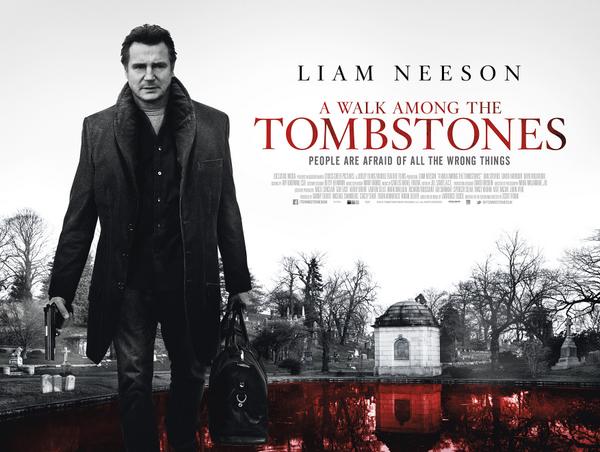
 It's fair to say that you might see the first few movies on this list and say "really, _____ made it on your 'Worst' list, but that didn't?" That's fair, I suppose; I could hide behind the veil of "subjectivity" and argue that this is my list, not yours, but the name of the blog isn't "General Cranpire's Den of Filmduggery" (note to Cranpire - that's a great title and you should use it, post-haste), so that should be obvious who the opinions belong to. Spoiler Alert: The Highest Bidder! But yes, okay, it's under a weird criteria that I determined where to stop the "worst of" without including one of last year's Liam Neeson movies (not the one where he fights vampires, I assume strictly from the title). That's how I roll, kids.


 So it makes sense to just get Non-Stop out of the way, and by that I mean mostly just link to my review from earlier this year. It was short enough to sandwich in with Bye Bye Birdie and Die, Monster Die!, so while I didn't hate it, clearly the movie didn't make much of an impression, review-wise: but, looking back at it, it's way longer than needs to be in a recap. This section of the review does seem to sum things up pretty well:

"It's almost ridiculous enough to recommend in and of itself, but the fact that the first half or so is also a decent game of "cat and mouse" works in its favor. In the "Liam Neeson, man of action" genre, it falls somewhere between Taken and Taken 2 - neither as enjoyable stupid as the former, nor as inane and redundant as the second [...] If you're inclined to enjoy movies like this, or saw the poster and said "I'll rent that," you're better off watching Non-Stop than, say, Drive Hard. If you're more predisposed towards, say, Neeson in The Grey, this is not going to be your cup of tea, but if you liked Flightplan... well, um, you liked Flightplan. Congratulations?"

 Fading Gigolo is a movie I'm guessing most of you didn't see, because it came out not long after last year's "is Woody Allen a pedophile or not" row that was everywhere between the Golden Globes and the Oscars but was pretty much gone by the time Magic in the Moonlight came out (a movie I'll be discussing in another part of the recap). At this point I'm going to stop talking about that, because I learned what a bad idea it is to mention the words "Woody Allen" or "Roman Polanski" and "controversy" on the internet. But yes, Woody Allen is in Fading Gigolo. He did not direct it - John Turturro did, along with writing and starring as the titular character, Fioravante. He's a florist, and his friend Murray (Allen) just lost his bookstore and needs money. Fioravante agrees to become an escort with Murray as his manager, in the service of eventually fulfilling the fantasy of Murray's dermatologist (Sharon Stone) and her friend (Sofia Vergara) to have a three-way.

 That's probably enough of a movie right there, but Turturro also includes an entirely separate plot about an Orthodox Jewish woman named Avigal (Vanessa Paradis) who Fioravante falls in love with, much to the chagrin of Dovi (Liev Schreiber), a community police officer. At some point, a council of Rabbis get involved, and it plays out like a bizarro version of being confronted by the mob, complete with Murray needing his lawyer (Bob Balaban) to save him from charges of being a pimp. It's a mostly harmless and sometimes amusing movie, even sweet sometimes, but not something that stuck with me for very long afterward. There's a better movie with John Turturro that will be showing up later in the recaps, so stay tuned for that.

 While we're on the subject of "better movies," I feel like there's a better movie somewhere in Alexandre Aja's Horns. Maybe it got lost in the editing, or maybe it's just inherent in the adaptation of Joe Hill's novel, but the finished product just don't quite work. It's as though Aja made a bitterly funny, black comedy, and also made a more generic, teen-friendly story of good and evil, and then smashed them together at the worst possible junctures. For the opening twenty minutes of Horns, you're probably going to think the movie is great: it has a wicked mean streak, Daniel Radcliffe is spot on as a guy everyone thinks is a murderer, that embraces the horns he grows and the power that comes with it. The way people react, first telling him their darkest fantasies and then acting on them when he says they should, is often hilarious.

 And then we hit the first of what turn out to be several, lengthy, flashbacks, giving us the backstory of Ig (Radcliffe) and Merrin (Juno Temple), leading up to her death - the one everyone assumes Ig is responsible for. Everyone, including his family - played by James Remar, Kathleen Quinlan, and Joe Anderson - is positive he did it and that he's lying, with the exception of his friend, Lee (Max Minghella). The "whodunit" is pretty easy to work out for yourself, even if Aja, Hill, and screenwriter Keith Bunin throw in a number of red herrings. I bet, without telling you anything else, you can guess who the real killer is. That's not the problem, so much as the flashbacks that put the mystery together. There's a massive tonal shift from black comedy to slightly tragic story of temptation and of good and evil (on a biblical scale), and for some reason, ne'er the twain shall meet in Horns.

 I can understand how it might have worked in Hill's novel - which I haven't yet read, but plan to - but as a film, the structure of the story is at times jarring and disruptive. Maybe there was no way to properly balance the two in a film, because Horns alternates between wicked and bland, between clever and obvious, without ever finding a good middle ground. There are some fantastic moments sprinkled throughout the film, and the cast is game for anything, playing both the best and worst versions of themselves as they encounter "evil" Ig, but Horns gets away from them. It's never quite the movie that it could be, so I'm left feeling ambivalent with the end result.

 Speaking of ambivalent, here's a good time to mention Bad Words, a movie people seemed to like a lot more than I did. While it's true that I liked Horrible Bosses 2 less than Bad Words, Jason Bateman is jerk instead of beleaguered everyman was not novelty enough to win me over what is essentially a one-note joke. If Bateman hadn't directed the film and the star was, oh, let's say Billy Bob Thornton, I somehow doubt anyone would even be talking about this, another film in the "bad" series of comedies. (For the record, that review is probably NSFW, just based on the first sentence).

  The best thing I can say about Automata is that it's a better version of I, Robot than I, Robot is. Actually, there are a lot of things to like about the film, which is not-so loosely based on I, Robot, but for some reason the film as a whole is underwhelming. There's little doubt in my mind that the film is trying to skirt by under the radar without people noticing the similarities to Alex Proyas', kinda loud, kinda dumb Big Willie Style / Shia LeBouf CGI action fest, including scaling back to rules of robotics from three to two (and changing one of them to suit the narrative - that robots can't self repair). It's a visual feast, for what I have to imagine was not a large budget (director and co-writer Gabe Ibáñez shot the film in Bulgaria).

 Stop me if you've heard this before: in the future, there's been a catastrophic global weather shift, which caused most of Earth to be irradiated. People live in cramped cities, with some living in zeppelin-like housing units. Robots help humanity, although they've so permeated the culture that they're considered just as useless as any of the other trash (shades of Elysium, if you remember that movie from, you know, last year). Cop Sean Wallace (Dylan McDermott) finds one repairing itself, and blows it away, causing the ROC Robotics Corporation to send insurance adjuster Jacq Vaucan (Antonio Banderas) to investigate. What he finds could change the ROC corporation forever, as well as endanger his boss, Robert Bold (Robert Forster) and his wife Rachel (Birgitte Hjort Sørensen) and their unborn son.

 And what does he discover (SPOILER???): that the robots are evolving, some past the point where they require humans at all. But they just want to be free, man. This doesn't sound familiar or anything, so I'm not going to belabor the comparisons to I, Robot any more. You get it. It's a more visually stylish, more sober approach to the story, after Jacq is rescued by the robots (one voiced by Melanie Griffith, who is also another character in the film, and one voice by Javier Bardem, although I didn't realize that until I saw his name in the credits). The ending is kind of predictable, but it feels like there's more at stake than in I, Robot, and that violent ends can and will come to any character.

 So why didn't I like it more? That is an excellent question, and I'm not convinced I can give you a good answer. Despite the fact that it does almost everything I, Robot does, but better, in part by giving is a Neill Blomkamp sheen or grime and decay over everything, there's something strangely inert about Automata. I can't quite put my finger on it, but instead of being invested, I found myself distanced, at times bored. It wasn't that you can see where the movie is going a mile away - that can be said of Horns, too, which is at least partly a fun ride - but that despite all of the effort into making the film look great, Ibáñez never quite makes the humans interesting. Banderas certainly gives it his all, but neither he nor the robots are all that gripping as characters. It's a very nice film to look at, and has a lot of things I would recommend about it, but I hesitate to recommend it over any of the better science fiction films released in 2014. And there were a lot, as you'll see when we get near the top of my list.

 There's a degree to which I enjoyed Batman: Assault on Arkham, one of the better DC Animated films that I've seen in a while. Despite the misleading title (this is, make no mistake, a Suicide Squad movie that Batman pops up in periodically), it's fast paced, sporadically funny, surprisingly violent, and pushes the PG-13 as far as they can with animated sideboob. Being that it's a Suicide Squad story - one tied to the Arkham games, and specifically Origins - the death toll is quite high, including many of the main characters. Unless you're a massive DC fan, you probably won't know many more characters beyond Harley Quinn and Deadshot. Maybe Captain Boomerang, and if you didn't, yes, that's a real thing. It has the odd distinction of having Kevin Conroy as Batman but not Mark Hamill as the Joker (although Troy Baker does a fine job) - also odd because Conroy isn't the voice of Batman in Arkham Origins, which ends with the setup for this movie. It's short, and I'm struggling to remember much more than a few offhand references to The Dark Knight and using the layout of the asylum you'll immediately recognize from the first game. So, uh, recommended?

 On that decisive note, we'll leave it here for now, but there's more. Next time, I'll move a little farther up the list, to mixed-positives that you might want to check out (with some caveats), although I have the feeling that one of them might be more contentious than anything included in this section. Until then...

Tuesday, December 30, 2014

The Worst Movies I Saw in 2014


 So the year is very nearly over (which year? check the title, I guess...), and as with every Year End Recap, I like to start at the bottom and work my way up. The Cap'n tried very hard to avoid movies that looked like they'd be a waste of time this year, but that doesn't mean I missed all of the rotten apples. I just didn't feel like talking about all of them, and only one had the dubious distinction of being a "So You Won't Have To". That said, unless I somehow muster up the interest to finish watching Tusk before the 31st (outcome: very unlikely), it's safe to say I've watched the worst of 2014 that I'm going to see.

 One thing you'll notice is the lack of obvious punching bags around the internet: as a general rule, if I'm not at least a little bit interested, I'm not going to see it. So that means no Teenage Mutant Ninja Turtles, no Transformers 4, no Adam Sandler or Seth McFarlane movie. I didn't even watch Jingle All the Way 2, although I did trick people into thinking they'd be seeing it*. That said, anything that makes this list is something I truly loathe, or felt like time was wasted watching. Or, maybe in the case of one movie, one that made me feel stupider, kind of like Lockout did. But we'll get to that one. Aside from the very worst movie of 2014 - which closes out this recap - there's no particular order to this, just a general cathartic primal scream of "Bad Movie! No Doughnut!"

 Shall we begin? (SPOILER: yes)

 V/H/S Viral - Remember how V/H/S was too long and only had a few good segments, but the frame story was fairly interesting even though why would you tape a Skype conversation and put it on a tape? And then V/H/S 2 was a marked improvement in every way, because it was shorter and the vignettes were more concise and creepier, even if the frame story was kind of a mess? I guess when the time came to make V/H/S Viral - which might as well be "3" based on the end of the movie - everyone involved from the producers to the writers and directors forgot that.

 The wrap around story makes almost no sense until the very end, and aside from an amusing cookout gone wrong, there's nothing but gore for gore's sake until the mysterious van that causes people go turn violent is shoehorned into the V/H/S mythos (such as it is). If clips from the first two films weren't crammed in as cutaways, you wouldn't even know it was supposed to be part of the same series. The "tapes" are abandoned completely, leaving us with a combination documentary / found footage story of a magician whose cape gives him real powers, a trip into another dimension that, initially, looks like ours but really, REALLY isn't, and twenty minutes with the most obnoxious skaters you're likely to meet, who are eventually killed by zombies or eaten by a demon the zombies are summoning.

 Of the segments, the second one - "Parallel Monsters" - by Nacho Vigalondo (Timecrimes) is the only one worth watching. That said, it's so over the top that you're liable to start laughing at the "reveal" of how the alternate universe is structured. The Day of the Dead / Skater video only gets remotely interesting near the end, when it's clear they can't kill the cult members in Tijuana. Everything else is an absolute waste of time, and I worry that trying to turn the series from a Videodrome-like vibe to a "viral video" ending (think The Signal or Pontypool, but much worse) isn't going to serve V/H/S well.

 Left Behind - Look, I know that the only reason anyone reading this was even considering watching the 2014 remake of Left Behind is for ironic purposes. You heard that Nicolas Cage was in it and then saw the awful trailer and thought "see you later, Sharknado 2!" Well, I have some bad news for you - this is every bit as boring and sanctimonious as the Kirk Cameron Left Behind, and Cage doesn't go anywhere close to MEGA until and hour into the movie. Even then, it's not for very long, because he's just trying to avoid hitting another plane. The worst sin Left Behind commits - worse even than oxymoron-ic internal logic, wafer thin characters, and groan-worthy dialogue - is being boring. Like, really, "geez this thing is still on?," boring. I can't prevent you from watching it ironically with your hipster friends, or convincing yourselves that you enjoyed it somehow, but I'll never watch it again, nor will I subject an audience to it during Bad Movie Night.

 And I made them watch Things.

 Horrible Bosses 2 - Cranpire and I disagree on this, but I found this to be a perfect example of a lazy sequel coasting on the goodwill engendered by fans of Horrible Bosses. The jokes are lazy, the shock value is lazy, most of the three times I laughed came from surprised outbursts of profanity, and even Jason Bateman, Jason Sudeikis, and Charlie Day seem to be phoning it in halfway through. They dutifully go through the motions, but it's abundantly clear that the new titular characters (a father / son duo played by Christoph Waltz and Chris Pine) are ahead of them every step of the way, and neither Waltz (barely in the movie) or Pine (in way too much of it) can muster the same sense of pure evil that Kevin Spacey does, literally phoning it in from behind a plexiglass wall in prison. You've seen every good joke in the trailer, and when Jamie Foxx's Motherfucker Jones only made me laugh once - it involves driving through a chain link fence - you know you're in trouble.

 What If - I do not understand this movie. Like, do not get it. Who is What If for? Because it feels to me like this is a movie that would appeal to Men's Rights assholes, who believe that "friend zone" is a real thing they are being subjected to. The moral seems to be that if they persevere, she totally wants you and it will work out, but it's cool to have unrealistic expectations and lash out at each other for interpreting deliberately mixed signals. I genuinely am confused about this film, because it makes a concerted effort to be a romantic comedy that portrays both sides (Zoe Kazan and Daniel Radcliffe) trying to "just be friends," but feel ambivalent about it, make overtures to be more than friends (on purpose, because there are scenes set before and after that reinforce we did not see one of them misinterpreting the other) and then get angry at the other one. Rinse, repeat.

 What is the purpose of this film? I'm being serious, because I've seen some outlandish concepts for romantic comedies, but What If goes out of it's way to represent the concept of "friend zone" as just another obstacle to true love. It would be one thing if it was just Radcliffe's Wallace being a creep, or Kazan's Chantry being totally misunderstood, but the narrative makes a concerted effort to show both of them acting behind the scenes in a way that you know they'll end up together (she refuses to introduce him to her friends, he tries to sabotage her engagement) and then spending lots of time with them not speaking to each other for doing just that! It has all the elements of a romantic comedy: the meet-cute, the dramatic plane flight to profess your feelings, the friends who set them up in secret (in this case, Wallace's roommate and Chantry's cousin, Allan, played by Adam Driver who playing Adam Driver's character from Girls). There's even the whimsical indie rock soundtrack, and because Chantry works for an animation company, her drawings come to life and float around to convey her feelings. But it all feels so unseemly because the message is that you should not respect another person's feelings about your friendship because they are into you and you just have to wear them down. I guess as long as you're Daniel Radcliffe and she's Zoe Kazan, the Men's Rights assholes are correct: just ignore the "friend zone" and keep pushing, because she'll totally realize what a great guy you are.

 In all honestly, I'd love to hear the female perspective on this movie. It feels like a movie made by guys to reinforce a particularly deplorable view of relationships that turns out exactly the day it never would. It's the meanest romantic comedy I've seen in a while, and no amount of saccharine at the end can take away the bitter aftertaste.

 The Expendables 3 - Take everything I said in my original review, and then compound it. This movie does not get better with repeated viewings. In fact, I'm kinda on the Conrad Stonebanks side of things now, because Barney Ross was a chump in the movie.

 Life After Beth - I've seen this in nearly every review of Life After Beth, but sometimes the oft repeated phrase is true: this would have been a pretty clever short film. I could see it playing at festivals, maybe winning some awards, and you'd have the added bonus of keeping the cast in place. But as a ninety minute feature? No, Life After Beth stops being funny a long time before the titular character-turned-zombie (Aubrey Plaza) goes full on undead. The premise is fun, and Dane Dehaan does an admirable job playing the straight man in what I think is the first time he isn't playing a totally sullen jerk (depending on how you feel about him in The Place Beyond the Pines).

 Most of the rest of the cast are there to play one-joke roles, like John C. Reilly and Molly Shannon as Beth's parents. It's not clear why Paul Reiser and Cheryl Hines are in the film at all until their dead parents show up (it's not just Beth who comes back, although the movie takes a while to get to that). While it's always nice to see Anna Kendrick, her part is so insignificant and underdeveloped that you wonder if the film even needed a love triangle. Plaza seems to be having fun as the increasingly unhinged Beth, who doesn't know she's dead and can only be calmed with smooth jazz, but largely speaking, Life After Beth has a lot of good small ideas that do not sustain its running time.

 The Sacrament - It's maybe not fair to put this in a "worst of" list, but I don't feel like Ti West's retelling of the Jonestown Massacre holds up under its own "found footage" gimmick. If you can't sustain your own internal logic, I don't care how interesting the cast can be or what suspense you manage to generate.

 They Came Together - For the first time that I can remember, I found myself thinking (and eventually saying out loud) "I think I hate this David Wain movie." Say what you will about how over-exaggerated parts of Wet Hot American Summer or The Ten are, at least there's some bite to the way they approach their subject matter. Wain, who co-wrote They Came Together with Michael Showalter, brings a sledgehammer to romantic comedies, and approaches the tropes with all the subtlety that Gallagher brings to a watermelon. It could be funny, like Wet Hot American Summer, except there's a lingering sense of "see how funny we are to skewer these movies?" And by that, I mean literally, the characters look at the camera after saying something stupid or cliché to undermine the entire façade.

 It reminds me of how a friend described the difference between Joel and Mike on Mystery Science Theater 3000: Joel was a guy who made the best out of a bad situation by poking fun at movies, but you got the sense that Mike really wanted to stick it to these turkeys. That's They Came Together in a nutshell: a movie that aggressively tears apart every overused rom-com gimmick and then stands there and says "look at what I did; I really gave them what for, am I right you guys?" What's weird is that Showalter already did this in the much better The Baxter, a movie about the guy who the girl always leaves for the lead character. It's a smarter movie, the jokes are better developed, and the execution isn't as grating or obvious, which makes They Came Together all the more baffling. The film even lacks most of Wain's signature non-sequitur moments, the ones that really make movies like Wet Hot American Summer memorable. Instead of "I'm going to fondle my sweaters," Christopher Meloni's character shits himself at a costume party and tries to pretend he came dressed in a robe. That's the joke. I guess the fact that her parents are white supremacists or that his grandmother wants to have sex with him are supposed to be funny in a shocking way, but Wain is far to invested in sticking it to romantic comedies to go anywhere with either setup.

 Were it not for Paul Rudd and Amy Poehler trying really, really hard to keep me invested, I think I might have turned They Came Together off after twenty minutes. The rest of the cast, who includes Bill Hader, Ellie Kemper, Michael Ian Black, Cobie Smulders, Ed Helms, Melanie Lynskey, Jack McBrayer, Kenan Thompson, Ken Marino, Adam Scott, Michael Shannon, Jeffrey Dean Morgan, Randall Park, John Stamos, and Michael Murphy, land mostly on the side of "annoying," showing up for a scene or two to mug shamelessly and then exit the film. If you had told me this was the Farrelly brothers follow-up to Movie 43, I'm not sure I would have doubted you, but it shocks me that I hated a David Wain movie this much.

 See No Evil 2 - I'm not going to waste much time talking about this movie. I guess that maybe I thought going from a porn director in See No Evil to Jen and Sylvia Soska (American Mary) could have only have been an improvement, but apparently the only memo they got was "use fluorescent lighting in a hospital and make every hallway look the same." I thought the first movie was underdeveloped on every level, but at least it was grimy. This one is sterile, dull, and the gore is perfunctory. Maybe you could say that it's cool to see Katharine Isabelle (Ginger Snaps) and Danielle Harris (Rob Zombie's Halloween 2) in the same movie, but SPOILER they both die. In fact, forget it, SPOILER everybody dies except Jacob Goodnight (Glen "Kane" Jacobs), who the Soska's can't find anything to do with other than kind of give him a "monster" costume, consisting of a mortician's apron and one of those masks NBA players wear when they break their nose. Forgive me if I sit out the inevitable See No Evil 3, because WWE Films loves to make franchises out of movies that don't need them (*coughTheMarinecough12Roundscough*)

 Lucy - If you hadn't guessed, Lucy is this year's Lockout. It may be the stupidest "high concept" sci-fi / action movie I've seen since, well, Lockout. I guess Luc Besson genuinely didn't understand the "10% of our brains" metaphor, because he literally uses brain percentage as the hook for how Scarlett Johannson goes from normal party girl to transcendent god-like being in ninety minutes. It's a mind-bogglingly stupid movie, in just about every way it can be, and in good conscience I couldn't put it anywhere other than on this list.

 That said, if you have some friends coming over with a case of beer, Lucy is a rollicking good time as bad movies go. Make no mistake, you're going to feel less intelligent by the time it's over, and if you happen to know a scientist (in any field, but I suppose a neuroscientist would be the best), there will be a lot of "wait... no, that can't happen" said aloud. In fact, I can almost guarantee you this will be playing at Bad Movie Night in a few months, possibly with Lockout. I'll see if I can't lower the IQ of the room by a few points. Besson goes all in with audacious stupidity with Lucy, and if you can put aside the improbability of, well, everything, it's a breezy ride of dumb fun. Just don't pretend it's anything else.

 Sin City: A Dame to Kill For - I was just going to link this to my "So You Won't Have To" review from earlier this fall and be done with this terrible movie, but when it came out on Blu-Ray, I read a couple of write-ups from reviewers I normally respect giving Robert Rodriguez a pass for this piece of shit. That I cannot abide. Being forgiving of Sin City: A Dame to Kill for because it has more of a narrative through line than Machete Kills is, to me, unacceptable. It's like saying that Resident Evil 5 is okay because it's not as terrible as Resident Evil 4. No, it's not okay - at the end of either one you feel cheated and that you wasted time that could have been put to better use. Interesting tidbit about Resident Evil 5 and Machete Kills: both are glorified trailers for as-yet-unreleased sequels disguised as a feature film.

 Is it true that Sin City: A Dame to Kill For is better than Machete Kills? Eh, maybe. Does it matter? Nope. Unless you're some kind of die hard Sin City fan that can also somehow divorce yourself from how much cheaper, poorly thought out, and lazily constructed the second film is from the first (let alone the ways it mangles the source material despite that fact that the creator co-directed the adaptation), there's nothing worth watching this for. Nothing. If you really need to see Eva Green naked and don't have the internet, pick almost any other film she's been in. Hell, watch the Frank Miller-based 300: Rise of An Empire, which while also not great, is better than A Dame to Kill For in nearly every aspect. Want to see Joseph Gordon Levitt in a crime movie in over his head? Watch Looper or The Lookout. If you watch Looper you'll even see Bruce Willis giving a shit about his role. For everything else, just watch Sin City. As many problems as I have with the first movie, it still does everything better than A Dame to Kill For.

 I'm genuinely convinced that Robert Rodriguez forgot how to make movies, or maybe just does not care anymore. Maybe he was too interested turning From Dusk Till Dawn into a ten hour miniseries I couldn't finish. The only directorial flourishes in A Dame to Kill For are ones that echo the worst parts of his digital era to the present. This is easily the worst movie I saw this year, and I watched Things twice. This year! At least Things rewards you with this at the end of the movie:


 A Dame to Kill For is one of my favorite Sin City stories, which makes it all the more egregious that Robert Rodriguez and Frank Miller butchered it so badly. There's nothing to give this movie a pass for, and I totally feel like it deserves the rotten reputation it has. I don't think critics were overly harsh panning this crap - the negativity is right on the money. Avoid it at all costs, and just read A Dame to Kill For again.

---

 Next time we'll go up the ladder a bit, discussing some movie the Cap'n liked, or kind of liked. I might save the movies I had high hopes about for its own column, since it'll cover many of the major releases that didn't get coverage at the Blogorium this year. Stay tuned: the top of the list is a random assemblage this year...

 * Instead, we watched Grumpy Cat's Worst Christmas Ever, which has the distinction of being either the second best or second worst "talking cat" movie I saw this year, depending on how you feel about A Talking Cat?!?!?

Wednesday, December 3, 2014

Blogorium Review: Nightcrawler


 Louis Bloom (Jake Gyllenhaal) is not a human being. He looks like one, or an approximation of one, anyway, but he isn't. The term "sociopath" doesn't do someone like Louis Bloom justice; not only does he not care about anyone or anything not directly connected to his agenda, they barely register as human beings at all to him. At best, they're objects he can manipulate, blackmail, or (in some instances), literally drag around to serve his purposes. We meet Louis Bloom as he assaults (possibly kills) someone who may or may not be a police officer / security guard and steals his watch - a visual metaphor that pops up periodically throughout Nightcrawler, as a reminder of sorts. Louis steals some construction equipment and some raw materials, and sells it to a scrapyard owner (Marco Rodriguez). While he's there, Louis makes his case that he should also be given a job, and doesn't quite register that the owner looks upon him with disdain. Only when he's told "I don't hire thieves," does Louis get the message and leaves.

 This is the protagonist of Dan Gilroy's Nightcrawler, the sort of film that makes one long for the days of decent antiheroes like Travis Bickle. It's certainly an interesting film, one that has a few rookie mistakes and a score that nearly cripples the film, but on the whole there's more to recommend than not. That is, as long as you don't mind spending two hours watching a "rags to riches" story where the scrappy young hero is replaced with a total psycho. It's a riveting performance from Gyllenhaal, and the rest of the cast is quite good as well, but I can't honestly say that I'm in any hurry to watch Nightcrawler again. There's a level of cynicism about humanity in Nightcrawler that makes the end of David Fincher's Gone Girl look like Pollyanna by comparison. And how Gilroy gets Louis from a low level scumbag to a truly frightening success story is by no means pleasant.

 By chance, Louis comes across an accident on the highway, and is subsequently introduced to the world of "nightcrawlers": independent videographers who shoot footage of crime scenes, accidents, or likewise grisly occurrences, and sell them to the highest bidder. Right after Louis pulls over, the van for Mayhem Productions pulls up, and the ever inquisitive Bloom grills Joe Loder (Bill Paxton) about what he does. An entrepreneur without a direction, Louis decides he has an objective, and will stop at nothing to be like Loder. Better than Loder. His people skills aren't great: Louis doesn't so much speak to people as he regurgitates business seminar talking points, applying them to himself as necessary. We don't know much about his life: he has an apartment with a TV and a plant, and beyond that, he's a cipher. It's not who Louis is, but what he's capable of doing that Gilroy is interested in showing us.

 In many ways, Nightcrawler follows the narrative structure of a "rags to riches" story almost exactly, only to horrifying ends. Louis buys a camera and a police scanner, makes mistakes, but eventually finds some usable footage and sells it to the lowest rated news channel in Los Angeles. He initiative impresses the news producer, Nina Romina (Renee Russo), although she has no idea what his real agenda is. He hires an intern, Rick (Riz Ahmed), a mostly homeless kid in desperate need of work, and relentlessly insults his inability to do exactly what Louis wants when he wants it. But they make it work: accident after accident, crime scene after crime scene, Louis builds his reputation. He's not above sneaking into somebody's house or moving evidence around for better shot composition. When he arrives at an accident before the police get there, Louis even moves a body in order to get more compelling footage. Ethics don't even factor into Bloom's world, much to the chagrin of KWLA's Frank Kruse (Kevin Rahm), the station director.

 At this point, we should probably be a little worried about where Nightcrawler is headed, although I will admit that I wasn't sure just how far down the rabbit hole we would be following Louis. He refuses an offer to join Mayhem Video and then goes one step further to insure his competition won't be around much longer. He arrives at a triple homicide before the killers have even left, and then spends time wandering around the house filming the bloody aftermath, and then withholds crucial evidence when detectives Frontieri (Michael Hyatt) and Liberman (Price Carson) track the news report to its source - Bloom's newly coined "Video Production Services," a "legitimate news source" as he demands Nina describe it to her anchors. His manipulation of Nina is arguably even worse, as he both emotionally and professionally blackmails her (the former off-camera but the latter very much in evidence onscreen). He takes umbrage to Rick negotiating a salary before a tense high speed chase, which leads us to the ultimate revelation of just how far Louis is willing to go to be the best nightcrawler in Los Angeles.

Gilroy (The Bourne Legacy, The Fall), who wrote and makes his directorial debut with Nightcrawler, does a fine job of showcasing the actors in this seedy, underexplored portrait of LA. It's largely Gyllenhaal's show, but Russo and Ahmed in particular are very good as the dual sides to how an actual human being would react to someone like Louis Bloom. Other characters come and go without much impact - even Bill Paxton barely registers as "the competition," and while the film is technically sound, it often feels inert. Gilroy seems to come to life during the high speed chase towards the end of the film, but Nightcrawler is often too low key, relying on Gyllenhaal to carry the narrative forward, by hook or by crook. The level of cynicism on display calls for something perhaps a little showier, if I'm being honest. Not too much, but there are portions of the middle that drag and lack momentum. I wouldn't consider it unfair to compare Nightcrawler to another writer-turned-director debut, Robert D. Siegel (The Wrestler)'s Big Fan, which covers a similarly troubled protagonist, and is likewise an interesting watch but not a film I'd hurry to revisit.

 More problematic is the score by James Newton Howard (The Happening), which is often jarringly inappropriate. If the direction is low key to a fault, the score is too traditional: there's often no subtlety to the music, to the point I found it distracting at critical parts of the film. If it was meant to be a deliberate juxtaposition between the character beats and the traditional story structure, it doesn't succeed at all. And, barring that, if this is simply what Howard thought fit best with the footage in front of him, he failed completely. If ever a film called for minimalist scoring, it would be Nightcrawler (I have seen reviews that suggested something closer to Cliff Martinez's score to Drive would be more appropriate, and it's a fair point). If anything, the music hurts the film more than Gilroy stretching his wings as a director.

 And yet, I would recommend Nightcrawler on the strength of its performances, provided you don't mind seeing a movie where the evil are rewarded and the good mostly punished, or otherwise relegated to obscurity. The point of view in the film is strictly from Bloom's perspective, so don't be surprised if your impressions of him match the befuddled reactions during points when he does encounter a genuine human being. Louis isn't one, and he's perhaps the least likable antihero in a long line of them, but if you don't mind taking a ride into the depths of darkness, Nightcrawler is a compelling trip downward. Just make sure you have something light to follow it with after you're done. Maybe a Lars Von Trier / Michael Haneke double feature...

Friday, November 14, 2014

Blogorium Review: John Wick


 I'm well aware that nobody is going to believe me that the Cap'n willingly sat down to watch a new Keanu Reeves joint. After all, I'm one of those Day One Matrix deniers who still doesn't get why everybody is so gaga about the first movie. Technically proficient, fun to watch action movie with pretensions of being high-minded science fiction? Sure, and most certainly to the second part, because if you name-drop Baudrillard in your movie and then he says you missed the point of Simulacra and Simulation... yeah. You know kung-fu. I still laugh when I think about that. Also, it's Dark City a year after Dark City came out. But I'm not here to re-litigate arguments from fifteen years ago. The point is that while I've seen many Keanu Reeves movies (including The Replacements), it's always with a groan or rolled eyes. The Cap'n has always been kind of a jerk when it came to Ted Theodore Logan, especially in his "action" phase.

 But yeah, John Wick. The trailer looked great, and I already enjoyed Man of Tai Chi (directed by and starring Reeves as the bad guy), so what the hell? A good, straight ahead revenge movie usually scratches my itch, and John Wick had a pretty solid premise: a retired hitman (Reeves) loses his wife, his car, and his dog in the span of a few days. The last two happen in one fell swoop, thanks to some Russian mobster (Michael Nyqvist)'s idiot kid (Alfie Allen), who just decides to break in to Wick's house because he wouldn't sell him his 1970 Mustang. Everybody, including his father, is immediately aware that this was a bad, bad idea, because John Wick is something of a legend among hit men.

 There's a stripped down quality to John Wick, directed by longtime Reeves stunt double Chad Stahelski that's refreshing in a way. I don't need every action movie to reinvent the wheel or throw in some crazy gimmick; as much as I find the Fast and Furious sequels entertaining, the ludicrous need to top themselves is funnier than it is exciting. John Wick reminds me a little bit of Payback in tone, but with more aggressive, brutal fights. Stahelski resists the current urge to edit every fight scene to the point of incomprehensibility, and we, the audience, are rewarded with long takes where Reeves mixes in a combination of kung-fu, gun-fu, with a touch of MMA-based grappling thrown in when he doesn't have an option. John Wick is not a man with whom you should mess, and everybody in the film except for Iosef (Allen) seems to understand that.

 After the idiot steals the car, he takes it to a chop shop and is promptly punched in the face by Aurelio (John Leguizamo) for having the audacity to bring John Wick's car to him. He asks him "do you know whose car this is?" and Iosef looks at him like he's insane. When Viggo (Nyqvist) calls later to ask Aurelio why he struck his son, his response to the explanation is "Oh," and he hangs up. Viggo knows his son is dead meat, and with a sense of resignation, he goes through the motion of trying to protect him: he calls Wick (it doesn't go well), he has his assistant, Avi (Dean Winters) put a contract on Wick's head, and he puts the boy in a safe house. But he knows how this is going to end. He even tries to explain it to his clueless son how dead he is, providing as much exposition about Wick's pre-retirement life as we're going to get juxtaposed with Reeves smashing open the floor. That's where the weapons and gold are - he'll need both to find Iosef, and he will find him.

 From there on out, John Wick the movie is a singular quest for revenge, and to facilitate that Stahleski and screenwriter Derek Kolstad (The Package) give us a glimpse into the underground world of assassins, without ever shifting or muddying the narrative. This gives them the opportunity to include a lot of recognizable actors from actions films (and elsewhere) to have a moment or two to shine in the film. Wick goes to The Continental Hotel, a place where hired killers can stay without fear of being attacked, thanks to house rules. It's run by Winston (Ian McShane, Death Race), who's surprised to see John walk back into his downstairs club. Adrianne Palicki (G.I. Joe: Retaliation) plays Jenkins, who's willing to violate the rules of the Continental in order to double the bounty on Wick's head. 

 Willem Dafoe is Marcus, a mentor of Wick's who may or may not take Viggo up on the bounty. The Wire's John Reddick and Clarke Peters play the concierge at the Continental and Harry, an associate of John's who agrees to watch Jenkins. You might also notice Kevin Nash (The Punisher), Keith Jardine (Gamer), Randal Duk Kim (The Matrix Reloaded), Daniel Bernhardt (Bloodsport 2), and Bridget Moynahan (I, Robot) briefly appearing as his dying wife. My favorite cameo is actually the leader of the cleanup crew that Wick calls, played by David Patrick Kelley (Commando). After a botched hit on his house, Wick calls out for a "reservation for twelve," which brings Charlie (Kelley) and two three burly guys in a "cleaning" van who meticulously clean the place up. It follows a scene where a Jimmy (The Newsroom's Thomas Sadoski), a local cop, responds to noise complaints at the Wick residence and finds John, post-neck snapping. Even Jimmy knows not to ask too much, so he nervously says, "you working again?" and then leaves Wick to his business.

 It's Reeves show, however, and he carries the film with a stoic, reserved performance, punctuated only by outbursts of brutal, focused violence. It's not often when you can make a headshot feel that rough, but Stahleski and Reeves work hard to make every blow register, every shot hurt. And Wick doesn't go unscathed - as good as he is, there's a little ring rust, and small mistakes add up over the course of the film. Of course, that leads to one of the best parts of the final fight between Reeves and Nyqvist, involving a knife, an abdominal wound, and a broken arm.

 There's really not much in Reeves' performance that's reminiscent of the wooden line readings I used to dread, and even when he does open up emotionally, it's with a seething rage that's more menacing than comical. Despite being emotionally devastated not once, but twice, Reeves bottles most of that up and give John Wick a steeled determination. His biggest laugh in the film is actually intended to be a joke, but his deadpan reaction to the joke is arguably funnier (it's in the trailer - the laundry scene), but it's supposed to be.

 Nyqvist and Allen are both good, the former more so than the latter, but mostly because Iosef is such a one note character. Despite having to be a Russian for no apparent reason (they're good villains, I guess) the Swedish Nyqvist brings a lot of nuance to a character that could have easily ended up like Rade Serbedzija's in Taken 2. He knows he can't be John Wick, and even in his small moments of hubris, where Viggo thinks he has an edge, there's a lingering doubt. Wick helped build his criminal empire, by doing the "impossible" hit, and he's not a man to try and stop. They have the mandatory final fight - hand to hand, in the rain - but it doesn't feel perfunctory. It's just the only way this can end.

 For me, John Wick feels like the culmination of a new era for Keanu Reeves, one where he's stepped back from doing big, blockbuster Hollywood movies in order to focus on projects he's passionate about. I had originally thought he stepped back after the third Matrix movie, but a glance at IMDB reminded me of Constantine and The Day the Earth Stood Still. One of those I liked and one I really didn't. Take a guess. I guess Street Kings would fall under that umbrella, too, but I think of that more as a first step for David Ayer that made it all the way to Fury this year (more on Fury another time).

 What I'd mostly remembered from Reeves was roles in smaller films that I liked a lot more, like Thumbsucker or A Scanner Darkly. That seemed to me more like the guy who took a supporting role in My Own Private Idaho than the star of Speed or Point Break. He narrated and conducted most of the interviews in Side by Side, and then spent a few years trying to make 47 Ronin happen (still haven't seen that one, but didn't hear great things), and the aforementioned Man of Tai Chi, which is less bombastic and more focused on good action choreography. And good action choreography is getting harder to find these days - just watch an Expendables movie if you doubt that. Maybe culmination is the wrong word - it's more like the "coming out" party for a new era of Reeves, the badass action star, not the one we underestimated because of his predilection for air guitar a long time ago (and, maybe, again).

 I don't always expect or even need action movies to be totally innovative or cutting edge. If you can tell a simple story very well, then that's just as welcome - sometimes even more so. John Wick is a very, very good revenge film, one that doesn't try crazy tricks or editing chicanery. If you're looking for a low-frills, quip-free, meat and potatoes action movie, this is right up your alley. In fact, I find it kind of amusing that most of the negative reviews of John Wick (which there aren't a lot of that I saw) use the fact that it's not somehow "groundbreaking" or "game changing" enough as the reason for it not being good. Oh well, if that's the worst you can say, I think John Wick's going to be okay.

  It gives you a glimpse into a world you wouldn't mind revisiting, with characters that would be interesting to see again. Some of them live, some of them don't, but since John Wick is wholly invented, I wouldn't say no to more films that took place before or after this one. Or, if it's a one-off, like Steven Soderbergh's Haywire, so be it. But I wouldn't say no to more movies with Mallory Kane or John Wick. And if you told me ten years ago that I would welcome more action movies from Steven Soderbergh or with Keanu Reeves, I might have called you crazy. Thankfully, the Cap'n is wrong sometimes. So put aside your inner doubts and see John Wick. It's much better than you're giving it credit for, sight unseen.

Thursday, November 13, 2014

Blogorium Review: Interstellar


 Christopher Nolan really does seem to be swinging for the fences with Interstellar, a very ambitious science fiction tale of human exploration beyond the reaches of our own galaxy. To push the baseball metaphor a little further, let's imagine that he's stepping to the plate with bases loaded, hoping to hit a grand slam and end the game in dramatic fashion. Instead of knocking it out of the park, Nolan ends up bouncing the ball off of the top row, resulting in a ground rule double. Two runners still score, and overall he's done a good job for everyone involved, but it's not the statement victory everybody was hoping for. Whether that's a bad thing or not is up to what expectations you bring when you sit down to watch Interstellar.

 This is going to be a review with SPOILERS because that can't be helped. Nolan's mostly cryptic trailers tell you very little about what transpires during Interstellar, and while I enjoyed the film overall, two of my biggest problems with the film happen during the third act, and neither of them are addressed at all in the advertising campaign. I would advise you to go in knowing as little as possible, so be aware that past this point I will be discussing Interstellar in its entirety.

 To quickly cover the basics, Interstellar is the story of Cooper (Matthew McConaughey), a test pilot who crashed or had some sort of incident at one point that prevented him from being an astronaut. Luckily for the engineer, he also had a farm he could work on, where he lives with his father-in-law Donald (John Lithgow) and two children, Tom (Timothée Chalamet) and Murphy (MacKenzie Foy).

(For the record, Cooper goes by "Coop" and Murphy by "Murph," because I guess monosyllabic names work better in this family).

 Mom's out of the picture because we're in the near future, where dust storms have wiped out all but the most rudimentary technology and almost all plants are dead. Coop's farm is growing corn, one of the last holdouts from the new dustbowl (Okra goes early into the movie, which from where I'm sitting is no big problem). There's not a lot of discussion in the film about how this happens, and Interstellar is strictly middle-America and space, so don't ask about what densely populated cities are doing. Nolan and his brother Jonathan keep the script focused specifically on the Earth being unsustainable, but since we've abandoned wasting money on space exploration, what can we do?

 Nolan does a pretty good job of setting up the world of the future without showing too much: the beginning of the film is presented like a PBS documentary, with lots of "talking head" shots of old timers telling us what it was like when things changed. At least one of them was way more famous than I'd expected to appear at the beginning of the movie, but it turned out she was a sneaky third version of a character we'd be meeting later. They cover all sorts of things you wouldn't think of but would probably be doing if there was an inch of dust over everything all of the time, like put your dishes out on the table upside down (maybe there are no cabinets in the Midwest?). It gets the job done pretty well.

 It's a sparse world that Coop and company live in - other than lots and lots of corn, you don't really see anybody. There are no animals in the film at all, and the town he lives near seems pretty deserted early in the movie. I can't remember seeing any other students at Tom and Murph's school; only the principal and Murph's teacher, who asks Coop to tell her the Moon landing was a hoax (the Room 237'ers win in the future and textbooks are rewritten to talk us out of believing space exploration existed). The only crowd you ever really see is at a baseball game (see what I did there? hint: first paragraph), where John Lithgow complains that popcorn isn't something you should have at a baseball game. He wants hot dogs. Well guess what, corn farmer, you should be grateful people are buying your product - you know, the only available one. The players are wearing Yankees hats, but I don't know if they're supposed to be that Yankees or just some local guys. It doesn't matter, because the game is interrupted by a huge dust storm. There's not crying in baseball, and also no finishing the game because of dust delays.

 Coop brings down a drone because he's a mischievous sort, but a strange magnetic incident in the house (Murph calls it her "ghost") leads them to a secret NASA facility where his old mentor, Professor Brand (Michael Caine) is working on humanity's last chance: a ship capable of travelling through a wormhole near Saturn. How or why the wormhole got there is mentioned, but not speculated on, but NASA sent twelve astronauts into another galaxy in the hopes of finding a new home for humans. Three signals (Dr.'s Mann, Edmonds, and Miller) have come back indicating likely candidates, so Brand wants Coop to fly the ship into the wormhole and investigate. The crew of the Endurance also includes Romilly (David Gyasi), Doyle (Wes Bentley), Brand's daughter (Anne Hathaway), and TARS (Bill Irwin), a robot on loan from what's left of the military. One of the first things TARS does during takeoff it to make a joke about shooting Coop out of the airlock, just in case you didn't think Nolan was aware that Interstellar is often reminiscent of Stanley Kubrick's 2001: A Space Odyssey.

 That, it turns out, is not a bad thing, at least for the first half of Interstellar. Once we get into space, Nolan stretches out a little bit for some big time spectacle filmmaking, and if you thought you needed to see Gravity on a big screen, Interstellar demands the largest one you can find. Also, one with comfortable chairs, because with the trailers and ads and everything else, you're looking at a three hour minimum investment. But for a lot of the movie, it's worth it. We've seen the vastness of space before, but Nolan's choice to keep the camera attached to the ship most of the time (like we see it in actual NASA footage*) adds a verisimilitude to the proceedings that helps sell the science fiction elements. McConaughey's folksy twang and a more dialed-back than usual Anne Hathaway also help in that regard. They're scientists, but they aren't science types, if that makes sense. They understand the consequences of their actions and have to weigh the adverse effects of their decisions while soaking in the fact they're in another galaxy.

 If I'm being honest, I would have liked more of the exploring the other planets instead of the part of Interstellar that you don't necessarily get from the trailers: the back and forth between Coop in space and his family on Earth. Instead of focusing on relativity and black holes, we have to keep jumping back home to see that Murph stills hasn't forgiven her father and now she's grown up and is Jessica Chastain (Tom is now Casey Affleck disguised as Ben Affleck in Argo). Murph is working with Professor Brand on how to save everybody on Earth because they haven't heard from the ship in 23-ish years (2 years to Saturn plus another 21 thanks to a disastrous turn of events on the first world they land on). It's here that the Nolan brothers introduce the theme of Interstellar that isn't about exploration: that love may be a tangible concept that transcends dimensions and we just don't understand it yet. Oddly enough, the internet's least favorite person (Anne Hathaway) delivers the best monologue about it, but it leads Interstellar down a path I maybe could have done without. The space exploration was so much more interesting, and the Earth plot isn't.

 Since we've moved to the "gripe" stage, it would be nice, just once, for writers to drop the well worn science fiction trope of "scientist from the previous mission goes insane and nearly ruins the mission." It nearly derailed Sunshine, an otherwise sober, intelligent movie that drastically shifts into a slasher film near the very end, complete with its own Freddy Krueger. The Nolans don't do anything quite so drastic, but it's clear from the moment that Dr. Mann (Matt Damon) wakes up from cryo-sleep that he's not selling Coop, Brand, or Romilly an honest bill of goods about his planet or his agenda. Not only is it predictable what he's eventually going to do, but the "turn" is almost comical as he leads Coop out to the middle of nowhere for a fistfight. Instead of, oh, I don't know, appealing to the team that losing one of the four remaining scientists tasked with keeping the human race alive is detrimental to all of them.

 This works to a certain lack of logic that is, I must admit, typically when you think carefully about Christopher Nolan films, from the Batman series to Inception, or even back to Memento. After an impassioned speech by Brand about why they should fly to Edmonds' planet instead of Mann's (they only have enough fuel to pursue one of the remaining leads), Cooper and Romilly reasonably determine that Mann's reports are better than Edmonds'. If we were to approach the same reasoning to Cooper's decision to go back to Earth on the off chance that he can disprove the "Plan A can never work" argument that conveniently surfaces right after they've revived Mann, there's no way the other three would allow him to go back through the wormhole. Ignoring the convenient timing of Murph's message, we already know that there's no guarantee of when Cooper would be returning to Earth, or even if there's enough time to come up with a plan to save humanity.

 This brings us to the second part of Interstellar that I can't quite give a pass to: after Mann tries to steal the ship and blows up part of it when he tries to open the airlock without docking, Cooper pulls off a near impossible feat of docking while the wheel is spinning (think of a sped-up version of 2001) and decides to send Brand to Edmond's planet using the black hole's gravitation to slingshot her (remember, not enough fuel). This means that Cooper and TARS have to pilot the other two shuttles and sacrifice themselves by being sucked into the black hole, where we've been continually told is a singularity they really would love to know more about. Invariably, Coop is sucked into the singularity and finds himself outside of the ship, floating in a strange, multidimensional space. Upon further investigation, he realizes he's behind the shelf in Murph's bedroom, and that (wait for it) he can slightly effect physical space around her throughout her timeline. Yes, Coop is his daughter's "ghost," and if he can communicate with her, he'll be able to save humanity where Professor Brand failed.

 I wouldn't have so much of a problem with this part of Interstellar were it not for the point when TARS chimes in over the radio and Coop begins explaining what's happening and what he's going to do. Like, out loud, literally explaining to the audience exactly what they're seeing, it's implications, and how he can communicate with grown up Murph (through a watch he left behind, using Morse Code). Nolan takes all of the ambiguity out of the sequence, and flat out tells us (through Coop) that humans evolve to the point where we can see beyond all dimensions and create the wormhole to save ourselves. I'm not spoiling anything because that's what McConaughey says, almost verbatim. At the outset of the "ghost" section, I really thought "he's not going in this direction, is he?" but by the end, when even the cheap seats are being spoon fed the plot, it was almost too much.

 And had Interstellar not regained some of its footing at the very end, when Nolan successfully pulls at the heartstrings (at least for the Grinch-like Cap'n), there's a strong possibility I would have come out hating this movie. The emotional manipulation is transparent at the end, and I'm not going to pretend it isn't, but Nolan finds a way to make Cooper meeting the old version of Murphy (Ellen Burstyn, who I did not recognize at all**) poignant enough that I could overlook the Saturn space station that looked like Elysium, dumb baseball callback, and implausible ending where Coop steals a spaceship to go find Brand. Looking back on it, I'm not sure why I'm okay with that, because when you apply logic to it, that's a really stupid way to end a movie that tries hard not to be dumb, scientifically. But that's how Christopher Nolan films are, I guess: they're fun to watch, offer astounding visual spectacle, and make about as much sense as Bazooka Joe gum in retrospect.

 The acting is solid all around, and if you're one of those people who inexplicably hate Anne Hathaway, this is not going to be on your "Exhibit A" YouTube videos. On the other hand, if you aren't down with the McConaughnissance, you'll find plenty of "all right, all right, all right" in his sometimes mumbled dialogue. I thought he was fine, but something about his drawl is always going to invite the "he's just stoned" reaction, and this won't change that. Jessica Chastain has a lot of screen time in the second half, but Murph is such a cipher of a character that she doesn't have anything to work with. Casey Affleck gets even less, and he registers about as much as Wes Bentley, who has half as much screen time and dies (hey, I said SPOILERS a long time ago). Nolan sneaks in a bunch of well known actors in small roles, well beyond the "oh, I forgot Matt Damon was in this!": David Oyelowo (Rise of the Planet of the Apes) is Murph's principal, William Devane (Payback) is a member of NASA, and for no discernible reason, Topher Grace (Predators) just appears as Murph's friend late in the film. I guess he's the doctor that she mentions can look at Tom's kids (dust clouds, as it turns out, are bad on the lungs), but he's just suddenly there, and you think, "wait, is that Topher Grace?" Yep, it is. He's in Interstellar. Who knew?

 This isn't really a negative review, but I guess it's not quite positive, either. In his filmography, I'm inclined to put Interstellar somewhere in the middle, above Insomnia but not quite near Memento. Visually, I wouldn't hesitate to recommend it, but if you have persistent issues with Nolan (as much of the internet and some of the critical community do), this isn't going to win you over. All of his highs and lows are on display, and it depends on how you weigh them whether that's enough to make Interstellar worth three hours of your time. It falls short of 2001, the film it's trying to come closest to, but I give Nolan a lot of credit for trying to make a movie about ideas, even if some of them are hoary or clumsily handled. This is mass audience entertainment that isn't just going to the lowest common denominator (*coughrobotdinosaurscough*), so that counts for something.

 At this point in his career, I imagine most of you know where you fall in the Christopher Nolan spectrum. Through no clear action of his own, he's become a very divisive filmmaker, in part because in a world of increasingly skimpy Hollywood output, he's afforded carte blanche as a filmmaker and every new movie he makes is treated like an event. This seems to magnify both the positives and negatives inherent in his style of filmmaking, and reactions are equal parts "that was great!" and "the emperor has no clothes!" which enter the echo chamber of the internet and are magnified. I don't know that I would have devoted this much time to a review that was this mixed if there wasn't something to Interstellar worth talking about, good or bad. Believe me, there are films I could have reviewed that you'd probably be very surprised to hear I wasn't crazy about (Boyhood, Gone Girl), but that I'm just not sure I have much to add to the discussion. With this film, at least Nolan gave me something to talk about.

 Interstellar isn't the best science fiction film I've seen this year, but 2014 has been a surprisingly fertile year for great science fiction. I'm going to go out on a limb and say you should probably see this over Ouija, but I haven't seen Ouija so I could be totally wrong. No, wait, I couldn't. For all of it's faults, there's no way that Interstellar is not way better than Ouija. Cheap shot at Ouija? Easy target? Probably, but I don't know if Interstellar holds its own against something like Snowpiercer, but it was made with a different size audience in mind***. It may not win the game in a grandiose fashion, but Christopher Nolan delivers another solid, mostly impressive film. For some people, that's not going to be enough, but for most it's better by a long shot than most of what passes for "crowd pleasing" movies.


 * Unless that is also faked - thanks, future textbook editors. You just gave conspiracy theorists years worth of material...
** All the more confusing, because you can totally tell it's Ellen Burstyn in the "documentary" footage at the beginning. You just don't know she's Murph at that point.
*** Or not, but I guess we'll never know since the Weinstein's sat on Snowpiercer after trying to cut it to pieces, and then half-heartedly dropped it in a few theatres.