Showing posts with label Matthew McConaughey. Show all posts

Thursday, November 13, 2014

Blogorium Review: Interstellar


 Christopher Nolan really does seem to be swinging for the fences with Interstellar, a very ambitious science fiction tale of human exploration beyond the reaches of our own galaxy. To push the baseball metaphor a little further, let's imagine that he's stepping to the plate with bases loaded, hoping to hit a grand slam and end the game in dramatic fashion. Instead of knocking it out of the park, Nolan ends up bouncing the ball off of the top row, resulting in a ground rule double. Two runners still score, and overall he's done a good job for everyone involved, but it's not the statement victory everybody was hoping for. Whether that's a bad thing or not is up to what expectations you bring when you sit down to watch Interstellar.

 This is going to be a review with SPOILERS because that can't be helped. Nolan's mostly cryptic trailers tell you very little about what transpires during Interstellar, and while I enjoyed the film overall, two of my biggest problems with the film happen during the third act, and neither of them are addressed at all in the advertising campaign. I would advise you to go in knowing as little as possible, so be aware that past this point I will be discussing Interstellar in its entirety.

 To quickly cover the basics, Interstellar is the story of Cooper (Matthew McConaughey), a test pilot who crashed or had some sort of incident at one point that prevented him from being an astronaut. Luckily for the engineer, he also had a farm he could work on, where he lives with his father-in-law Donald (John Lithgow) and two children, Tom (Timothée Chalamet) and Murphy (MacKenzie Foy).

(For the record, Cooper goes by "Coop" and Murphy by "Murph," because I guess monosyllabic names work better in this family).

 Mom's out of the picture because we're in the near future, where dust storms have wiped out all but the most rudimentary technology and almost all plants are dead. Coop's farm is growing corn, one of the last holdouts from the new dustbowl (Okra goes early into the movie, which from where I'm sitting is no big problem). There's not a lot of discussion in the film about how this happens, and Interstellar is strictly middle-America and space, so don't ask about what densely populated cities are doing. Nolan and his brother Jonathan keep the script focused specifically on the Earth being unsustainable, but since we've abandoned wasting money on space exploration, what can we do?

 Nolan does a pretty good job of setting up the world of the future without showing too much: the beginning of the film is presented like a PBS documentary, with lots of "talking head" shots of old timers telling us what it was like when things changed. At least one of them was way more famous than I'd expected to appear at the beginning of the movie, but it turned out she was a sneaky third version of a character we'd be meeting later. They cover all sorts of things you wouldn't think of but would probably be doing if there was an inch of dust over everything all of the time, like put your dishes out on the table upside down (maybe there are no cabinets in the Midwest?). It gets the job done pretty well.

 It's a sparse world that Coop and company live in - other than lots and lots of corn, you don't really see anybody. There are no animals in the film at all, and the town he lives near seems pretty deserted early in the movie. I can't remember seeing any other students at Tom and Murph's school; only the principal and Murph's teacher, who asks Coop to tell her the Moon landing was a hoax (the Room 237'ers win in the future and textbooks are rewritten to talk us out of believing space exploration existed). The only crowd you ever really see is at a baseball game (see what I did there? hint: first paragraph), where John Lithgow complains that popcorn isn't something you should have at a baseball game. He wants hot dogs. Well guess what, corn farmer, you should be grateful people are buying your product - you know, the only available one. The players are wearing Yankees hats, but I don't know if they're supposed to be that Yankees or just some local guys. It doesn't matter, because the game is interrupted by a huge dust storm. There's not crying in baseball, and also no finishing the game because of dust delays.

 Coop brings down a drone because he's a mischievous sort, but a strange magnetic incident in the house (Murph calls it her "ghost") leads them to a secret NASA facility where his old mentor, Professor Brand (Michael Caine) is working on humanity's last chance: a ship capable of travelling through a wormhole near Saturn. How or why the wormhole got there is mentioned, but not speculated on, but NASA sent twelve astronauts into another galaxy in the hopes of finding a new home for humans. Three signals (Dr.'s Mann, Edmonds, and Miller) have come back indicating likely candidates, so Brand wants Coop to fly the ship into the wormhole and investigate. The crew of the Endurance also includes Romilly (David Gyasi), Doyle (Wes Bentley), Brand's daughter (Anne Hathaway), and TARS (Bill Irwin), a robot on loan from what's left of the military. One of the first things TARS does during takeoff it to make a joke about shooting Coop out of the airlock, just in case you didn't think Nolan was aware that Interstellar is often reminiscent of Stanley Kubrick's 2001: A Space Odyssey.

 That, it turns out, is not a bad thing, at least for the first half of Interstellar. Once we get into space, Nolan stretches out a little bit for some big time spectacle filmmaking, and if you thought you needed to see Gravity on a big screen, Interstellar demands the largest one you can find. Also, one with comfortable chairs, because with the trailers and ads and everything else, you're looking at a three hour minimum investment. But for a lot of the movie, it's worth it. We've seen the vastness of space before, but Nolan's choice to keep the camera attached to the ship most of the time (like we see it in actual NASA footage*) adds a verisimilitude to the proceedings that helps sell the science fiction elements. McConaughey's folksy twang and a more dialed-back than usual Anne Hathaway also help in that regard. They're scientists, but they aren't science types, if that makes sense. They understand the consequences of their actions and have to weigh the adverse effects of their decisions while soaking in the fact they're in another galaxy.

 If I'm being honest, I would have liked more of the exploring the other planets instead of the part of Interstellar that you don't necessarily get from the trailers: the back and forth between Coop in space and his family on Earth. Instead of focusing on relativity and black holes, we have to keep jumping back home to see that Murph stills hasn't forgiven her father and now she's grown up and is Jessica Chastain (Tom is now Casey Affleck disguised as Ben Affleck in Argo). Murph is working with Professor Brand on how to save everybody on Earth because they haven't heard from the ship in 23-ish years (2 years to Saturn plus another 21 thanks to a disastrous turn of events on the first world they land on). It's here that the Nolan brothers introduce the theme of Interstellar that isn't about exploration: that love may be a tangible concept that transcends dimensions and we just don't understand it yet. Oddly enough, the internet's least favorite person (Anne Hathaway) delivers the best monologue about it, but it leads Interstellar down a path I maybe could have done without. The space exploration was so much more interesting, and the Earth plot isn't.

 Since we've moved to the "gripe" stage, it would be nice, just once, for writers to drop the well worn science fiction trope of "scientist from the previous mission goes insane and nearly ruins the mission." It nearly derailed Sunshine, an otherwise sober, intelligent movie that drastically shifts into a slasher film near the very end, complete with its own Freddy Krueger. The Nolans don't do anything quite so drastic, but it's clear from the moment that Dr. Mann (Matt Damon) wakes up from cryo-sleep that he's not selling Coop, Brand, or Romilly an honest bill of goods about his planet or his agenda. Not only is it predictable what he's eventually going to do, but the "turn" is almost comical as he leads Coop out to the middle of nowhere for a fistfight. Instead of, oh, I don't know, appealing to the team that losing one of the four remaining scientists tasked with keeping the human race alive is detrimental to all of them.

 This works to a certain lack of logic that is, I must admit, typically when you think carefully about Christopher Nolan films, from the Batman series to Inception, or even back to Memento. After an impassioned speech by Brand about why they should fly to Edmonds' planet instead of Mann's (they only have enough fuel to pursue one of the remaining leads), Cooper and Romilly reasonably determine that Mann's reports are better than Edmonds'. If we were to approach the same reasoning to Cooper's decision to go back to Earth on the off chance that he can disprove the "Plan A can never work" argument that conveniently surfaces right after they've revived Mann, there's no way the other three would allow him to go back through the wormhole. Ignoring the convenient timing of Murph's message, we already know that there's no guarantee of when Cooper would be returning to Earth, or even if there's enough time to come up with a plan to save humanity.

 This brings us to the second part of Interstellar that I can't quite give a pass to: after Mann tries to steal the ship and blows up part of it when he tries to open the airlock without docking, Cooper pulls off a near impossible feat of docking while the wheel is spinning (think of a sped-up version of 2001) and decides to send Brand to Edmond's planet using the black hole's gravitation to slingshot her (remember, not enough fuel). This means that Cooper and TARS have to pilot the other two shuttles and sacrifice themselves by being sucked into the black hole, where we've been continually told is a singularity they really would love to know more about. Invariably, Coop is sucked into the singularity and finds himself outside of the ship, floating in a strange, multidimensional space. Upon further investigation, he realizes he's behind the shelf in Murph's bedroom, and that (wait for it) he can slightly effect physical space around her throughout her timeline. Yes, Coop is his daughter's "ghost," and if he can communicate with her, he'll be able to save humanity where Professor Brand failed.

 I wouldn't have so much of a problem with this part of Interstellar were it not for the point when TARS chimes in over the radio and Coop begins explaining what's happening and what he's going to do. Like, out loud, literally explaining to the audience exactly what they're seeing, it's implications, and how he can communicate with grown up Murph (through a watch he left behind, using Morse Code). Nolan takes all of the ambiguity out of the sequence, and flat out tells us (through Coop) that humans evolve to the point where we can see beyond all dimensions and create the wormhole to save ourselves. I'm not spoiling anything because that's what McConaughey says, almost verbatim. At the outset of the "ghost" section, I really thought "he's not going in this direction, is he?" but by the end, when even the cheap seats are being spoon fed the plot, it was almost too much.

 And had Interstellar not regained some of its footing at the very end, when Nolan successfully pulls at the heartstrings (at least for the Grinch-like Cap'n), there's a strong possibility I would have come out hating this movie. The emotional manipulation is transparent at the end, and I'm not going to pretend it isn't, but Nolan finds a way to make Cooper meeting the old version of Murphy (Ellen Burstyn, who I did not recognize at all**) poignant enough that I could overlook the Saturn space station that looked like Elysium, dumb baseball callback, and implausible ending where Coop steals a spaceship to go find Brand. Looking back on it, I'm not sure why I'm okay with that, because when you apply logic to it, that's a really stupid way to end a movie that tries hard not to be dumb, scientifically. But that's how Christopher Nolan films are, I guess: they're fun to watch, offer astounding visual spectacle, and make about as much sense as Bazooka Joe gum in retrospect.

 The acting is solid all around, and if you're one of those people who inexplicably hate Anne Hathaway, this is not going to be on your "Exhibit A" YouTube videos. On the other hand, if you aren't down with the McConaughnissance, you'll find plenty of "all right, all right, all right" in his sometimes mumbled dialogue. I thought he was fine, but something about his drawl is always going to invite the "he's just stoned" reaction, and this won't change that. Jessica Chastain has a lot of screen time in the second half, but Murph is such a cipher of a character that she doesn't have anything to work with. Casey Affleck gets even less, and he registers about as much as Wes Bentley, who has half as much screen time and dies (hey, I said SPOILERS a long time ago). Nolan sneaks in a bunch of well known actors in small roles, well beyond the "oh, I forgot Matt Damon was in this!": David Oyelowo (Rise of the Planet of the Apes) is Murph's principal, William Devane (Payback) is a member of NASA, and for no discernible reason, Topher Grace (Predators) just appears as Murph's friend late in the film. I guess he's the doctor that she mentions can look at Tom's kids (dust clouds, as it turns out, are bad on the lungs), but he's just suddenly there, and you think, "wait, is that Topher Grace?" Yep, it is. He's in Interstellar. Who knew?

 This isn't really a negative review, but I guess it's not quite positive, either. In his filmography, I'm inclined to put Interstellar somewhere in the middle, above Insomnia but not quite near Memento. Visually, I wouldn't hesitate to recommend it, but if you have persistent issues with Nolan (as much of the internet and some of the critical community do), this isn't going to win you over. All of his highs and lows are on display, and it depends on how you weigh them whether that's enough to make Interstellar worth three hours of your time. It falls short of 2001, the film it's trying to come closest to, but I give Nolan a lot of credit for trying to make a movie about ideas, even if some of them are hoary or clumsily handled. This is mass audience entertainment that isn't just going to the lowest common denominator (*coughrobotdinosaurscough*), so that counts for something.

 At this point in his career, I imagine most of you know where you fall in the Christopher Nolan spectrum. Through no clear action of his own, he's become a very divisive filmmaker, in part because in a world of increasingly skimpy Hollywood output, he's afforded carte blanche as a filmmaker and every new movie he makes is treated like an event. This seems to magnify both the positives and negatives inherent in his style of filmmaking, and reactions are equal parts "that was great!" and "the emperor has no clothes!" which enter the echo chamber of the internet and are magnified. I don't know that I would have devoted this much time to a review that was this mixed if there wasn't something to Interstellar worth talking about, good or bad. Believe me, there are films I could have reviewed that you'd probably be very surprised to hear I wasn't crazy about (Boyhood, Gone Girl), but that I'm just not sure I have much to add to the discussion. With this film, at least Nolan gave me something to talk about.

 Interstellar isn't the best science fiction film I've seen this year, but 2014 has been a surprisingly fertile year for great science fiction. I'm going to go out on a limb and say you should probably see this over Ouija, but I haven't seen Ouija so I could be totally wrong. No, wait, I couldn't. For all of it's faults, there's no way that Interstellar is not way better than Ouija. Cheap shot at Ouija? Easy target? Probably, but I don't know if Interstellar holds its own against something like Snowpiercer, but it was made with a different size audience in mind***. It may not win the game in a grandiose fashion, but Christopher Nolan delivers another solid, mostly impressive film. For some people, that's not going to be enough, but for most it's better by a long shot than most of what passes for "crowd pleasing" movies.


 * Unless that is also faked - thanks, future textbook editors. You just gave conspiracy theorists years worth of material...
** All the more confusing, because you can totally tell it's Ellen Burstyn in the "documentary" footage at the beginning. You just don't know she's Murph at that point.
*** Or not, but I guess we'll never know since the Weinstein's sat on Snowpiercer after trying to cut it to pieces, and then half-heartedly dropped it in a few theatres.

Friday, February 28, 2014

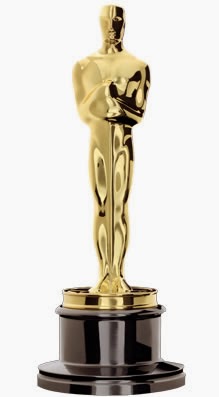
Cap'n Howdy Presents His Quasi-Annual Academy Award Speculation


 As anyone inclined to read a blog about movies already knows, this weekend brings the 86th Annual Academy Awards, the final award show of "Awards Season" that runs from last December until the beginning of March. It's possible the Razzies are also this weekend, but since they gave up nominating movies that were bad and just went for the low hanging fruit (did Adam Sandler or M. Night Shyamalan make a movie this year? Nominate them in every category!) I really haven't given that much credence. I can't remember when I started watching the Academy Awards, but it's been a fixture in my life as a cinephile (to give you some idea, I can still remember Jack Palance doing push-ups on stage and Billy Crystal in the Hannibal Lecter mask like it was yesterday).

With that said, I've never been very good at predicting the winners. As I often joke, I tend to defer to friend of the Blogorium Neil, because he has a much better track record, but as he's not around to write this, it falls to the Cap'n to give it a shot. With the exception of Nebraska, Captain Phillips, and Philomena, I've seen all of the Best Picture nominees, and a vast majority of the other nominated pictures (with the exception of Best Foreign Film and Best Documentary, which I'll be going with what friends have been telling me). In the spirit of the late Roger Ebert - who I imagine will have some form of tribute on Sunday - the structure will be who the Cap'n thinks should win and who will win. I'll try to give you some idea of why I think one nominee will win over another, but remember that a) the awards are voted on by people in the Academy, so who knows what their thought process is, and b) I'm not very good at this. Nevertheless, it should be fun to look at this next year, or even just next week.


 In order of how they're usually presented:

 Best Supporting Actress:

 Sally Hawkins - Blue Jasmine
 Jennifer Lawrence - American Hustle
 Lupita Nyong'o - 12 Years a Slave
 Julia Roberts - August: Osage County
 June Squibb - Nebraska

 Who Should Win: Lupita Nyong'o
 Who Will Win: Lupita Nyong'o

 Looking at the other nominees, there's no question in my mind that Lupita Nyong'o is taking home the statue for Patsey in 12 Years a Slave, and she deserves it. As much as I liked Sally Hawkins in Blue Jasmine, there's no comparison. I haven't seen Roberts or Squibb in their respective roles, and Jennifer Lawrence was too young for her part in American Hustle.

 Best Supporting Actor:

 Barkhad Abdi - Captain Phillips
 Bradley Cooper - American Hustle
 Michael Fassbender - 12 Years a Slave
 Jonah Hill - The Wolf of Wall Street
 Jared Leto - Dallas Buyers Club

 Who Should Win: Jared Leto
 Who Will Win: Jared Leto


 This is a little trickier to pick: although I'm convinced Leto should and will win, there's an off chance that American Hustle starts picking up steam (I'll get to the reasons why during Best Director and Best Picture) and Bradley Cooper sneaks in and takes it away as some weird penance for not winning last year. There is this strange sense of "making up for" awards that happen at the Oscars, which lead to oddball wins for movies, like Denzel Washington for Training Day or Martin Scorsese for The Departed (not that they aren't both very good movies / performances, but far from the best either has ever done). Still, Leto is fantastic in Dallas Buyers Club, although I don't know how that would impact the Leading Actor category. As another friend of mine pointed out, Jonah Hill might have been a little too broad, and Fassbender while great is too loathsome in 12 Years a Slave.

 Best Animated Film:

 The Croods
 Despicable Me 2
 Ernest & Celestine
 Frozen
 The Wind Rises

 Who Should Win: The Wind Rises
 Who Will Win: Frozen (?)

 I'm not sure here, to be honest with you; The Wind Rises is Hayao Miyazaki's final film and I can't imagine that wouldn't factor in the voters minds somehow, but all I hear about everywhere I can listen in on the public is Frozen. Since there's no Pixar entry this year, and that's the reliable vote (was Despicable Me 2 really that much better than Monsters University?), I guess Disney has an outside shot at this, but Studio Ghibli has my pick.

 Documentary (Feature):

 The Act of Killing
 Cutie and the Boxer
 Dirty Wars
 The Square
 20 Feet from Stardom

 Who Should Win: The Act of Killing
 Who Will Win: The Square (?)


 I'm not 100% sold on my "will win" pick - it could be 20 Feet from Stardom, although conventional wisdom is to go with the strangest title (Cutie and the Boxer). In truth, every single person I know who saw The Act of Killing says it's not only the best documentary they saw last year, but that it was the best movie they saw last year. Looking at the last few years, it's hard to say if a movie about unrepentant perpetrators of war atrocities is going to be the top vote getter, but it sounds like it should be. I'm looking forward to sitting down and watching The Act of Killing and seeing for myself.

 Writing (Adapted Screenplay):

 Richard Linklater, Julie Delpy, Ethan Hawke - Before Midnight
 Billy Ray - Captain Phillips
 Steve Coogan, Jeff Pope - Philomena
 John Ridley - 12 Years a Slave
 Terence Winter - The Wolf of Wall Street

 Who Should Win: Richard Linklater, Julie Delpy, Ethan Hawke
 Who Will Win: John Ridley

 Unless 12 Years a Slave totally gets blanked in every category, John Ridley will be taking home the Oscar for adapting Solomon Northrup's true story, and I'm okay with that. It's a harrowing experience, and a very well written screenplay that avoids being maudlin or playing for cheap emotional beats. That said, Before Midnight is built around conversations, usually between Delpy and Hawke, and is a masterwork of writing and capturing the ebb and flow of conversation. It's a little silly this lands in "adapted" because Jesse and Celine are recurring characters and therefore are "based" on something else, but despite my admiration for Linklater, Delpy, and Hawke's writing, the Academy's propensity for going "rogue" in writing is usually reserved for the next category.

 Writing (Original Screenplay):
Eric Warren Singer, David O. Russell - American Hustle
 Woody Allen - Blue Jasmine
 Craig Borten, Melissa Wallack - Dallas Buyers Club
 Spike Jonze - Her
 Bob Nelson - Nebraska

 Who Should Win: Spike Jonze
 Who Will Win: Craig Borten, Melissa Wallack


 Or David O. Russell and Eric Warren Singer, if American Hustle starts a-rolling. There's no chance for Woody Allen, and as much as I enjoyed Blue Jasmine we all know why that's not happening this year. I hesitate to even bring that up because I know how toxic the back and forth is and I don't want to weigh in without knowing all of the facts, and as it has nothing to do with Blue Jasmine's screenplay that's all I have to say about it. If Spike Jonze was going to win anything for Her (which he should but it's on the outside looking in for most nominations), it ought to be this but I somehow don't think it will be. That said, Borten and Wallack took what could have been an easy tear-jerker of a true story and gave us a more nuanced version, whether they took liberties with Ron Woodruff's story or not (speaking of which, how is something based on a true story an "original" screenplay?), so I'd say they have a good shot at it.

Best Actress in a Leading Role:
Amy Adams - American Hustle
Cate Blanchett - Blue Jasmine
Sandra Bullock - Gravity
Judi Dench - Philomena
Meryl Streep - August: Osage County

 Who Should Win: Amy Adams
 Who Will Win: Amy Adams


As much as Cate Blanchett owns every moment of Blue Jasmine, I think it's pretty clear that's a non-starter this year. Sandra Bullock was the odds-on favorite for Gravity when the film came out, but unfortunately that was too long ago (last summer is eons ago in Academy-time, which is why most of the nominees seem to be films released in November or December). Judi Dench and Meryl Streep are reliable favorites and you can never, ever count them out, but Amy Adams is THE reason to watch American Hustle. I'm dubious about all of the other acting nominations for that film, but unquestionably Adams is riveting from beginning to end and deserves to win.

Best Actor in a Leading Role:

Christian Bale - American Hustle
Bruce Dern - Nebraska
Leonardo DiCaprio - The Wolf of Wall Street
Chiwetel Ejiofor - 12 Years a Slave
Matthew McConaughey - Dalls Buyers Club

 Who Should Win: Chiwetel Ejiofor
 Who Will Win: Matthew McConaughey

 Now, I could be wrong here, and Bruce Dern could be the spoiler because of a strange trend in Hollywood. What usually happens is that an older actor who has been under the radar for a while has a great performance and suddenly awards voters freak out and assumed that he's going to die soon and those nominations fly in (see Peter O'Toole in Venus, Frank Langella in Frost/Nixon, or Richard Farnsworth in The Straight Story). Now, to be fair, none of the actors I mentioned won, but everybody's talking about Bruce Dern like he's suddenly on death's door and how many more movies has he got blah blah blah. For what it's worth to you death clock counters, Peter O'Toole was nominated in 2006 and will be memorialized this year.

 For different reasons, I think there's no chance for Leonardo DiCaprio or Christian Bale. DiCaprio, who did some of the most impressive work I've ever seen him do in The Wolf of Wall Street, has no shot because the stupid controversy surrounding the film "glorifying" Jordan Belfort, the sleazeball that DiCaprio is playing. In no way would you ever want to be Belfort after watching The Wolf of Wall Street, but DiCaprio makes him an undeniable presence you want to watch for three hours. The physical work in the quaaludes scene alone should be enough to justify his nomination.

 Christian Bale was all right in American Hustle. That's it. He wasn't any better or any worse than he is in any other movie, so I genuinely don't understand why he was nominated, and unless voters just decide to go crazy for American Hustle, I can't see him taking home the Oscar for gaining weight.

 I'm really tempted to go with Matthew McConaughey taking it from the amazing Ejiofor (who conveys a sense of dignity in the most dire of circumstances and is in almost every scene of 12 Years a Slave) just because voters seem to love a physical transformation. Also, McConaughey has been on a serious upswing over the last two or three years where he finally got tired of being Surfer, Dude and has been on a real tear reminding people he's more than Wooderson from Dazed and Confused. I think I preferred him in Mud, but this might be the year that voters decide to take him seriously. But secretly I hope Chiwetel Ejiofor wins, and deep down I think he might.

 Best Director:

 David O. Russell - American Hustle
 Alfonso Cuarón - Gravity
 Alexander Payne - Nebraska
 Steve McQueen - 12 Years a Slave
 Martin Scorsese - The Wolf of Wall Street

 Who Should Win: Steve McQueen
 Who Will Win: Alfonso Cuarón

 Since 1999, when Steven Spielberg won for Saving Private Ryan and Shakespeare in Love took Best Picture, it's no longer a guarantee that Best Director and Best Picture will go hand in hand, as they always seemed to. Ben Affleck wasn't even nominated last year, which boggles my mind if you're going to award Argo Best Picture, but I digress. What Best Director now means is anybody's guess, but last year's winner, Ang Lee for The Life of Pi, indicates that spectacle and technical achievement is now a mitigating factor. In that case, it's very hard to argue that what Alfonso Cuarón achieved in Gravity doesn't automatically qualify him to win, hands down. Regardless of how I feel about Gravity's story (and it's telling the screenplay isn't nominated), I can't argue that it's an astonishingly well made film, the work of a director who spent years doing something we hadn't seen before. So he's almost certainly going to win.

 Is that unfortunate? I guess: I prefer the understated, sober direction of McQueen in 12 Years a Slave, with his long takes and willingness to let a scene unfold without overt manipulation. It's hard to believe this is only his third feature film, and all of them are uniformly excellent. In my mind there's no reason he shouldn't be standing at the podium accepting the award for Best Director (as he has been at various ceremonies this season), but the Academy Award voters are weird like that.

Speaking of which: there's a teeny, tiny, outside chance that neither happens and that David O. Russell stops being a bridesmaid and finally wins (three nominations in four years, after all), even if it's not for his best direction. I'd hate to think he would win Best Director for a film that is so clearly a copy of Martin Scorsese's films, especially at the expense of Scorsese, who made a much better film that's not going to win anything, but there's certainly been a big push for Russell since The Fighter. It's weird, because I vastly prefer Three Kings and I Heart Huckabees to Silver Linings Playbook and American Hustle, but it could be that kind of year, which leads us to...

 Best Picture:


 American Hustle
 Captain Phillips
 Dallas Buyers Club
 Gravity
 Her
 Nebraska
 Philomena
 12 Years a Slave
 The Wolf of Wall Street

 Who Should Win: 12 Years a Slave
 Who Will Win: American Hustle

 Yep, I'm going with it. I don't think American Hustle was the best movie of 2013, and while Her is nominated it has no chance considering the paltry nominations. The Wolf of Wall Street is this year's Zero Dark Thirty, a great film overshadowed by a ridiculous "controversy" that will scare off voters regardless of the merits of the movie itself. Gravity has excellent direction and nice special effects but a story that strains credibility to the breaking point - it's a great ride, but not necessarily a great movie. I've heard nothing bad about Philomena, Nebraska, or Captain Phillips (in fact, quite the opposite), but they seem to be movies that are there to fill out the new "5-10 nominees" logic the Academy implemented a few years ago. Dallas Buyers Club is a fine movie but not one I see taking home the big award.

 All of the buzz, and rightfully so, has been with 12 Years a Slave, and it was my hands down pick to win Best Picture until I found out just how few people had seen it. I know that it's an incredibly difficult film to watch (I watched it) and that it's not a "feel good" movie and that it's "important." That's not to diminish the fact that yes, it IS important and it IS a part of American history we don't like to look at or talk about, but it saddens me that people just won't go see it because they don't want to deal with it. And I worry that this is going to trickle over to the voters in the Academy. It's true that the actors and critics and writers and directors who all voted for 12 Years a Slave in their respective guilds are also Academy voters, but for some reason they tend to go "safe" with the Oscars.

 Look, I really liked Argo, but it was the "safe" alternative to Zero Dark Thirty, which wasn't going to win anyway but they dealt with precarious points in American history that involved a level of obsession and a coordinated effort to come out victorious. Shakespeare in Love was the "safe" choice. The Artist was the "safe" choice, and so were The King's Speech and Slumdog Millionaire, to name a few from the last few years. Best Picture, increasingly, has been a bizarre alternate universe where movies you wouldn't necessarily consider the best picture of the year are nevertheless selected over other films.

 Putting aside the obvious argument that it isn't fair to put such varying types of films against each other, the reality is that often voters will go with a film they enjoyed over an "important" film. In fact, the "important" with quotes around it gets some sort of asinine backlash from people who want spectacle over serious. Think about the South Park episode that tore George Clooney and Hollywood a new one for being smug and suggesting that cinema should mean anything (and, by proxy, that they "mean" anything). That's a prevailing thought, even as it's easy to lampoon Hollywood for being too self-important.

 So yeah, could voters pick American Hustle over 12 Years a Slave? I can totally see it happening. Take the consistent presence of David O. Russell for the last few years, with a cast that was almost uniformly not doing their very best work (no offense, but Amy Adams is the alpha and the omega of that ensemble) who are all nominated, and a gamut of other categories, and you have the makings of a picture that could run the table. Why? Because it's a fun movie and lots of people liked it (although, increasingly, I talk to people who really didn't) and dammit, isn't that what's fun about Hollywood? Not depressing movies about the horrible things we did to other human beings and I know it's important but dammit I just want to see Bradley Cooper with a perm, you guys!

 Will it happen? I don't know. I'd like it not to, but you can never be sure. If there's one thing I've learned from years of unsuccessfully choosing winners, it's that I don't know what's going on in the minds of voters any more than I know how March Madness is going to end. I can pay attention to the prevailing trends of Awards Season and extrapolate from that, but that's about it. But it's fun to speculate in the meantime, to have wild theories and to spend unnecessary time and energy into rationalizing them. And besides, I haven't had a non-review post in a while, mostly because I didn't want to talk about Philip Seymour Hoffman or Harold Ramis, and I'm sure as hell not comfortable talking about Woody Allen right now. But the Academy Awards? Now that's something to talk about, at least until next week...

Friday, January 17, 2014

Cap'n Howdy's Best of 2013: Mud


  When I was working on the recap of "the middle," it was tempting to put Mud in the "Novel-less Adaptations," but I decided I liked it too damn much to keep the film out of the best of the year. Jeff Nichols (Take Shelter)'s film doesn't necessarily play like a novel on film, but in many ways it will remind viewers of The Adventures of Huckleberry Finn, which, according to the director was intentional. Nichols, in fact, described Mud as "Sam Peckinpah directing a Mark Twain Story." That first part didn't really occur to me while watching Mud, but I can understand how that would fit in.

 Mud is one of those rare movies that's about kids but isn't bogged down with what I like to call "dumb kid movie crap" like cutaways to animal reaction shots and people getting hit in the nuts a lot (even Hugo has a scene like that, where Sacha Baron Cohen runs into a pole, groin first, and Scorsese cuts to his dog watching.) Instead, it's a little more tonally consistent with something like Stand By Me, but with the aforementioned Twain influence. Everybody has a reason for doing what they do, and most of them make bad decisions, but they mean well, and not everything is wrapped up nicely with a bow at the end (SPOILER).

 Ellis (Tye Sheridan) lives on a river in Arkansas with his parents, Senior (Ray McKinnon) and Mary Lee (Sarah Paulson), who aren't having such a good go of things right now. Ellis isn't too concerned about that, because his friend Nate (Jacob Lofland), better known as "Neckbone," found an island up river with a cool surprise. A recent flood left a boat stuck up in a tree, and the boys claim it as their own when they sneak out to the island. The only problem is that somebody's already living in the boat: a stranger who calls himself "Mud" (Matthew McConaughey), who says he's meeting somebody on the island. At first, he just asks the boys to help bring him food while he waits, but when it becomes clearer why Mud is on the island and not in town, plans change...

 Ellis trusts Mud implicitly, even though Neckbone sees something disingenuous about the gregarious stranger. Mud doesn't sleep in the same place twice, and his two prized possessions are his shirt and his gun, and the reason he needs the latter is more important than the former. Mud did something that has the attention of the wrong people: Carver (Paul Sparks) and King (Joe Don Baker) arrive in town not long after the boys meet Mud, and they aren't looking to talk to him. They're also watching Juniper (Reese Witherspoon), the woman Mud's supposed to be meeting. Mud and Juniper are lovers, but it's complicated.

 What I find so refreshing about Mud is that while this is going on, Ellis and Neckbone continue living their lives. They can't put everything aside and just help Mud out, there's work to be done. Ellis helps Senior deliver fish around town, and Neckbone helps out his uncle Galen (Michael Shannon) dig for clams and oysters (?). There are nice touches, particularly with Galen, who isn't in the movie much - I didn't even realize it was Michael Shannon until the second time I saw him - but who I'm guessing used to be in a punk band and who is always working on his home-made diver's helmet. Ellis also defends the honor of May Pearl (Bonnie Sturdivant), a older girl he knew before she went to high school, and she takes a liking to the 14 year old.

 Like the Twain stories that inspire Mud, the film alternates between a fugitive on the run and slice of life anecdotes, and does so seamlessly, eventually blending everything together. Ellis and Neckbone find a novel way to get in touch with Juniper while she's being watched, even if it doesn't end so well at first for one of them. They have to steal supplies to help fix the boat, and Ellis learns there are repercussions. He doesn't live in a vacuum, and eventually Senior finds out. I haven't even mentioned Ellis' mysterious neighbor across the river, Tom (Sam Shepard), who knew Mud when he was younger and knows a great deal more about his relationship with Juniper than Ellis realizes at first.

 There's deception at play, some innocent, some not so, but Mud isn't exactly what he seems to be. He's made bad decisions before, and the mess he's in is too much even for Tom to get involved. At least, that's what he tells Ellis. Mud is convinced the "old assassin" will come around. Discovering that the world is more complicated than what's presented is the through-line for Ellis in the story: as his parents decide to split up (and, along with that, to let the river boat be scheduled for demolition), Ellis has to learn to deal with the fact that not everybody says what they mean, and that sucker punching people doesn't always settle problems. Sometimes they punch back.

 Sheridan (who played the older brother in The Tree of Life) is magnetic, as is McConaughey, who wins the boys over with his charm but slowly reveals himself to be a man in way over his head. Aside from an explosion of violence near the end (hence the Peckinpah part) and scattered profanity, this is the kind of movie you could watch with kids, especially pre-teens, that would have the same sort of impact a movie like Stand By Me did when I was that age. Mud is straight forward, assured filmmaking and a whole lot of fun to watch, which is always welcome around these parts. It's also funny most of the time, but can be serious without getting maudlin. I couldn't say with any authority what Mark Twain and Sam Peckinpah would think, but I'm sure happy I saw Mud.

Monday, January 6, 2014

2013 Recap: Working Our Way Up to the Top (Part One)


 Now that we're done wallowing in the worst of 2013, it's time to move on and work our way up to the very best. When we last met I promised that starting with this batch, the Cap'n might not be covering the best that last year had to offer, but from here on out I'd recommend almost everything. There are any number of diverse options for varying tastes, and I suspect you'll find at least something to like in what I saw.

 Unlike the normal "list" format that you see so often on the Blogorium, I'm going to try grouping movies together under loosely unifying themes. It keeps things from getting too long in the tooth and will give you a rough idea of where I'm coming from while evaluating each entry. Some are more logically connected than others, but while I was putting this together, individual films gravitated together, so hopefully this works. Let's start with a fairly logical grouping:


 Three Disney Films That were Pretty Good, but I'm in No Hurry to Revisit.

 I didn't see Frozen last year, which I suppose is in keeping with an unofficial trend of missing newer Walt Disney animated films in theaters (I think the last one I saw during its first run was... The Lion King?), but I did see two live action features and the second sequel from the re-branded Disney / Pixar. Of the three, I probably enjoyed Monsters University the most; it's slight, and problematic in that it's a prequel to Monsters, Inc., so we already know that Mike and Sully will end up friends.

Putting aside the fact that they claimed to have met much earlier in life according to the first filmMonsters University is an amusing and sometimes clever Pixar version of the "college" genre. There are prerequisite references to Animal House and lots of foreshadowing of things to come in the movie we've already seen, but it's nice to have everybody back and Billy Crystal and John Goodman are clearly giving 110%. Steve Buscemi is in and out of the story as a younger, nicer, Randall Boggs, and the new additions (including Nathan Fillion, Charlie Day, Sean Hayes, Dave Foley, and Alfred Molina and Helen Mirren as faculty members) are all welcome. If there's one thing that pushes it slightly over the "prequel" trap, it's that while most of the most goes exactly how you'd expect it to, the denoument is quite a surprise. I'm impressed that Dan Scanlon, Robert L. Baird, and Daniel Gerson opted to take the road less travelled by in closing the story out, and there's a sense of earning the connection to Monsters, Inc. that I appreciated.

 While we're on the subject of prequels, Sam Raimi's Oz: The Great and Powerful got its share of grief for being simultaneously too much and not enough like The Wizard of Oz earlier this year. I will admit that the movie is perhaps not what it could be (although, what were we expecting?), the nearly unanimous consensus I've heard from friends - particularly ones with children - was that they were entertained. Unlike most people, I liked James Franco as the Wizard-to-be, and found some interest in the fact that Raimi keeps him as a basically weasely trickster for most of the movie. Whereas Tim Burton's Alice in Wonderland sequel-ish thing for Disney headed down the Narnia-route with an unnecessary battle scene, Raimi keeps the great showdown between Oscar Diggs and the Witch of the East (yes, I'll still keep it a secret which witch is which) limited to an unorthodox clash between magic and illusion. The Wonderful Wizard triumphs specifically because he's so good at misdirection.

Is the rest of the cast great? Eh... maybe not. I liked Michelle Williams as Glinda, and Mila Kunis and Rachel Weisz are okay as Theodora and Evanora, but neither of them really get the chance to develop as characters. Bruce Campbell puts up with a beating from Tony Cox to secure his name in the opening credits (and he's in the movie for maybe five minutes, tops). Joey King's China Girl is something of a marvel as a character but Zach Braff's Finley the talking monkey is mostly there for Oscar to have someone to be mean to. The special effects range from very impressive to okay, but I did enjoy the vintage "Raimi inflicting pain on his lead actor" during the tornado after an otherwise okay opening. I will say the change in aspect ratio and color was a nice touch, but there are too many forced connections crammed in very quickly before Franco shuttles off to Oz.

 The parts may not all work or, at times, even fit together, but the sum is fitfully amusing for one of two viewings. I have no idea if I'm going to watch Oz: The Great and Powerful again any time soon, or if it will have any lasting replay value, but for one go-round the trip down the Yellow Brick Road was worth it.

 I don't mention it here a lot, but the Cap'n is a lifelong fan of Mary Poppins. It's not the kind of thing you'd probably expect, which is why it doesn't come up much, but it's true. Even Dick Van Dyke's terrible cockney accent doesn't bother me; I can settle down and watch it almost any old time and feel like a kid again. Accordingly, I was cautiously optimistic about Saving Mr. Banks, the Disney-approved story of Walt Disney's efforts to secure P.L. Travers' approval of the Mary Poppins we all know and love today (okay, I'm assuming you have the same affinity for it as I do).


 It's a double edged sword, because yes, some of the contentious opinions that Travers had during and after the film's released are, shall we say, smoothed over in favor of a more conventional "dealing with daddy issues" storyline. On the other side, I don't imagine any other studio could have shot on the Disney lot in the original locations (or approximations thereof) and had the level of access and imagery you'd need. Think about Fox Searchlight's Hitchcock, which somehow manages to avoid Universal Studios almost entirely, despite the fact that Universal released Psycho and the iconic house is on their tour.


 Saving Mr. Banks is structured alternating between "present day" 1961 and turn of the century Australia, where Pamela Travers (Emma Thompson) remembers her childhood and her whimsical father (Colin Farrell - I'm leaving out the character name on the off chance you don't know anything about Travers). Throughout the film, we learn more and more about her father, why they have to move around the continent, and the foundations of where the character of Mary Poppins comes from, all while Travers struggles with Disney (Tom Hanks)'s insistence the movie be made his way, with animated penguins and songs, much to her dismay. Travers has an inherent disgust for Walt Disney's films, and early in the movie watches Walt on TV with Tinkerbell, only to sigh "Poor (J.M.) Barrie."

 She's staunchly against giving over the rights to Mary Poppins and is reticent to deal with screenwriter Don DeGradi (Bradley Whitford) and songwriting duo the Sherman brothers: Richard (Jason Schwartzman) and Robert (B.J. Novak), who don't quite understand why. As an audience, we already know how this turns out, and as we see the kernels of what become iconic moments in Mary Poppins, we're obviously rooting for Travers to "come around." At the same time, Saving Mr. Banks is told primarily through Travers' perspective, and while she's often rude and dismissive, we like her. The film takes a few steps in the "easy" direction of softening Thompson as Travers, in particular through a totally sympathetic limo driver played by Paul Giamatti who just happens to have the perfect bonding moment at the perfect time with the writer. Wisely, Walt Disney is shuttled off to the background, so that the naturally likeable Tom Hanks is able to always be a voice of reason and never grouchy (they do show him smoking, though. Kudos to that).

 While it's a touch predictable and perhaps not the most forthright (I would recommend reading Vern's review for a more thorough examination of the negative reaction towards Disney and Travers from other critics) about the actual facts, Saving Mr. Banks is nevertheless a worthwhile "true story," and one people might not be familiar enough with. If you like Mary Poppins or Walt Disney or just Emma Thompson and Tom Hanks, it's an easy recommendation. Just don't expect anything too in depth about the man behind the Mouse or anything hyper-critical, and you'll have a nice time. I liked it, but will probably stick with Mary Poppins from here on out.

 Oh, and while we're on the subject of "true story with some liberties taken..."

 Speaking of "Inspired By a True Story"

 If you're going to watch Oprah Winfrey presents Lee Daniels' The Butler "Inspired By an Article We Read and Pretty Much Went from There," I would strongly recommend not doing so anywhere in the vicinity of 12 Years a Slave or Forrest Gump. It will bring up unsatifsying comparisons to the former and oddly specific connections to the latter, and in all honesty I have the feeling that most audiences will find plenty to enjoy about the story of Cecil Gaines (Forest Whitaker), a White House butler that served Presidents Eisenhower, Kennedy, Johnson, Nixon, (I guess) Carter, and Reagan. For me, it didn't do much, but that's largely because the screenplay by Danny Strong (Game Change, Buffy the Vampire Slayer) is so predictable.

 The film is "inspired by a true story" in the way that Strong took Will Haygood's Article "A Butler Well Served by this Election" and used it as a springboard to cover race relations in the United States from 1926 to 2008. Eugene Allen became Cecil Gaines, and what Gaines doesn't see firsthand in the White House is covered by his son Louis Gaines (David Oyelowo), giving the film a sort of Gump-like tour through major moments in Civil Rights history. I'm trying hard not to diminish the efforts of Daniels, Strong, or the excellent cast, but the problem I had with The Butler is that you can predict almost like clockwork what's going to happen next based on perfunctory set-up scenes.

 For example (SPOILER, I guess), let's say that Cecil's other son Charlie (Elijah Kelly) has a conversation with Louis about how he's going to Vietnam and Louis warns him he's going to get killed. Charlie tells Louis (who is at this point a member of the Black Panther Party and on the outs with his father) not to come to his funeral if he dies. So when we get the scene that Charlie has been killed, does it happen during the same sequence when Cecil and his wife Gloria (Oprah Winfrey) are watching Soul Train and wearing Disco outfits? Look, I can understand the use of emotional juxtaposition, but you can spot it a mile away over and over again during The Butler and that really took me out of the movie.

 There's also a strange sense of moralization going on during The Butler that's reminiscent of Forrest Gump: Freedom Riders are good, Black Panthers are bad. Martin Luther King Jr. is peaceful, but the only scene involving Malcolm X (as Louis and his girlfriend are walking away from one of his speeches) ends with gunshots. Gloria has a brief dalliance with her neighbor, Howard (Terrence Howard), who ends up being shot by someone else's jealous husband. The Black Panther section, in particular, is almost cartoonish - Louis abandons the Freedom Riders after King is assassinated and brings his girlfriend to dinner, only for Cecil to throw them both out. But Louis also abandons the Black Panthers after one meeting that suggest retaliatory violence against the police, which is followed in the next shot by news of the Panthers being raided by the FBI. I'm sorry, there's no subtlety there whatsoever. Louis and Cecil finally reconcile during a rally to free Nelson Mandela, and then it jumps forward to the 2008 election. If you're wondering if someone dies of before she can vote for Obama, I suggest you look for Oprah Winfrey during the Supporting Actress nominations.

 I found that the end result was that while I watched The Butler, I began to wonder about the more trivial moments, like the often bizarre casting of the Presidents. Questions like "are they really not going to use anything other than a fake nose to make John Cusack look like Nixon?" to "I wonder what was going through Jane Fonda's mind while she was playing Nancy Reagan?" floated around with "why didn't they bother finding someone to play Jimmy Carter?" or "isn't Liev Schreiber too young to be Lyndon Johnson?" If you ever wondered what would happen if Alan Rickman was asked to impersonate Ronald Reagan, you'll get your answer in The Butler. Robin Williams is Eisenhower, James Marsden is Kennedy, and Minka Kelly is Jackie Kennedy (of whom Gloria is inexplicably jealous). The individual moments with the presidents are sometimes so odd that you forget the otherwise fine performances from Cuba Gooding, Jr. and Lenny Kravitz as Whitaker's fellow White House butlers.

 Make no mistake about it: I can be a hard audience for movies, in part because I'm always trying to put together where a film is going next, so The Butler was unfortunately too "easy" for me. Most audiences will find more to like about it than I did, and I'm not trying to say it wasn't good. But for the Cap'n, it wasn't anything more than "good," and I saw movies this year that were a LOT better than good.

  And to close this out, I'd like to take a look at another movie "inspired" on a true story (is this just the new thing to avoid people thinking that a condensed version of someone's life isn't 100% factually accurate?), Dallas Buyers Club. I will openly admit I know almost nothing about Ron Woodruff, the Dallas electrician / rodeo rider who contracted HIV and found a way to make money off of medicine not approved by the FDA by bringing it in from other countries. I listened to a segment about him on NPR shortly before the film's release and from interviews with people that knew him, the real Woodruff was perhaps even more gregarious than Matthew McConaughey portrays him in the film, and he cursed more, which is impressive considering the level of profanity in Dallas Buyer's Club.

 That said, I was rather impressed by the film from director Jean-Marc Vallée (Young Victoria) and screenwriters Craig Borten and Melissa Wallack. Woodruff, in the film, is a man out for number one, a gambler and ladies man who ultimately does a good deed mostly out of self interest, but who is often sympathetic even as we marvel at what a selfish, homophobic asshole he can be. Casting McConaughey goes a long way in helping to not be totally repulsed by Woodruff's actions and attitudes (at least early on); the actor has always been likeable, and string of recent performances went a long way to bringing him back from just a "naked bongo" punchline. Dallas Buyers Club is one of two movies I saw with McConaughey this year where I was very impressed with the actor, and his physical transformation as Woodruff is akin to Christian Bale's in The Machinist.

 But it's not just McConaughey, or some clever choices of misdirection early in the film (I'm thinking particularly of one scene where candles lead you to believe Woodruff is in one place when he's in nearly the polar opposite); Jared Leto is also something of a revelation as Rayon, a fellow AIDS patient who becomes Woodruff's business partner and slowly (though never unbelievably) something of a friend. Rayon never gives Woodruff an inch in his behavior, and the interplay between Leto and McConaughey is the film's strongest selling point. Jennifer Garner, Steve Zahn, and Griffin Dunne are also good in supporting roles, and Dallas Buyers Club mostly keeps things from wandering into maudlin or tear-jerker territory. Woodruff's battles with the medical industry and particularly with the FDA could easily fall into a "David vs. Goliath" narrative, but credit where it is due for keeping the story in less rigidly defined territory. It's a reasonably sober look at someone who did something good for maybe the wrong reasons, but did good nonetheless, and if I'm going to damn the other films in this section of the recap with faint praise, it only seemed fair to close out with something I think you'd all want to see.