Showing posts with label Amy Adams. Show all posts

Friday, February 28, 2014

Cap'n Howdy Presents His Quasi-Annual Academy Award Speculation


 As anyone inclined to read a blog about movies already knows, this weekend brings the 86th Annual Academy Awards, the final award show of "Awards Season" that runs from last December until the beginning of March. It's possible the Razzies are also this weekend, but since they gave up nominating movies that were bad and just went for the low hanging fruit (did Adam Sandler or M. Night Shyamalan make a movie this year? Nominate them in every category!) I really haven't given that much credence. I can't remember when I started watching the Academy Awards, but it's been a fixture in my life as a cinephile (to give you some idea, I can still remember Jack Palance doing push-ups on stage and Billy Crystal in the Hannibal Lecter mask like it was yesterday).
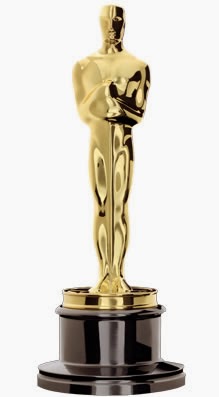
With that said, I've never been very good at predicting the winners. As I often joke, I tend to defer to friend of the Blogorium Neil, because he has a much better track record, but as he's not around to write this, it falls to the Cap'n to give it a shot. With the exception of Nebraska, Captain Phillips, and Philomena, I've seen all of the Best Picture nominees, and a vast majority of the other nominated pictures (with the exception of Best Foreign Film and Best Documentary, which I'll be going with what friends have been telling me). In the spirit of the late Roger Ebert - who I imagine will have some form of tribute on Sunday - the structure will be who the Cap'n thinks should win and who will win. I'll try to give you some idea of why I think one nominee will win over another, but remember that a) the awards are voted on by people in the Academy, so who knows what their thought process is, and b) I'm not very good at this. Nevertheless, it should be fun to look at this next year, or even just next week.


 In order of how they're usually presented:

 Best Supporting Actress:

 Sally Hawkins - Blue Jasmine
 Jennifer Lawrence - American Hustle
 Lupita Nyong'o - 12 Years a Slave
 Julia Roberts - August: Osage County
 June Squibb - Nebraska

 Who Should Win: Lupita Nyong'o
 Who Will Win: Lupita Nyong'o

 Looking at the other nominees, there's no question in my mind that Lupita Nyong'o is taking home the statue for Patsey in 12 Years a Slave, and she deserves it. As much as I liked Sally Hawkins in Blue Jasmine, there's no comparison. I haven't seen Roberts or Squibb in their respective roles, and Jennifer Lawrence was too young for her part in American Hustle.

 Best Supporting Actor:

 Barkhad Abdi - Captain Phillips
 Bradley Cooper - American Hustle
 Michael Fassbender - 12 Years a Slave
 Jonah Hill - The Wolf of Wall Street
 Jared Leto - Dallas Buyers Club

 Who Should Win: Jared Leto
 Who Will Win: Jared Leto


 This is a little trickier to pick: although I'm convinced Leto should and will win, there's an off chance that American Hustle starts picking up steam (I'll get to the reasons why during Best Director and Best Picture) and Bradley Cooper sneaks in and takes it away as some weird penance for not winning last year. There is this strange sense of "making up for" awards that happen at the Oscars, which lead to oddball wins for movies, like Denzel Washington for Training Day or Martin Scorsese for The Departed (not that they aren't both very good movies / performances, but far from the best either has ever done). Still, Leto is fantastic in Dallas Buyers Club, although I don't know how that would impact the Leading Actor category. As another friend of mine pointed out, Jonah Hill might have been a little too broad, and Fassbender while great is too loathsome in 12 Years a Slave.

 Best Animated Film:

 The Croods
 Despicable Me 2
 Ernest & Celestine
 Frozen
 The Wind Rises

 Who Should Win: The Wind Rises
 Who Will Win: Frozen (?)

 I'm not sure here, to be honest with you; The Wind Rises is Hayao Miyazaki's final film and I can't imagine that wouldn't factor in the voters minds somehow, but all I hear about everywhere I can listen in on the public is Frozen. Since there's no Pixar entry this year, and that's the reliable vote (was Despicable Me 2 really that much better than Monsters University?), I guess Disney has an outside shot at this, but Studio Ghibli has my pick.

 Documentary (Feature):

 The Act of Killing
 Cutie and the Boxer
 Dirty Wars
 The Square
 20 Feet from Stardom

 Who Should Win: The Act of Killing
 Who Will Win: The Square (?)


 I'm not 100% sold on my "will win" pick - it could be 20 Feet from Stardom, although conventional wisdom is to go with the strangest title (Cutie and the Boxer). In truth, every single person I know who saw The Act of Killing says it's not only the best documentary they saw last year, but that it was the best movie they saw last year. Looking at the last few years, it's hard to say if a movie about unrepentant perpetrators of war atrocities is going to be the top vote getter, but it sounds like it should be. I'm looking forward to sitting down and watching The Act of Killing and seeing for myself.

 Writing (Adapted Screenplay):

 Richard Linklater, Julie Delpy, Ethan Hawke - Before Midnight
 Billy Ray - Captain Phillips
 Steve Coogan, Jeff Pope - Philomena
 John Ridley - 12 Years a Slave
 Terence Winter - The Wolf of Wall Street

 Who Should Win: Richard Linklater, Julie Delpy, Ethan Hawke
 Who Will Win: John Ridley

 Unless 12 Years a Slave totally gets blanked in every category, John Ridley will be taking home the Oscar for adapting Solomon Northrup's true story, and I'm okay with that. It's a harrowing experience, and a very well written screenplay that avoids being maudlin or playing for cheap emotional beats. That said, Before Midnight is built around conversations, usually between Delpy and Hawke, and is a masterwork of writing and capturing the ebb and flow of conversation. It's a little silly this lands in "adapted" because Jesse and Celine are recurring characters and therefore are "based" on something else, but despite my admiration for Linklater, Delpy, and Hawke's writing, the Academy's propensity for going "rogue" in writing is usually reserved for the next category.

 Writing (Original Screenplay):
Eric Warren Singer, David O. Russell - American Hustle
 Woody Allen - Blue Jasmine
 Craig Borten, Melissa Wallack - Dallas Buyers Club
 Spike Jonze - Her
 Bob Nelson - Nebraska

 Who Should Win: Spike Jonze
 Who Will Win: Craig Borten, Melissa Wallack


 Or David O. Russell and Eric Warren Singer, if American Hustle starts a-rolling. There's no chance for Woody Allen, and as much as I enjoyed Blue Jasmine we all know why that's not happening this year. I hesitate to even bring that up because I know how toxic the back and forth is and I don't want to weigh in without knowing all of the facts, and as it has nothing to do with Blue Jasmine's screenplay that's all I have to say about it. If Spike Jonze was going to win anything for Her (which he should but it's on the outside looking in for most nominations), it ought to be this but I somehow don't think it will be. That said, Borten and Wallack took what could have been an easy tear-jerker of a true story and gave us a more nuanced version, whether they took liberties with Ron Woodruff's story or not (speaking of which, how is something based on a true story an "original" screenplay?), so I'd say they have a good shot at it.

Best Actress in a Leading Role:
Amy Adams - American Hustle
Cate Blanchett - Blue Jasmine
Sandra Bullock - Gravity
Judi Dench - Philomena
Meryl Streep - August: Osage County

 Who Should Win: Amy Adams
 Who Will Win: Amy Adams


As much as Cate Blanchett owns every moment of Blue Jasmine, I think it's pretty clear that's a non-starter this year. Sandra Bullock was the odds-on favorite for Gravity when the film came out, but unfortunately that was too long ago (last summer is eons ago in Academy-time, which is why most of the nominees seem to be films released in November or December). Judi Dench and Meryl Streep are reliable favorites and you can never, ever count them out, but Amy Adams is THE reason to watch American Hustle. I'm dubious about all of the other acting nominations for that film, but unquestionably Adams is riveting from beginning to end and deserves to win.

Best Actor in a Leading Role:

Christian Bale - American Hustle
Bruce Dern - Nebraska
Leonardo DiCaprio - The Wolf of Wall Street
Chiwetel Ejiofor - 12 Years a Slave
Matthew McConaughey - Dalls Buyers Club

 Who Should Win: Chiwetel Ejiofor
 Who Will Win: Matthew McConaughey

 Now, I could be wrong here, and Bruce Dern could be the spoiler because of a strange trend in Hollywood. What usually happens is that an older actor who has been under the radar for a while has a great performance and suddenly awards voters freak out and assumed that he's going to die soon and those nominations fly in (see Peter O'Toole in Venus, Frank Langella in Frost/Nixon, or Richard Farnsworth in The Straight Story). Now, to be fair, none of the actors I mentioned won, but everybody's talking about Bruce Dern like he's suddenly on death's door and how many more movies has he got blah blah blah. For what it's worth to you death clock counters, Peter O'Toole was nominated in 2006 and will be memorialized this year.

 For different reasons, I think there's no chance for Leonardo DiCaprio or Christian Bale. DiCaprio, who did some of the most impressive work I've ever seen him do in The Wolf of Wall Street, has no shot because the stupid controversy surrounding the film "glorifying" Jordan Belfort, the sleazeball that DiCaprio is playing. In no way would you ever want to be Belfort after watching The Wolf of Wall Street, but DiCaprio makes him an undeniable presence you want to watch for three hours. The physical work in the quaaludes scene alone should be enough to justify his nomination.

 Christian Bale was all right in American Hustle. That's it. He wasn't any better or any worse than he is in any other movie, so I genuinely don't understand why he was nominated, and unless voters just decide to go crazy for American Hustle, I can't see him taking home the Oscar for gaining weight.

 I'm really tempted to go with Matthew McConaughey taking it from the amazing Ejiofor (who conveys a sense of dignity in the most dire of circumstances and is in almost every scene of 12 Years a Slave) just because voters seem to love a physical transformation. Also, McConaughey has been on a serious upswing over the last two or three years where he finally got tired of being Surfer, Dude and has been on a real tear reminding people he's more than Wooderson from Dazed and Confused. I think I preferred him in Mud, but this might be the year that voters decide to take him seriously. But secretly I hope Chiwetel Ejiofor wins, and deep down I think he might.

 Best Director:

 David O. Russell - American Hustle
 Alfonso Cuarón - Gravity
 Alexander Payne - Nebraska
 Steve McQueen - 12 Years a Slave
 Martin Scorsese - The Wolf of Wall Street

 Who Should Win: Steve McQueen
 Who Will Win: Alfonso Cuarón

 Since 1999, when Steven Spielberg won for Saving Private Ryan and Shakespeare in Love took Best Picture, it's no longer a guarantee that Best Director and Best Picture will go hand in hand, as they always seemed to. Ben Affleck wasn't even nominated last year, which boggles my mind if you're going to award Argo Best Picture, but I digress. What Best Director now means is anybody's guess, but last year's winner, Ang Lee for The Life of Pi, indicates that spectacle and technical achievement is now a mitigating factor. In that case, it's very hard to argue that what Alfonso Cuarón achieved in Gravity doesn't automatically qualify him to win, hands down. Regardless of how I feel about Gravity's story (and it's telling the screenplay isn't nominated), I can't argue that it's an astonishingly well made film, the work of a director who spent years doing something we hadn't seen before. So he's almost certainly going to win.

 Is that unfortunate? I guess: I prefer the understated, sober direction of McQueen in 12 Years a Slave, with his long takes and willingness to let a scene unfold without overt manipulation. It's hard to believe this is only his third feature film, and all of them are uniformly excellent. In my mind there's no reason he shouldn't be standing at the podium accepting the award for Best Director (as he has been at various ceremonies this season), but the Academy Award voters are weird like that.

Speaking of which: there's a teeny, tiny, outside chance that neither happens and that David O. Russell stops being a bridesmaid and finally wins (three nominations in four years, after all), even if it's not for his best direction. I'd hate to think he would win Best Director for a film that is so clearly a copy of Martin Scorsese's films, especially at the expense of Scorsese, who made a much better film that's not going to win anything, but there's certainly been a big push for Russell since The Fighter. It's weird, because I vastly prefer Three Kings and I Heart Huckabees to Silver Linings Playbook and American Hustle, but it could be that kind of year, which leads us to...

 Best Picture:


 American Hustle
 Captain Phillips
 Dallas Buyers Club
 Gravity
 Her
 Nebraska
 Philomena
 12 Years a Slave
 The Wolf of Wall Street

 Who Should Win: 12 Years a Slave
 Who Will Win: American Hustle

 Yep, I'm going with it. I don't think American Hustle was the best movie of 2013, and while Her is nominated it has no chance considering the paltry nominations. The Wolf of Wall Street is this year's Zero Dark Thirty, a great film overshadowed by a ridiculous "controversy" that will scare off voters regardless of the merits of the movie itself. Gravity has excellent direction and nice special effects but a story that strains credibility to the breaking point - it's a great ride, but not necessarily a great movie. I've heard nothing bad about Philomena, Nebraska, or Captain Phillips (in fact, quite the opposite), but they seem to be movies that are there to fill out the new "5-10 nominees" logic the Academy implemented a few years ago. Dallas Buyers Club is a fine movie but not one I see taking home the big award.

 All of the buzz, and rightfully so, has been with 12 Years a Slave, and it was my hands down pick to win Best Picture until I found out just how few people had seen it. I know that it's an incredibly difficult film to watch (I watched it) and that it's not a "feel good" movie and that it's "important." That's not to diminish the fact that yes, it IS important and it IS a part of American history we don't like to look at or talk about, but it saddens me that people just won't go see it because they don't want to deal with it. And I worry that this is going to trickle over to the voters in the Academy. It's true that the actors and critics and writers and directors who all voted for 12 Years a Slave in their respective guilds are also Academy voters, but for some reason they tend to go "safe" with the Oscars.

 Look, I really liked Argo, but it was the "safe" alternative to Zero Dark Thirty, which wasn't going to win anyway but they dealt with precarious points in American history that involved a level of obsession and a coordinated effort to come out victorious. Shakespeare in Love was the "safe" choice. The Artist was the "safe" choice, and so were The King's Speech and Slumdog Millionaire, to name a few from the last few years. Best Picture, increasingly, has been a bizarre alternate universe where movies you wouldn't necessarily consider the best picture of the year are nevertheless selected over other films.

 Putting aside the obvious argument that it isn't fair to put such varying types of films against each other, the reality is that often voters will go with a film they enjoyed over an "important" film. In fact, the "important" with quotes around it gets some sort of asinine backlash from people who want spectacle over serious. Think about the South Park episode that tore George Clooney and Hollywood a new one for being smug and suggesting that cinema should mean anything (and, by proxy, that they "mean" anything). That's a prevailing thought, even as it's easy to lampoon Hollywood for being too self-important.

 So yeah, could voters pick American Hustle over 12 Years a Slave? I can totally see it happening. Take the consistent presence of David O. Russell for the last few years, with a cast that was almost uniformly not doing their very best work (no offense, but Amy Adams is the alpha and the omega of that ensemble) who are all nominated, and a gamut of other categories, and you have the makings of a picture that could run the table. Why? Because it's a fun movie and lots of people liked it (although, increasingly, I talk to people who really didn't) and dammit, isn't that what's fun about Hollywood? Not depressing movies about the horrible things we did to other human beings and I know it's important but dammit I just want to see Bradley Cooper with a perm, you guys!

 Will it happen? I don't know. I'd like it not to, but you can never be sure. If there's one thing I've learned from years of unsuccessfully choosing winners, it's that I don't know what's going on in the minds of voters any more than I know how March Madness is going to end. I can pay attention to the prevailing trends of Awards Season and extrapolate from that, but that's about it. But it's fun to speculate in the meantime, to have wild theories and to spend unnecessary time and energy into rationalizing them. And besides, I haven't had a non-review post in a while, mostly because I didn't want to talk about Philip Seymour Hoffman or Harold Ramis, and I'm sure as hell not comfortable talking about Woody Allen right now. But the Academy Awards? Now that's something to talk about, at least until next week...

Wednesday, January 15, 2014

Cap'n Howdy's Best of 2013: American Hustle


 Somehow over the course of a month the Cap'n went from being in the majority to the minority with respect to American Hustle. At the time American Hustle was released, the critical consensus was high on the film, audiences were looking forward to seeing it, and things looked good for David O. Russell (I Heart Huckabees, Three Kings)'s follow-up to Silver Linings Playbook. I saw it, really enjoyed it, and wanted to spread that enthusiasm, only to discover that friends of mine who I thought would also dig the movie... didn't. And then the internet backlash started.

 Now American Hustle is, from what I've been reading an watching, a mess; it's a case of actors doing whatever they want with no clear direction to corral them and a director who clearly doesn't care about the story being told and it's just meh. Totally overrated. Now, if it was just the internet, I could understand that, because if there's something you like, spend five minutes online and you'll find hundreds of people vociferously arguing why it's the "worst thing ever" in forums and comments or on blogs (like this one - I bet someone out there who loves Lockout can't understand why I thought it was the worst movie of 2012). The internet is a place where everybody gets a voice whether anyone wants to hear it or not (Blogorum - case in point), so that's fine, they hate American Hustle.

 My friends were a bit more puzzling, and it wasn't so much that they hated it, but that they were underwhelmed. Maybe it was expectations for a new David O. Russell film, which usually sets the bar pretty high, or for the cast (which is impressive), but it didn't do it for them. I understand that, because I felt like Silver Linings Playbook was a thoroughly average movie that was nice to watch and amusing but in no way deserving of all the attention it got during Awards Season. In fact, I'd mostly forgotten about Silver Linings Playbook until after I watched American Hustle.

 So American Hustle still makes the cut in the "Best Of" because while I was watching the film I enjoyed it tremendously, but it's an outlier. It's on the edges, although not because of anything in the first three paragraphs. No, American Hustle gets bumped a bit because of the director and type of movie Russell is paying homage to, and only because the director in question also made a movie this year and it's that much better. Still, I'm going to stick up for American Hustle, because I disagree with much of the criticism thrown its way, and I think the internet is willingly overlooking what a clever, amusing ride the film is.

 Unlike The Butler or Dallas Buyers Club or Saving Mr. Banks, American Hustle doesn't mess around with the "Inspired By a True Story" schtick we've been seeing a lot of in 2013. It is based on real events, although not strictly speaking, and the title card at the beginning makes it clear that some of the movie really happened. Not all of it, but mostly the catching a politician in a sting operation in New Jersey part. Although it would have been pretty cool if the person who caught him had the terrible comb-over / wig combo that Irving Rosenfeld (Christian Bale) is rocking.

 American Hustle opens with a long, dialogue-free section while Rosenfeld is putting on his wig and adjusting his hair to make it look real, which it doesn't. It never looks real, and while it's kind of pathetic, it's a visual indicator of the underlying theme of American Hustle: everybody is lying. Coming into the film, I was taking the "hustle" part seriously, and rightfully assuming it meant that the film was a "con artist" movie, so I'm watching it for the con. Everybody in this movie is lying (well, almost everybody, and I'll get to the exceptions shortly) and the fun, for me, was figuring out the angle: who was lying to who about what and when.

 Rosenfeld is preparing for a sting with Lady Edith Greensly (Amy Adams) and Richie DiMaso (Bradley Cooper), and thanks to some undercover cameras, we know it's 1978. They're already bickering and Irving doesn't trust Richie and somebody's hairpiece gets messed up. I'll let you figure out who that might be. In Goodfellas fashion, we then jump back to Irving's life as a child, helping his father improve business as a window repairman by throwing rocks in strategic directions, if you catch my drift. Irving meets Edith, who isn't actually Lady Edith Greensly, or even British, but in fact is Sydney Prosser, a former burlesque dancer who moved to New York and got a clerical job at Cosmopolitan, but that's not really her calling either. Sydney and Irving bond over Duke Ellington at a party and he gives her free clothes from the laundromat he owns. Also, Irving suggests she joins him in scamming people out of money with fake loans, but Sydney leaves. Irving thinks he screwed up, but she comes back in with a British accent and introduces herself as Lady Edith. Con artists in love.

 So how does Richie fit into this? Well, he's an FBI agent that busts London Associates during one of their loan scams and decides to cut them both a deal: help him bust four bigger fish in the pond and he'll let them go. Richie immediately has eyes for who he thinks is Lady Edith, despite the fact that he has a fiance who lives with him at his mother's house. Also, he wears curlers at night to give him a perm, of sorts. Oh, did I mention that Irving is already married? Yep, he has a wife, Rosalyn (Jennifer Lawrence) and has adopted her son Danny (Danny and Sonny Corbo), and Sydney knows about this but doesn't really care. Rosalyn knows, and probably cares, but is also kind of crazy and hates it when people tell her what to do. She's a liability, as we'll see later in the film, but Irving loves Danny and doesn't want to lose him, so he sticks with her.

 So, I mentioned earlier that there are three genuine characters in American Hustle, and one of them is DiMaso's first target: Mayor Carmine Polito (Jeremy Renner). Instead of being a corrupt politician willing to take a crooked deal from a Hispanic FBI Agent posing as an Arab Sheik (Michael Peña), Polito genuinely believes that this investment in Atlantic City casinos will help bring jobs back to the community. And the community already loves him. Moreover, in a moment that confuses Irving, Carmine becomes friends with Rosenfeld, takes him out to dinner with his wife, and gives him a microwave, not as some kickback but as a sincere gift for helping him help the community. Irving thinks it's an angle, but it's not, and the scene is rather touching, because in a world of con men, Rosenfeld never had a real friend.

 The other genuine characters are DiMaso's supervisor, Stoddard Thorsen (Louis C.K.), who is stuck between Richie asking for ridiculous things like two million dollars, the entire floor of a hotel, and a jet, and his boss Anthony Amado (Alessandro Nivola), a middle of the chain guy who wants to make a name for himself. Thorsen is just trying to do right by the agency and is repeatedly punished for it, while Richie tries to guess the moral of an ice fishing story that Stoddard never finished telling. The last character, I'll leave as a surprise, but it involves the mob and was really nice to see this actor as imposing again. It's been a long time and gives me hope that we might see more of it in the future.

 Things naturally spiral out of control because Richie overestimates his ability to con people, to Irving's annoyance, but Lady Edith is also working him over (or is she working over Rosenfeld?). Meanwhile, Rosalyn can't be bothered to follow the instructions not to put metal into the "science oven" and sets something else in the house on fire. It gets messier when Carmine insists that Irving bring Rosalyn, and not Edith, to dinner and then to a party with members of the mob in attendance, and before you know it everybody is in way over their heads.

 I think I can understand the "actors gone wild" position, even if I don't agree with it. The story isn't meant to be taken on its own terms, because movies about con artists are their own particular beast. Yes, everybody has crazy hair and Amy Adams is using a British accent and only Jeremy Renner and Louis C.K. seem the least bit reserved, but that's because they're playing roles. The three main characters in American Hustle are constantly shifting because they need to convince someone to trust them, so yes there's inconsistency in the performances. I don't think that's simply a case of David O. Russell letting the actors improvise and never reigning them in. Maybe the gaudy 70s clothes and disco music are also helping this argument persist? I'm not sure, but at any rate, I see the performances as part and parcel of the story, not existing in place of one.

 On the other side, while I enjoyed Jennifer Lawrence's train wreck that is Rosalyn Rosenfeld, she's much too young to be playing that character. It's never more evident than in scenes with Bale and Lawrence together, where he seems to be the right age and she seems even younger than she's playing. On the other hand, the microwave scene is pretty funny. Renner and Louis C.K. underplaying actually helps as a counterbalance to the outlandish Bale and Cooper, and Amy Adams is a force to be reckoned with in this movie. Even as people complain about American Hustle being overrated, the exception is always Adams' performance, with good reason. She's electric in every scene in the movie, and when Sydney comes clean to Richie that Edith doesn't exist, it's a powerful scene for both actors.

 Does the Goodfellas / Casino multiple-narration, doubling backwards and forwards on itself help American Hustle? Well, David O. Russell's take on a Martin Scorsese movie definitely isn't going to compare well to an actual Martin Scorsese movie (as we'll see in a little while), but imitation is the sincerest form of flattery, and taken on its own, American Hustle uses the structure well. I think it's probably right that it shouldn't get the kind of Awards Season attention that it's getting already, but considering the backlash directed at Jordan Belfort and The Wolf of Wall Street, American Hustle might be seen as a "safer" alternative for voters. I don't know. I enjoyed every moment of American Hustle while I was watching it, and in retrospect it's maybe slipped down the list a few tics, but that's only because I saw a few movies that I liked more. And we'll be getting to those very soon. Stay tuned.

Monday, September 24, 2012

Blogorium Review: The Master


  "Even for Paul Thomas Anderson, that was different."

 That was friend of the Blogorium and occasional contributor Neil's immediate reaction after The Master cut to credits, and it's a fair assessment. The Master doesn't conform to a "conventional" narrative, in that it's beginning, middle, and end are what would traditionally be considered the "middle" of the story. We meet Freddie Quell (Joaquin Phoenix) at the tail end of his service in the Pacific front of World War II, and follow him as he drifts into the life of Lancaster Dodd (Philip Seymour Hoffman), a scientist, author, and guru of "The Cause," Dodd's movement to bring humanity to a new level of evolution by solving traumas of lives past. And, on the other end, we see the end of that quixotic attempt by Dodd to make Quell his protege, his triumph in practice. Nothing more, nothing less.

 Which is not to say that there isn't plenty of story in The Master, but it can leave on feeling as though they've only seen part of a film. It makes the narrative arc of There Will Be Blood seem downright thorough by comparison, so I understand the critical divide about The Master. Much of the misgivings are softened by the exceptional performances by Hoffman and Phoenix, who reminds us why his retreat from the public eye surrounding I'm Still Here robbed audiences of any number of great performances.

 I hesitated to mention this, because using Freudian analysis of film is overdone to the point of being trite (the Cap'n was in no less than three classes that insisted on using psychoanalysis to dissect horror and film noir) but in the case of The Master it might help answer a few questions I overheard leaving the theatre.

 If The Master is "about" anything in particular (and there were certainly a number of people asking that), one could read the film as an exploration of the Ego unsuccessfully taming the Id, using the backdrop of a familiar religious movement without calling it that. It's important to point out that The Master is not about Scientology, although people will certainly find parallels to draw between "The Cause" and Dianetics. The film is less about what Lancaster Dodd is doing than his mission to "civilize" Freddie Quell, to rid him of his "animal" instincts and prove (to himself, if no one else) that "The Cause" works.

 Joaquin Phoenix, as Freddie Quell, is the embodiment of the Id: he is a creature devoted entirely to fulfilling his instincts, specifically sexual. He spends much of the film in pursuit of women, but also in a semi-drunken stupor, based almost exclusively on alcoholic concotions he makes from whatever he can find (bomb fuel, mouth cleaner, rubbing alcohol). Quell and Dodd bond after the former drunkenly stows away on the latter's boat and wakes up the next morning to discover he asked "The Master" to hire him for any work needed. In addition to taking a liking to his hodgepodge liquor, Dodd is fascinated by the uninhibited Quell, who acts entirely according to his desires. Even his body language - sloped shoulders, shambling gait, face pinched with rage - evoke less of a man and more of the Freudian Id.

 The Master is ostensibly told from Freddie's perspective, and frequently shifts into what he is seeing or thinking (no more apparent than the scene where Dodd is singing "I'll Never Go a Roving").  In that case, it's fair to wonder how much of what happens in The Master actually happens (the ending of the film in particular), but most of it seems to be concerned with Quell's stubborn indifference to being "pygmalioned" (probably not a real word) by the spiritual guru. Their first "processing" interview is an acting tour de force, as Quell realizes the game Dodd is playing and matches him beat for beat. As The Master progresses, it becomes unclear who has the stronger effect on the other, and emotional manipulation fades away into mutual regret.

 In fact, the Ego (Dodd) might continue to "rehabilitate" the Id (Quell) if not for the Super Ego, in this case the members of his family who make up the core of "The Cause": his wife Peggy Dodd (Amy Adams), daughter  Elizabeth (Ambyr Childers), and son-in-law Clark (Rami Malek). Each offers their reason why Freddie is undermining Lancaster's goal, but it may be Peggy - who knows of her husband's philandering ways - who makes the strongest case that Quell cannot be tamed. As the most devoted supporter of "The Cause," Peggy sees clearly that her husband leans too heavily towards his baser tendencies, and draws him back from the Id.

 It isn't merely that Freddie is almost always drunk or behaving lustily, but also that in his misguided attempts to be loyal to Dodd (who took him in), he often acts out violently against anyone who criticizes "The Cause," including Dodd's own son, Val (Jesse Plemons). He viciously attacks a man who challenges "The Master" during a session, assaults police officers who come to arrest Dodd after it's revealed the yacht was stolen, and savages Dodd's former editor (Kevin J. O'Connor) after the release of The Split Saber, Lancaster's second "gift to Homo Sapiens." Much to the chagrin of the Dodd family, Freddie refuses (or is unable) to separate his immediate reactions from what's best to promote the movement.

 Mind you, this is one possible reading of The Master. There are others, including one it has in common with Anderson's other films: the idea of atypical families, particularly fathers and sons (and it's apparent that in The Master, like There Will Be Blood, that the father figure is less concerned with his immediate family than that of an adopted outcast). There are a number of obvious religious parallels, beyond the analogies to Scientology: one could read the final scene between Freddie and Lancaster as an inversion of the "Prodigal Son" parable, if what happens between them even really took place at all (it follows a certain dream logic consistent with Quell's imagination). There's a clear distinction made between WWII veterans who suffered psychological trauma during the war and the rest of society, who move on towards their "brave new world," that bears noting. It clearly plays into Freddie's psychological state throughout the film, whether he behaves on impulse or not.

 And so The Master is atypical, narratively at least, but not without plenty of substance to be drawn from its unbalanced structure. It's also a beautifully shot film, with a disconcerting score by Jonny Greenwood counterbalanced with jazz standards (one of which certainly helps the Id / Ego comparison, Ella Fitzgerald performing "Get Thee Behind Me Satan"). The acting is going to bring you in and keep you there, even if the narrative seems disjointed at times. Hoffman, Phoenix, Adams, and even a surprise turn from Laura Dern - who I had no idea was in the film - are at the top of their game, and the scenes with Dodd and Quell crackle with electricity. By the time "The Master" explains to Freddie that "if we meet again in the next life, you will be my sworn enemy and I will show you no mercy," it's hard to argue that you're seeing anything less than stellar acting at work.

 So I don't mind if it isn't as consistent as There Will Be Blood, or as tied together as Boogie Nights. It's emotional core is a bit like Punch-Drunk Love, which is to say tricky to settle into at first but ultimately rewarding. I can see disappointment, even with the elevate expectations that a Paul Thomas Anderson film invariably brings, but I disagree that there's no "there" there. There's plenty to The Master, it's just packaged differently.