Friday, April 4, 2014
Blogorium Review: The Addiction
Continuing in an unofficial streak of "hey, there's another Abel Ferrara movie I haven't watched yet," I finished up Ms. 45 and noticed a copy of The Addiction on the "to see" pile. Ferrara made The Addiction between Body Snatchers and The Funeral (there's also Dangerous Games, the Harvey Keitel / Madonna movie that most of us didn't see in there as well), the former I have not seen and the latter I have. It was interesting to see Ferrara making another movie set in contemporary New York, especially following Ms. 45, which is a "New York at the cusp of the 80s" and King of New York, the equivalent for the 1990s. This is more of the New York wedged between the end of the grunge era and the beginning of the Wu Tang dynasty. At least, that would have been the case if The Addiction came out in 1994 (the trademark on the credits) and not 1995 (released alongside The Funeral); Maybe Ferrara wanted to draw a sharper contrast to Wes Craven's Vampire in Brooklyn.
That brings us to the "spoiler" of The Addiction: it's about vampires. Not exactly conventional vampires - they don't really seem to have fangs and they aren't picky about how they get their blood into the system (more on that in a moment), but they have the same attitude of superiority over humans are generally pretty unpleasant. One of them, named Casanova in the credits (Annabella Sciorra) attacks Kathleen Conkin (Lili Taylor) and forces her into an alleyway (wait... this is sounding familiar) and taunts her before biting her neck and having a little snack. Kathleen is traumatized, but lives, and as the days go on, she notices some... changes. Light seems just a little more painful, her appetite for regular food diminishes. She starts vomiting blood. Kathleen has... The Addiction.
Now if you're wondering if the title means we're going into metaphorical territory here, don't. Remember when I said in the Ms. 45 review that Ferrara likes to mix the "trashy with arthouse sensibilities"? Little did I know that the "subtext" in The Addiction was literally just going to be the text, but it's pretty clear the moment you see Kathleen use a syringe to draw blood from a sleeping transient and then inject it into her own veins. I guess I should have known it was coming sooner than that, because Cypress Hill's "I Want to Get High" is in the soundtrack almost immediately (the byproduct, I think, of executive producer Russell Simmons, whose name appears in the opening credits before Ferrara's or screenwriter Nicholas St. John's). It also plays later in the film, just in case you forgot - she wants to get high. So high.
It turns out that drug addiction is only partially what Ferrara and St. John are going for with The Addiction: I haven't mentioned yet that Kathleen is a doctoral candidate in Philosophy at the University of New York (that's what it says...), which kind of explains the fact that the film opens with a slideshow of atrocities committed in Vietnam and repeatedly comes back to a Holocaust exhibit in New York City, often juxtaposed with Kathleen finding new victims. The issue of how humans can be so, well, inhuman, dovetails into her research, or at least with making the allusions to philosophy more explicit. It's one thing to address a character who moves beyond good and evil, but it might be a little too on the nose for her professor (Paul Calderon) to assign Nietzsche in the class she's taking.
Which is not to say I'm being too critical of The Addiction, but there's not much in the way of subtlety in the film. For some, the breaking point might be when Peina (Christopher Walken) shows up, and turns Kathleen's superiority complex on its ear. She's been prone to taking people, students, guys who leer at her on the street, and physically imposing her will on them (see, the will to power? get it?) while taunting them to "ask me to leave," which she never does. One night, she sneaks up behind Peina, who easily overtakes her and brings her up to his apartment. He's much older than she is and has a better grasp on "the addiction" (yes, that's what they call it in the movie). He's even learned to control it, to mask it, and to "pass" for human. He tells her she's "nothing" and suggests she reads Naked Lunch because "Burroughs really captures what it's like not to have a face." To some, his monologues are going to be the tipping point between "trashy arthouse" and "pretentious," but Peina's role in the overall narrative is a small one.
The truth is that I can't really defend the philosophical or (later) religious overtones* in The Addiction - they are what they are, and barely disguised as anything else. If you aren't as familiar with Kathleen's field of study as I am, it might not be so apparent that this is a Philosophy 101 level** depiction of the vampire as Übermensch. The good news is that you can also enjoy it as an interesting take on the increasingly crowded genre of vampire movies. It's somewhere between Tony Scott's The Hunger and Chan-Wook Park's Thirst in its ambitions, but Ferrara's low-fi techniques give The Addiction a unique feel. Ferrara shot the film in twenty days, in black and white, and makes the best of chiaroscuro lighting (the criss-cross pattern on Casanova's face during the first attack is particularly striking).
Lili Taylor is very good as Kathleen, who goes on a more interesting arc than I was expecting from the middle of the film. In a way, there are parallels to the protagonist of Ms. 45 - both go from positions of relative innocence (as innocent as a Ph.D. Philosophy candidate can be, anyway) to victims to taking control of their new-found stature, and eventually become indiscriminate killers. There's a scene late in the film when we realize that Kathleen has not simply been abandoning her victims that helps shift the film a bit, and leads to one of the bloodier vampire attacks this side of 30 Days of Night. Walken and Calderon are asked to carry most of the leaden dialogue about the nature of being that we maybe didn't need. I'm still on the fence about that, because even for 1994/5 this is a more interesting approach to vampires, and while not exactly novel (and definitely not subtle), it is refreshing considering what passes for bloodsuckers these days.
By and large, The Addiction is Taylor's movie, but there are a few other characters that make an impression: Edie Falco comes in and out of the story as Jean, Kathleen's fellow PhD colleague. Fredro Starr (of Onyx fame, another group on the soundtrack) has a few memorable scenes as Black, who tries to pick up Kathleen early in the film and regrets it later. Kathryn Erbe (later of Oz and Stir of Echoes) is an anthropology student that Kathleen targets in the library, and the conversation they have after biting / being bitten is the first insight into Conklin's new outlook on life. While he's listed in the main credits, don't expect to see Michael Imperioli for very much in the film: he has one scene as a missionary, although his refusal to follow Kathleen inside is a bit of foreshadowing I didn't necessarily see coming.
In fact, the ending in general helps The Addiction overcome some of the more obvious allegories of the film, even if the last shot is about as understated as a Slayer album (sorry, no Slayer on the soundtrack, but you do see a Smashing Pumpkins t-shirt early in the film). If you don't mind mixing your vampires with the revelation that "self awareness is the annihilation of self" and enjoy an atmospheric, gritty vampire story, you'll probably enjoy The Addiction. It's also an interesting companion piece to Ms. 45 and King of New York as a continued exploration of different sections of New York over time (fashion, crime, education), so on that level Ferrara succeeds. And let's be honest, it's a hell of a lot better than Wes Craven's Vampire in Brooklyn. Low hanging fruit, I know, but I'm still debating the relative merits of The Addiction. On one hand, I liked the execution visually, and the direction of the story was compelling, but on the other hand, it was like listening to a first year philosophy major lecture me about the nature of good and evil. It's a toss-up for now.
* Late in the film, there are some direct quotes from R.C. Sproul, which echo a lot of early Calvinist writings about the nature of man and its inability to rise above sin on Earth. It's a little odd, if only because the end of the film is heavy on Catholic imagery, and seems to suggest the opposite - salvation is possible, or at least forgiveness.
**Is Nietzsche philosophy 101? I came to him from another direction, in a religious studies class about "Masters of Suspicion," but I would gather most philosophy majors know Beyond Good and Evil, if not the rest.
Wednesday, March 26, 2014
Blogorium Review: Ms. 45
Abel Ferrara's third film, Ms. 45, is an unusual entry into the "revenge" film subgenre. The trailer sells it as a vintage slice of grindhouse cinema, but in truth, Ferrara is less interested in titillation and cheap shocks than exploring a character slowly losing her grip on reality. In some ways, it is a "revenge" film, but not in the way that an I Spit on Your Grave is; I found odd but persistent parallels to Taxi Driver throughout Ms. 45, although the films approach their respective protagonists very differently.
What causes Thana (Zoë Tamerlis) to radically shift from a meek seamstress to a an alluring siren of death is, even for grindhouse films, a pretty rough way to start a movie: on the way home from work, Thana is dragged into an alley and raped by a man in a mask (played by the director, billed as "Jimmy Laine"), and when she pulls herself together from that violation, she comes home to find another criminal who broke in and is furious that he can't find any money. He decides to also rape the already shell-shocked Thana, but she manages to subdue and, ultimately, kill him. Thana, unsure of what to do, cuts his body into pieces and stuffs him in the fridge and freezer, determining it would be best to leave his parts around New York City, so as not to raise suspicion. She also finds his .45 next to the couch, which brings us to the next phase of Ms. 45.
The content of the film certainly fits inside of the wheelhouse of "grindhouse" and "revenge" cinema, but there are some critical distinctions that are likely to surprise fans looking for some cheap, grimy thrills. Both rape scenes are grim, unpleasant affairs, with limited nudity that focus more on violation. The horror plays out on Thana's face, and what little nudity that follows is almost always coupled with a traumatic memory of the one-two punch that sets the narrative in motion. Unlike most "grindhouse" cinema, we're not meant to enjoy the taboo, but to experience it for what it is - in that respect, Ms. 45's opening is similar to Irreversible. The other factor that separates Ms. 45 from most "revenge" films is the fact that the first rapist never returns - while the violation of I Spit in Your Grave is atrocious, the audience gets some satisfaction from the brutal retaliation on the men who committed it later in the film. What happens instead in Ms. 45 at first seems to be a cultural statement about macho stereotypes and Lotharios in the late 70s and early 80s, but then turns into something quite different.
What I found most interesting is that the first time Thana kills someone with the .45, it's the result of panic, but not totally unjustified. Like nearly every man in the film, the greaser who chases after her is introduced trying to pick up literally any woman who walks past him, but the reason he's chasing Thana has nothing to do with sex. He mistakenly thinks that she forgot her bag (in fact, just a body part) and is trying to return it to her, and when she runs down an alleyway and panics, she shoots him point blank in the head. It's an accidental reaction and happens for reasons neither fully understand, but it sets Thana on a different path for the rest of the film. She begins dressing more provocatively, wandering the streets at night, and finding men who stalk her, and then kills them ruthlessly.
This is not to say that most of the men in Ms. 45 don't deserve what's coming to them, at least initially. The best example is a sleazy fashion photographer introduced making out with his girlfriend in a restaurant where Thana and her coworkers are eating lunch. As soon as the girl leaves, he begins to hit on their table, and manages to talk Thana into coming up to his studio, only it doesn't quite work out the way that he planned (the scene is reminiscent of Blow Up, or perhaps Brian DePalma's early film Murder à la Mod ). Other random street thugs get theirs, including an impressive scene where Thana kills five guys surrounding her in rapid succession (Ferrara never does explain how she learned to shoot with such accuracy and only once addresses the lingering question of ammunition).
As the film goes on, however, Thana's grip on being "wronged" by men slips away. She picks up a guy at a bar who relays a long story about his wife cheating on him with another woman, which ends with him accidentally killing himself. In another scene, Thana decides to kill a young man who doesn't even know she exists, but has committed the cardinal sin of making out with his girlfriend in front of a Baskin Robbins. She fails in killing him only because he manages to open the door to his apartment building (without ever knowing his life was in danger), but her frustration at not shooting him is the first sign of misplaced aggression. Her boss, Albert (Albert Sinkys), a fashion designer, initially seems to be overbearing but sympathetic to her trauma, but shifts to just another sex starved creep by the end of the film. At the end (SPOILER), Thana goes on a shooting rampage at a Halloween party, indiscriminately gunning down any man she sees, whether or not they made any passing glances at her. In the end, she's taken down by a co-worker, Laurie (Darlene Stuto), who she can't bring herself to shoot. Laurie, by the way, is holding a knife like this, which can't be mistaken for anything but a phallic metaphor:
(in case you're wondering, that's how she holds it the entire time)
There's something important worth mentioning that makes Ms. 45 more unorthodox from its "revenge" ilk: Ferrara and Tamerlis made the unorthodox choice to play Thana as mute, so that we see everything play out on her face, but without ever hearing her say anything. Tamerlis does wonders conveying the transformation of Thana, first as timid and withdrawn, to overwhelmed and traumatized, and finally to a woman unwilling to deal with the amorous advances of men in New York. It also gives the added benefit that her undivided attention to many of her victims is read as interest, and not a single one of them ever seems to be aware that she can't talk. That they don't care is only more damning and essentially seals their fate.
It seems unlikely that Ferrara and screenwriter Nichols St. John chose the name Thana ("what is that, Greek?" "It is to you.") for their protagonist and didn't intend it to be a reference to Thanatos, the Greek personification of Death. Ms. 45 is littered with references to Thanatos, Freud's Beyond the Pleasure Principle (which describes the dueling creative forces of Eros [love] and Thanatos [death], a central theme in the film), and a few, less subtle, religious allegories. The first rape leaves Thana curled up in a fetal position in the alleyway, with an apple at her feet, and the second ends when she smashes a glass apple into the head of her (pun intended) intruder. The "loss of innocence" metaphor, coupled with her final burst of violence dressed as a nun during a Halloween party, is unlikely to just be a coincidence.
I mentioned Taxi Driver earlier, and while Travis Bickle seems to wait the entire movie to finally burst into violence, there is a component of his nihilistic outlook on life that is mirrored in Thana for much of Ms. 45. As she transitions from drawing out the worst examples of masculinity (and ending them) to randomly attacking anything that resembles sexual activity - whether it involves her or not - there's something about Bickle's misanthropy that is familiar. Near the end, there's a scene that's very hard to argue isn't Ms. 45's equivalent of "you talking to me?" despite the fact that Thana cannot, in fact, talk to the mirror. The explosion of violence at the end (again, directed at men in both films, but for somewhat different reasons*) is similarly chaotic, and their mental states are comparable heading in the the climax of their respective narratives.
There's certainly more under the surface than just gratuitous violence and nudity in Ms. 45, something that might surprise audiences who only know it from the poster or seeing the trailer on the 42nd Street Forever compilation. I was pleasantly surprised, and when I realized that Zoë Tamerlis was the same Zoë Lund who wrote Ferrara's Bad Lieutenant, it made a certain kind of sense. Abel Ferrara has always found as way to imbue the trashy with art house sensibilities, so if you don't mind not getting nudity every fifteen minutes in your "revenge" film, or a film that challenges the idea of satisfaction through violence, Ms. 45 will be a refreshing experience to the subgenre. It's not always pleasant, and given the subject matter, it really shouldn't be. If you aren't coming in looking for grimy kicks, you might find something really interesting to come away with.
* Since the central premise of Ms. 45 is about men treating women as nothing more than objects, one could argue that Travis Bickle killing pimps and johns is actually doing exactly the same thing than Thana is doing, if for a different reason, although by that point in Thana's story she's just killing any man she sees.
Labels:
Abel Ferrara,
Exploitation,
Grindhouse,
Revenge Films,
Reviews,
Sketchy Dudes,
trickery,
Zoë Tamerlis
Monday, March 17, 2014
Blogorium Review: Cheap Thrills
While I doubt this is the case, I'd like to imagine that E.L. Katz's Cheap Thrills is a rebuttal to A Serbian Film, a "case in point" that you can make a movie exploring the limits of human depravity without alienating the audience or handing out a vomit bag to anybody foolhardy enough to show up. This is not to say that Cheap Thrills is for the weak of heart or the easily offended, but it's a damn sight more enjoyable to watch than its "extreme" contemporaries. Like its bretheren, the film is also interested in pushing a desperate man to see how far he'll go to provide for his family, but with some comedy mixed in. What is it they say about a spoonful of sugar?
Craig Daniels (Pat Healy) is (or, was) a writer living in Los Angeles, and he's struggling to pay the bills while his wife Audrey (Amanda Fuller) takes care of their fifteen month old son. On the mother of all bad days, he finds an eviction notice on their apartment door, loses his job as an oil changer (?), and has no idea how he's going to come up with the $4,500 he needs by the end of the week. While at a bar, he runs into Vince (Ethan Emby), a friend from high school he hasn't seen in five years, and as they catch up, a couple approaches who want to party. Colin (David Koechner) and his wife Violet (Sara Paxton) are looking to have a "night you'll never forget," and the way they're throwing around money catches Vince and Craig's attention. Colin begins offering prop bets ("$300 to get slapped by that woman at the bar") while Violet disinterestedly plays with her phone, but when Vince and Craig end up back at their place, the challenges take a more insidious tone...
Cheap Thrills starts off innocently enough (or as innocently as Colin paying off the bartender to snort cocaine in public can) and doesn't take long to dive in to deep, dark territory. However, it's never without a sense of humor, albeit a twisted one. I've struggled with what genre Cheap Thrills would fall into, and the one that makes the most sense is "black comedy," although it gets a little more serious at times than that. It rides the line between a Very Bad Things and a Would You Rather in a way that is reminiscent of a less heightened Heathers - there's a pervasive darkness to the film that sometimes gives you pause to wonder if you should be laughing. The screenplay by David Chirchirillo and Trent Haaga pushes Craig into some really heavy territory. He really just wants to go home, but there's a history with Vince that includes some lingering resentments between the two that keeps him going, wanting to prove that he's willing to do anything for his family.
The film is something of a reunion for Pat Healy and Sara Paxton, who were the main characters of Ti West's The Innkeepers, although they couldn't be more different in Cheap Thrills. Healy is a timid everyman, the audience surrogate whose presence we miss when he leaves the story (however briefly), and with whom we have to ask "could I do that if it meant taking home $250,000?". Paxton, on the other hand, is the femme fatale from hell, a bored housewife with more money than she knows what to do with and a husband willing to facilitate the ultimate birthday present, one that becomes clearer as the night goes on. It shouldn't be a spoiler to tell you that her disaffected behavior in the beginning is a facade, but what Violet is really after doesn't become clear until much later in the game.
Koechner has a field day turning his affability on its ear: his normally boisterous, loudmouth persona takes a quick turn into more menacing directions once Colin has Vince and Craig in the confines of his home, and there's a scene late in the movie when he drops the "nice guy" act completely and becomes really frightening. Ethan Embry is the real surprise as Vince, particularly if you only remember him from Can't Hardly Wait or That Thing You Do. Vince has it bad in ways that Craig never could, making his money as a collection thug who often has to beat payments out of "clients," and his increasing frustration at Craig's willingness to hurt himself for money is the real driving force behind the narrative. The "bets" are really secondary, and range from anywhere in the "how long can you hold your breath" range to "take a shit in my neighbor's house" before things stop being polite and start getting real.
I'm intentionally not telling you how crazy things get because not knowing what's going to happen or how far down the rabbit hole Vince and Craig are willing to follow Colin and Violet is part of the fun of watching Cheap Thrills. Like West's The House of the Devil, there is a sense early on that something bad is always about to happen, but the ways that Craig reacts to his desperation and the money for the taking provide their own sort of "cheap thrills" for the audience. Rather than simply shoving our faces in the ugly side of humanity for 87 minutes, Katz makes sure there's also comedy peppered throughout, mostly coming from the reactions of Vince or Craig to what the other is doing (there's a sequence of events late in the film involving a meat cleaver and an iron that shouldn't be as funny as it is, but a well disguised reveal makes the laughter more hearty). Healy has a great reaction shot when he takes the bet to punch a strip club bouncer (Jason X and Drive Angry writer Todd Farmer in a nice cameo) before he punches him, and the last shot is a doozy.
Black comedies are notoriously tricky to get right, but Katz threads the needle very well with Cheap Thrills, and does it without ever making what happens seem outside of the realm of possibility. Other than one challenge I can't imagine Colin would really have time to make up on the fly, everything in the film matches the verisimilitude with which it's presented, which is all the more impressive. Cheap Thrills is a great movie to watch with friends who don't mind a little twisted in their cinema, and you won't have to clean vomit up off of the floor (maybe). I don't think you can say the same about A Serbian Film, so I think I know which one I'd pick.
Labels:
Black Comedies,
extreme violence,
Reviews,
What the Hell was that?,
Yuks
Friday, February 28, 2014
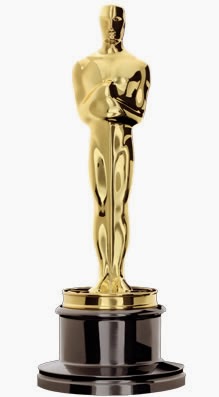
Cap'n Howdy Presents His Quasi-Annual Academy Award Speculation
As anyone inclined to read a blog about movies already knows, this weekend brings the 86th Annual Academy Awards, the final award show of "Awards Season" that runs from last December until the beginning of March. It's possible the Razzies are also this weekend, but since they gave up nominating movies that were bad and just went for the low hanging fruit (did Adam Sandler or M. Night Shyamalan make a movie this year? Nominate them in every category!) I really haven't given that much credence. I can't remember when I started watching the Academy Awards, but it's been a fixture in my life as a cinephile (to give you some idea, I can still remember Jack Palance doing push-ups on stage and Billy Crystal in the Hannibal Lecter mask like it was yesterday).
With that said, I've never been very good at predicting the winners. As I often joke, I tend to defer to friend of the Blogorium Neil, because he has a much better track record, but as he's not around to write this, it falls to the Cap'n to give it a shot. With the exception of Nebraska, Captain Phillips, and Philomena, I've seen all of the Best Picture nominees, and a vast majority of the other nominated pictures (with the exception of Best Foreign Film and Best Documentary, which I'll be going with what friends have been telling me). In the spirit of the late Roger Ebert - who I imagine will have some form of tribute on Sunday - the structure will be who the Cap'n thinks should win and who will win. I'll try to give you some idea of why I think one nominee will win over another, but remember that a) the awards are voted on by people in the Academy, so who knows what their thought process is, and b) I'm not very good at this. Nevertheless, it should be fun to look at this next year, or even just next week.
In order of how they're usually presented:
Best Supporting Actress:
Sally Hawkins - Blue Jasmine
Jennifer Lawrence - American Hustle
Lupita Nyong'o - 12 Years a Slave
Julia Roberts - August: Osage County
June Squibb - Nebraska
Who Should Win: Lupita Nyong'o
Who Will Win: Lupita Nyong'o
Looking at the other nominees, there's no question in my mind that Lupita Nyong'o is taking home the statue for Patsey in 12 Years a Slave, and she deserves it. As much as I liked Sally Hawkins in Blue Jasmine, there's no comparison. I haven't seen Roberts or Squibb in their respective roles, and Jennifer Lawrence was too young for her part in American Hustle.
Best Supporting Actor:

Barkhad Abdi - Captain Phillips
Bradley Cooper - American Hustle
Michael Fassbender - 12 Years a Slave
Jonah Hill - The Wolf of Wall Street
Jared Leto - Dallas Buyers Club
Who Should Win: Jared Leto
Who Will Win: Jared Leto
This is a little trickier to pick: although I'm convinced Leto should and will win, there's an off chance that American Hustle starts picking up steam (I'll get to the reasons why during Best Director and Best Picture) and Bradley Cooper sneaks in and takes it away as some weird penance for not winning last year. There is this strange sense of "making up for" awards that happen at the Oscars, which lead to oddball wins for movies, like Denzel Washington for Training Day or Martin Scorsese for The Departed (not that they aren't both very good movies / performances, but far from the best either has ever done). Still, Leto is fantastic in Dallas Buyers Club, although I don't know how that would impact the Leading Actor category. As another friend of mine pointed out, Jonah Hill might have been a little too broad, and Fassbender while great is too loathsome in 12 Years a Slave.
Best Animated Film:
The Croods
Despicable Me 2
Ernest & Celestine
Frozen
The Wind Rises
Who Should Win: The Wind Rises
Who Will Win: Frozen (?)
I'm not sure here, to be honest with you; The Wind Rises is Hayao Miyazaki's final film and I can't imagine that wouldn't factor in the voters minds somehow, but all I hear about everywhere I can listen in on the public is Frozen. Since there's no Pixar entry this year, and that's the reliable vote (was Despicable Me 2 really that much better than Monsters University?), I guess Disney has an outside shot at this, but Studio Ghibli has my pick.
Documentary (Feature):
The Act of Killing
Cutie and the Boxer
Dirty Wars
The Square
20 Feet from Stardom
Who Should Win: The Act of Killing
Who Will Win: The Square (?)
I'm not 100% sold on my "will win" pick - it could be 20 Feet from Stardom, although conventional wisdom is to go with the strangest title (Cutie and the Boxer). In truth, every single person I know who saw The Act of Killing says it's not only the best documentary they saw last year, but that it was the best movie they saw last year. Looking at the last few years, it's hard to say if a movie about unrepentant perpetrators of war atrocities is going to be the top vote getter, but it sounds like it should be. I'm looking forward to sitting down and watching The Act of Killing and seeing for myself.
Writing (Adapted Screenplay):
Richard Linklater, Julie Delpy, Ethan Hawke - Before Midnight
Billy Ray - Captain Phillips
Steve Coogan, Jeff Pope - Philomena
John Ridley - 12 Years a Slave
Terence Winter - The Wolf of Wall Street
Who Should Win: Richard Linklater, Julie Delpy, Ethan Hawke
Who Will Win: John Ridley
Unless 12 Years a Slave totally gets blanked in every category, John Ridley will be taking home the Oscar for adapting Solomon Northrup's true story, and I'm okay with that. It's a harrowing experience, and a very well written screenplay that avoids being maudlin or playing for cheap emotional beats. That said, Before Midnight is built around conversations, usually between Delpy and Hawke, and is a masterwork of writing and capturing the ebb and flow of conversation. It's a little silly this lands in "adapted" because Jesse and Celine are recurring characters and therefore are "based" on something else, but despite my admiration for Linklater, Delpy, and Hawke's writing, the Academy's propensity for going "rogue" in writing is usually reserved for the next category.
Writing (Original Screenplay):

Eric Warren Singer, David O. Russell - American Hustle
Woody Allen - Blue Jasmine
Craig Borten, Melissa Wallack - Dallas Buyers Club
Spike Jonze - Her
Bob Nelson - Nebraska
Who Should Win: Spike Jonze
Who Will Win: Craig Borten, Melissa Wallack
Or David O. Russell and Eric Warren Singer, if American Hustle starts a-rolling. There's no chance for Woody Allen, and as much as I enjoyed Blue Jasmine we all know why that's not happening this year. I hesitate to even bring that up because I know how toxic the back and forth is and I don't want to weigh in without knowing all of the facts, and as it has nothing to do with Blue Jasmine's screenplay that's all I have to say about it. If Spike Jonze was going to win anything for Her (which he should but it's on the outside looking in for most nominations), it ought to be this but I somehow don't think it will be. That said, Borten and Wallack took what could have been an easy tear-jerker of a true story and gave us a more nuanced version, whether they took liberties with Ron Woodruff's story or not (speaking of which, how is something based on a true story an "original" screenplay?), so I'd say they have a good shot at it.
Best Actress in a Leading Role:

Amy Adams - American Hustle
Cate Blanchett - Blue Jasmine
Sandra Bullock - Gravity
Judi Dench - Philomena
Meryl Streep - August: Osage County
Who Should Win: Amy Adams
Who Will Win: Amy Adams
As much as Cate Blanchett owns every moment of Blue Jasmine, I think it's pretty clear that's a non-starter this year. Sandra Bullock was the odds-on favorite for Gravity when the film came out, but unfortunately that was too long ago (last summer is eons ago in Academy-time, which is why most of the nominees seem to be films released in November or December). Judi Dench and Meryl Streep are reliable favorites and you can never, ever count them out, but Amy Adams is THE reason to watch American Hustle. I'm dubious about all of the other acting nominations for that film, but unquestionably Adams is riveting from beginning to end and deserves to win.
Best Actor in a Leading Role:
Christian Bale - American Hustle
Bruce Dern - Nebraska
Leonardo DiCaprio - The Wolf of Wall Street
Chiwetel Ejiofor - 12 Years a Slave
Matthew McConaughey - Dalls Buyers Club
Who Should Win: Chiwetel Ejiofor
Who Will Win: Matthew McConaughey
Now, I could be wrong here, and Bruce Dern could be the spoiler because of a strange trend in Hollywood. What usually happens is that an older actor who has been under the radar for a while has a great performance and suddenly awards voters freak out and assumed that he's going to die soon and those nominations fly in (see Peter O'Toole in Venus, Frank Langella in Frost/Nixon, or Richard Farnsworth in The Straight Story). Now, to be fair, none of the actors I mentioned won, but everybody's talking about Bruce Dern like he's suddenly on death's door and how many more movies has he got blah blah blah. For what it's worth to you death clock counters, Peter O'Toole was nominated in 2006 and will be memorialized this year.
For different reasons, I think there's no chance for Leonardo DiCaprio or Christian Bale. DiCaprio, who did some of the most impressive work I've ever seen him do in The Wolf of Wall Street, has no shot because the stupid controversy surrounding the film "glorifying" Jordan Belfort, the sleazeball that DiCaprio is playing. In no way would you ever want to be Belfort after watching The Wolf of Wall Street, but DiCaprio makes him an undeniable presence you want to watch for three hours. The physical work in the quaaludes scene alone should be enough to justify his nomination.
Christian Bale was all right in American Hustle. That's it. He wasn't any better or any worse than he is in any other movie, so I genuinely don't understand why he was nominated, and unless voters just decide to go crazy for American Hustle, I can't see him taking home the Oscar for gaining weight.
I'm really tempted to go with Matthew McConaughey taking it from the amazing Ejiofor (who conveys a sense of dignity in the most dire of circumstances and is in almost every scene of 12 Years a Slave) just because voters seem to love a physical transformation. Also, McConaughey has been on a serious upswing over the last two or three years where he finally got tired of being Surfer, Dude and has been on a real tear reminding people he's more than Wooderson from Dazed and Confused. I think I preferred him in Mud, but this might be the year that voters decide to take him seriously. But secretly I hope Chiwetel Ejiofor wins, and deep down I think he might.
Best Director:
David O. Russell - American Hustle
Alfonso Cuarón - Gravity
Alexander Payne - Nebraska
Steve McQueen - 12 Years a Slave
Martin Scorsese - The Wolf of Wall Street
Who Should Win: Steve McQueen
Who Will Win: Alfonso Cuarón
Since 1999, when Steven Spielberg won for Saving Private Ryan and Shakespeare in Love took Best Picture, it's no longer a guarantee that Best Director and Best Picture will go hand in hand, as they always seemed to. Ben Affleck wasn't even nominated last year, which boggles my mind if you're going to award Argo Best Picture, but I digress. What Best Director now means is anybody's guess, but last year's winner, Ang Lee for The Life of Pi, indicates that spectacle and technical achievement is now a mitigating factor. In that case, it's very hard to argue that what Alfonso Cuarón achieved in Gravity doesn't automatically qualify him to win, hands down. Regardless of how I feel about Gravity's story (and it's telling the screenplay isn't nominated), I can't argue that it's an astonishingly well made film, the work of a director who spent years doing something we hadn't seen before. So he's almost certainly going to win.
Is that unfortunate? I guess: I prefer the understated, sober direction of McQueen in 12 Years a Slave, with his long takes and willingness to let a scene unfold without overt manipulation. It's hard to believe this is only his third feature film, and all of them are uniformly excellent. In my mind there's no reason he shouldn't be standing at the podium accepting the award for Best Director (as he has been at various ceremonies this season), but the Academy Award voters are weird like that.
Speaking of which: there's a teeny, tiny, outside chance that neither happens and that David O. Russell stops being a bridesmaid and finally wins (three nominations in four years, after all), even if it's not for his best direction. I'd hate to think he would win Best Director for a film that is so clearly a copy of Martin Scorsese's films, especially at the expense of Scorsese, who made a much better film that's not going to win anything, but there's certainly been a big push for Russell since The Fighter. It's weird, because I vastly prefer Three Kings and I Heart Huckabees to Silver Linings Playbook and American Hustle, but it could be that kind of year, which leads us to...
Best Picture:
American Hustle
Captain Phillips
Dallas Buyers Club
Gravity
Her
Nebraska
Philomena
12 Years a Slave
The Wolf of Wall Street
Who Should Win: 12 Years a Slave
Who Will Win: American Hustle
Yep, I'm going with it. I don't think American Hustle was the best movie of 2013, and while Her is nominated it has no chance considering the paltry nominations. The Wolf of Wall Street is this year's Zero Dark Thirty, a great film overshadowed by a ridiculous "controversy" that will scare off voters regardless of the merits of the movie itself. Gravity has excellent direction and nice special effects but a story that strains credibility to the breaking point - it's a great ride, but not necessarily a great movie. I've heard nothing bad about Philomena, Nebraska, or Captain Phillips (in fact, quite the opposite), but they seem to be movies that are there to fill out the new "5-10 nominees" logic the Academy implemented a few years ago. Dallas Buyers Club is a fine movie but not one I see taking home the big award.
All of the buzz, and rightfully so, has been with 12 Years a Slave, and it was my hands down pick to win Best Picture until I found out just how few people had seen it. I know that it's an incredibly difficult film to watch (I watched it) and that it's not a "feel good" movie and that it's "important." That's not to diminish the fact that yes, it IS important and it IS a part of American history we don't like to look at or talk about, but it saddens me that people just won't go see it because they don't want to deal with it. And I worry that this is going to trickle over to the voters in the Academy. It's true that the actors and critics and writers and directors who all voted for 12 Years a Slave in their respective guilds are also Academy voters, but for some reason they tend to go "safe" with the Oscars.
Look, I really liked Argo, but it was the "safe" alternative to Zero Dark Thirty, which wasn't going to win anyway but they dealt with precarious points in American history that involved a level of obsession and a coordinated effort to come out victorious. Shakespeare in Love was the "safe" choice. The Artist was the "safe" choice, and so were The King's Speech and Slumdog Millionaire, to name a few from the last few years. Best Picture, increasingly, has been a bizarre alternate universe where movies you wouldn't necessarily consider the best picture of the year are nevertheless selected over other films.
Putting aside the obvious argument that it isn't fair to put such varying types of films against each other, the reality is that often voters will go with a film they enjoyed over an "important" film. In fact, the "important" with quotes around it gets some sort of asinine backlash from people who want spectacle over serious. Think about the South Park episode that tore George Clooney and Hollywood a new one for being smug and suggesting that cinema should mean anything (and, by proxy, that they "mean" anything). That's a prevailing thought, even as it's easy to lampoon Hollywood for being too self-important.
So yeah, could voters pick American Hustle over 12 Years a Slave? I can totally see it happening. Take the consistent presence of David O. Russell for the last few years, with a cast that was almost uniformly not doing their very best work (no offense, but Amy Adams is the alpha and the omega of that ensemble) who are all nominated, and a gamut of other categories, and you have the makings of a picture that could run the table. Why? Because it's a fun movie and lots of people liked it (although, increasingly, I talk to people who really didn't) and dammit, isn't that what's fun about Hollywood? Not depressing movies about the horrible things we did to other human beings and I know it's important but dammit I just want to see Bradley Cooper with a perm, you guys!
Will it happen? I don't know. I'd like it not to, but you can never be sure. If there's one thing I've learned from years of unsuccessfully choosing winners, it's that I don't know what's going on in the minds of voters any more than I know how March Madness is going to end. I can pay attention to the prevailing trends of Awards Season and extrapolate from that, but that's about it. But it's fun to speculate in the meantime, to have wild theories and to spend unnecessary time and energy into rationalizing them. And besides, I haven't had a non-review post in a while, mostly because I didn't want to talk about Philip Seymour Hoffman or Harold Ramis, and I'm sure as hell not comfortable talking about Woody Allen right now. But the Academy Awards? Now that's something to talk about, at least until next week...
Sunday, February 23, 2014
Nevermore Film Festival Recap (Day Three)
The final day of Nevermore for the Cap'n was a bit of a light one, by comparison to Saturday, but continued the trend of quality over quantity. While I only saw one feature (admittedly one I'd seen before) and one collection of shorts, the experience was consistently entertaining and served as a nice way to close out the fifteenth anniversary of the festival. As has been the case all weekend, the main draw, other than the films themselves, was the jubilant festival atmosphere. There really is something to be said for being at an event where people really want to be there, and not just showing up at the multiplex because it's something to do. Waiting in between screenings was an opportunity to soak in the decorations, take a look at posters new and old, and to trade notes with strangers about something you wanted to see but couldn't fit in.
And there were more than a few - 2014 may have been the hardest to schedule in the three years I've been going to Nevermore. To give you some idea, here are the movies I wanted to see at the festival but didn't: Here Comes the Devil, Almost Human, Haunt, and Malignant. I'd already seen Last Days on Mars, Big Bad Wolves and The Human Race, so I was trying to catch movies I a) wanted to see with an audience (Grand Piano) or b) wouldn't be able to see on VOD or rental any time soon (The Shower). Since at least two of the movies I didn't see at Nevermore are on VOD (maybe more - I think The Visitant might be on there, too), I'll try to watch them in the next week or so and do a "supplementary Nevermore coverage" set of reviews, as were it not for the festival I wouldn't have known about them. As it was, I don't think I would have known about some of these movies at all had it not been for Nevermore, which is the other reason it's so much fun. But let's get to talking about the movies, and on the other side I'll share a few photos I remembered to snap over the weekend.
---
Grand Piano is a movie that I'm honestly surprised I hadn't heard about before Nevermore. It's a Hitchcockian thriller that wears its influences proudly on its sleeve, and is also being favorably likened to Brian DePalma, in part because it's easier (and maybe safer) to invoke DePalma than to draw comparisons to The Master of Suspense. That's fair (it sets a very high bar and is almost impossible to live up to when you put it up against Hitchcock), but director Eugenio Mira draws attention to his camera work and trick shots than DePalma ever has, and in many ways Grand Piano is a feature length version of the end of The Man Who Knew Too Much. It's a solid thriller with a very good cast that makes the most out of the three main characters being largely stationary for the duration of the film.
Tom Selznick (Elijah Wood) is a famed classical pianist, or, at least, he was - Selznick hasn't performed in public in five years. Following a botched performance of his mentor's composition, he withdrew from the public eye, just as his wife, Emma (Kerry Bishé)'s, star is on the rise. She's a famous actress, and uses some pull to get Tom back on stage to perform in Chicago for the first time. On top of that, Selznick will be performing on his mentor, the late Patrick Godureaux's custom Bösendorfer piano, flown in especially for the occasion. Most of the orchestra Tom's performing with is glad to see him, including conductor Reisinger (Don McManus), but someone in the audience is determined that Selznick have a perfect performance. If he doesn't, he's a dead man, and once the ground rules are in place, it's up to the pianist to figure out who is threatening his life, and why, without drawing attention while everybody is watching him.
You can look at the poster and see that Elijah Wood isn't the only marquee name to draw in audiences: John Cusack is listed right afterwards, so it shouldn't be hard to figure out who the voice of the (mostly) unseen assailant is. At first I thought it might be a bad thing to know Cusack was in the film, since when you don't see him it's easy to work out his role in the film, but a friend of mine pointed out to me that it would be much more distracting not to know he was in the film and to suddenly hear his voice. Unlike Kiefer Sutherland in Phone Booth, it's impossible not to recognize Cusack's voice immediately, and it would pull you right out of the story at a critical point. As it is, using his name for marquee value when he's more of a audible presence than a physical one in the film is a necessary evil, but I do wonder why Grand Piano is still mostly an unknown film.
The selling point of the film, beyond the always reliable Wood (people still content to think of him as Frodo tend to forget that he has quite a range beyond that) and a supporting cast you've seen in many other films, even if you don't recognize the names (Bishé was in Argo, for example) is Mira's direction. The camera is constantly moving, redirecting your focus and masking or revealing critical details at exactly the right moment. There's a split screen that doesn't initially look like one until one half of the screen zooms in on Selznick while the other side remains stationary, and seemingly impossible shots that swirl around the piano as Wood (or someone - Mira masks it very well) plays a series of very complicated pieces. Hitchock is famous for his use of "sound bridges," but Mira makes a great "visual bridge" by cutting to somepne playing a cello at the moment an act of violence occurs. I was impressed by the clever use of camerawork, but never distracted by it (as I sometimes am when watching DePalma).
My fear is that the fact that Grand Piano is still something no one seems to know about will result in it being released on home video and being treated like a "DTV dump" to sit on shelves with any number of other movies with recognizable names that just aren't very good. Like, oh for example, The Frozen Ground, another movie with Cusack and Nicolas Cage you probably didn't know existed. It's not very good, and certainly nowhere near as interesting visually or structurally as Grand Piano. I don't feel like it would be fair for such a solid, consistently entertaining thriller to be thought of as "just another paycheck" for a few actors whose best days are behind them, which is often what the "DTV dump" implies. Wood was similarly great in the recent remake of Maniac, another movie that went largely unnoticed outside of hardcore horror fans when it drifted through a limited release last year. I'd hate to think that Grand Piano might not get a fair shot with audiences when I think many of them would enjoy it, and it's much better than a lot of so-called "thrillers" that do get wide release. But I'm glad I had the chance to see it again at Nevermore, and it benefits from multiple viewings, as the second time around you can see how much of the main narrative is set up in the first twenty minutes. Oh, and Alex Winter (Bill S. Preston, esquire) takes a break from his Excellent Adventures and Bogus Journeys to play a supporting role in the film, if that helps sway you.
---
After Grand Piano, we walked upstairs from Fletcher Hall to Cinema Two for They're Coming to Get You, Barbra!, the collection of U.S. shorts, which tends to be a highlight of every Nevermore. Generally speaking, it's difficult to see these short films outside of a festival atmosphere, even in a world where you can find nearly every short ever made online somewhere. Of the entries this year, I'd only seen one, and that was because it was an entry made for the forthcoming The ABCs of Death 2, where "M" is the letter up for voting this year.
There was a bit of a wait outside of Cinema Two as a Q&A from the previous showing was running over, so after talking to a few other attendees and Jim, Nevermore's programmer, I caught up with some friends and had a brief chat with the cast and crew of The Shower who came all the way across the country with the film (seriously, if you can see it, do so. I'm looking forward to a release on DVD or Blu-Ray so I can show it to everybody I know, but in the meantime, keep an eye out to see if it's playing at a festival near you). Once Cinema Two finally opened up, it was time for my last screening of Nevermore, and it turned out to be one of the hardest ballots to choose a winner from.
Like yesterday's shorts collection, I'll provide a brief synopsis and try to link to the trailer, site, or an IMDB page, because other than one entry, I couldn't find any of the full versions online.
The Root of the Problem - starting things off on a high note is the story of a woman visiting the dentist in the 1950s(ish), only to discover her fears of dental work may not be unfounded. Are her dentist and his assistant really monsters, or is it just the gas causing her to see something horrible behind their pearly whites?
Call Me Crazy - A mental institution may not seem like the best place to find love, but when a vampire who murdered her boyfriend meets a cannibal who ate his girlfriend, sparks fly. It starts a little awkwardly but quickly picks up steam and is both funny and rather gory in a way not dissimilar to yesterday's Mr. Bear.
Out of One's Misery - A man mourns the loss of his family, only to be visited by a stranger that may or may not be real. The premise is a solid one, and it manages to be fitfully creepy, but there's a bit too much repetition of action in the story for me to really take to it.
Songs in the Key of Death - In the world where zombies roam the Earth, it's not always easy to make a living, but FJ Ackerman found a gold mine as a piano tuner with undead accompaniment. Presented as a news piece, ala 60 Minutes, Songs in the Key of Death is at times riotously funny and then flips to a truly gonzo finale that takes the insanity of the premise to a whole new level.
Rope-a-Dope - While not horror in the slightest sense of the word, Eric Jacobus' Rope-A-Dope is an amusing and action-packed variation on Groundhog Day where the Dope (Jacobus) runs afoul of a Martial Arts Mafia and wakes up on the same morning every time they knock him out. He has to learn to fight back, and the use of slapstick and action choreography and editing makes for a very impressive and funny short film.
Christmas Carvings - A locally made film starring one of the co-stars of Out of One's Misery, this short has a Tales from the Crypt-style twist but suffers a bit from pacing issues. A husband and wife celebrate the holidays in a unique fashion, but are they really alone?
Killer Kart - FSU Film School student James Feeney makes what I ended up selecting as my favorite of a really strong set of contenders with this story of the closing crew at a grocery store trying to survive the shopping cart that "snapped." It combines the best elements of a slasher film with genuinely likable characters, some impressive gore, and one of the most improbable monsters you're likely to see this side of The Gingerdead Man. On top of that, it's really well made an a fun ride from beginning to end.
M is for Mime - I quite enjoyed this brief story of a disrespected mime who has his revenge on a snarky hipster, but realized quickly why The ABCs of Death keeps the credits for each short at the very end of the film - the credits are almost as long as the short itself, which left much of the audience feeling antsy. Don't take that as a slight against "M" is for Mime, because you'll enjoy the short itself, but it somewhat drained the momentum immediately following the end of the action.
Welcome to Dignity Pastures - Speaking of really short shorts, I'm not sure what to make of this. Dignity Pastures is about a funeral home that caters to families of the undead, which is something we find out after the recently deceased comes back to life in the middle of a service. The funeral director is very quickly called to switch another service to a cremation, and before you know it, Welcome to Dignity Pastures is over. I suppose there's some merit to "get in, make your point, get out" but it felt like a better premise than the execution made it out to be.
---
Finally, here are some pictures I remembered to take (in my infinite wisdom) on Saturday night:
One of the many banners.
Also known as "three I didn't see."
Forgive the glare: I tried hard to avoid it but it just wasn't happening.
Well, gang, that about wraps it up for the 2014 Nevermore Film Festival coverage. I had a great time, made some excellent new discoveries, and am looking forward to seeing what's in store for 2015!
Saturday, February 22, 2014
Nevermore Film Festival Recap (Day Two)
Saturday is always the grinder at Nevermore, because I have the entire day and try to take advantage of seeing as many movies as I can. After breakfast at a greasy spoon, we were on out way to a healthy mixture of features, foreign short films, and the Retro feature of the Festival: William Castle's The Tingler Starring Vincent Price (yep, still pretty sure that's the title, so no need to check up on that). There wasn't anything that quite matched the surprise and entertainment that was The Shower (well, maybe The Tingler, but that's a movie I'd already seen), but overall Saturday turned out to be a pretty solid lineup.
---
We started with The Returned (which, it turns out, is not the same as the show Les Revenants), which is kind of a contagion / sort-of zombie movie that also isn't. It uses the idea of an outbreak that turns people into flesh eaters and jumps forward twenty years to a world that's learned to cope with the virus. Anyone who is bit (it's only transferred by blood) becomes one of them, but if a retroviral drug is administered immediately, there's a chance they can survive and become what's referred to as "The Returned." They have to continue injecting themselves every day to prevent the virus from breaking down their bodies, but the contagion is largely under control - until the supply of the drug starts running low.
At the center of the story, which is less about the disease and more about how the world responds to its continued presence are Kate (Emily Hampshire), a doctor who works with "Returned" and prepares them for life outside of the hospital's rehabilitation center, and her boyfriend Alex (Kris Holden-Reid), a guitar instructor who met Kate when he was infected. As Kate struggles to convince private firms to invest money into developing a synthetic form of the drug (the natural can only be made from untreated victims), she works to buy more medicine for Alex, illegally if necessary. After a hospital break-in from an anti-Returned group ends violently, the clinician who was smuggling medicine to Kate, Eve (Melina Matthews) warns her that they also stole information about where registered Returned live, and that she may be in danger. Alex's friend Jacob (Shawn Doyle) and his wife Amber (Claudia Bassols) offer them a place to hide out, but the world seems to be falling apart as tensions increase between pro and anti-Returned groups...
I was rather impressed by how writer Hatem Khraiche and director Manuel Carballo slowly provide exposition in The Returned. Rather than devoting time to an exposition dump early on, we're eased into the world where the presence of Returned is already accepted (by some, anyway) and learn about its origins and effects through conversation. Alex is nervous about telling Jacob he's Returned, and we don't know what that means or the ramifications of it until later, during one of Kate's presentations, where it's treated like any other life-long disease. There's no long discussion about where it came from or how the world handled it at first, just a handful of flashbacks involving one of the main characters. The Returned deals with this world as it is and is comfortable enough in the strength of the story to let the audience put the pieces together.
As would turn out to be the trend for the day, The Returned is less of a horror film than the premise might imply and more allegorical, similar in a sense to David Cronenberg's remake of The Fly. It has a similar sense of hope and desperation, but on a broader scale - while there are four main characters, the lives touched by families with Returned is explored repeatedly and in differing approaches. It's an intimate story with a broader scope, one that maybe stumbles a bit near the end (it's really the only way the movie could end, but you can probably guess what's going to happen halfway in) but is quite well directed and acted. Think of it as a sort of alternate universe response to 28 Days Later, story-wise, and it has some nice ideas to wrestle with. A great way to start the day off.
---
After The Returned, we settled down in Cinema Two for the long form and short form foreign shorts, Across the Styx and Revolution of the Foreign Invaders (respectively), which I'll try to cover in short bursts, with links to the films (or their trailers) when possible.
Across the Styx:
Agophobia - I'm not going to lie - I watched this film, was impressed by the visuals, but didn't know what the hell I'd seen when it was over. I think the best way I can describe it is if you imagine William Gibson going on a walkabout with some serious hallucinogens. If it helps, the synopsis is on the official site. It was interesting to watch, but I freely admit that I didn't follow most of it.
The Other Side - A student working on his thesis goes to the home of a writer and her lover, convinced they found a portal to another world. It's a slow build and a bit of a rushed final scene, but has an interesting premise. There are so many results for this title that I couldn't find the specific one based on Nevermore's site, but if I locate it I will update this entry.
The Crimes of All Hallow's Day - After an introduction from filmmaker Antonio Isasi-Isasmendi, we're presented a story of true crime from Ibiza in the 1970s about a Danish couple who run across the wrong "nice old couple" while out for a drive. It has a very late-sixties, early-seventies vibe to the lighting and cinematography, and a wicked sense of humor.
AM/FM - A student has a chance encounter with a homeless man who makes a compelling case for alien invaders in this short from Brazil. Some of the cutaways to what the aliens look like are rather amusing and reminiscent of Ed Wood films, but it takes a surprisingly dark turn at the end. After The Crime of All Hallow's Day, my second favorite of the long form shorts.
Revolution of the Foreign Invaders:
Euthanas, Inc.- A cheap family wants to euthanize grandma, so they take drop her off with a company who specializes in unique deaths. If you want to die like in your favorite movie, Euthanas, Inc. can make it happen. But Grandma has other plans...
Don't Look Here - When her fathers dies, a young woman returns home to comfort her mother and sister, but it appears that his connection with the younger daughter is stronger than anyone may have expected. It's a brief, Guillermo del Toro-esque take on communicating with the dead, that's effective but perhaps too quick to conclude. (Searching for the title has been extremely difficult, both in English and in Spanish. I will update accordingly if I locate it).
Hibernation - An astronaut prepares for deep sleep as he heads out for interstellar exploration, but he's more interested in the girl whose place he's taking. More straight-ahead science fiction than anything resembling horror, but it has some nice cinematography and a distinctly retro-vibe.
Mr. Bear - Steve and his wife are running late to their children's Christmas dinner, and when the car breaks down next to a mechanic, he's mistaken by the men inside for a "cleaner" of, unusual circumstances. Quite clever and surprisingly gory with some sadistic humor thrown in for good measure.
REM - To be honest, I wasn't a huge fan of this short. It wasn't that it was very reminiscent of Inception (which it is), but that it essentially exists to tease either a) more short films or b) a feature length continuation of the story, neither of which I'm particularly interested in.
Nexo - A man's new phone has a strange camera: instead of showing what's in front of him, it displays the yard of his friends, where the man appears to be, even though he's inside his house alongside his girlfriend. There's some genuine suspense, but it's often hampered by not seeing the image on the phone and an abrupt conclusion. (I was having trouble finding this short as well in any form online).
Le Revenant - My favorite of the foreign shorts involves a young man who is convinced he can cheat death, so he tests his theory with hilarious results. Often cartoonish with a healthy dose of black comedy, Le Revenant ramps up the insanity as the now undead man decides he's going to stop Death from doing his job, often with disastrous consequences.
---
The main event for Saturday night was Nevermore's "Retro" screening of The Tingler (shortened title for the sake of brevity), presented by Bruce Goldstein of Rialto Pictures. Goldstein mentioned in his introduction that despite his reputation and recognition for film programming, he's probably best known around the world for The Tingler due to his interest in screening it (and other William Castle films) with the original "gimmick," Percepto. The Tingler also happens to be John Waters' favorite movie, and with good reason. While House on Haunted Hill might be better known, The Tingler exemplifies "camp" cinema before anyone had a firm grasp on what "camp" was, not to mention the distinction of having an onscreen LSD experience in 1959, nearly a decade before it caught on with the counter-culture.
If you're a fan of very questionable "science" and even more questionable scientific techniques of experimentation, or of characters who exist to out-chew the scenery of their co-stars, or of William Castle / Vincent Price and you haven't seen The Tingler, you're really missing out. Price is gnawing all over the scenery like an overgrown rat as Dr. Warren Chapin, a prison mortician who also researches fear in his home laboratory with his assistant, David Morris (Darryl Hickman). David is dating Lucy Stevens (Pamela Lincoln), the younger sister of Chapin's wife, Isabelle (Patricia Cutts). Warren and Isabelle have a "hate / hate" relationship; she is constantly (and openly) carousing around town with other men, and at one point he tricks her into thinking he's going to kill her for the sake of an experiment. Their dialogue is also dripping with innuendo, like this bon mot from Warren:
"How is it that the back door slams whenever the husband comes in the front door?"
I'll let you mull that one over. The title creature comes in after Warren meets Ollie Higgins (Phillip Coolidge), the husband of deaf / mute theater owner Martha (Judith Evelyn). Warren is explaining his theory that an organism lives inside of us and materializes during periods of extreme fear, which gives it enough strength to shatter vertebrae. Ollie suggests calling it "the Tingler," and when Warren mentions it to David, he agrees that "we can't give a Latin name until we've discovered it, so the Tingler works." David also traps a cat, leaves a dog outside in a car, and makes a strange joke about hoping that Lucy can't run fast. Screenwriter and Castle regular Robb White, intentionally or otherwise, packs the film with lines that could imply something far less innocent. Although, considering that Chapin is open to the idea of experimenting with Martha because she can't scream (the only way to stop the Tingler) in order to manifest the creature should give you some idea of how morally questionable every character is in The Tingler. When (SPOILER) Isabelle tries to murder Warren with the Tingler, it hardly seems unreasonable after what he's done in the name of "science."
The great fun of watching a movie like The Tingler is seeing it with an audience, in particular because Percepto! is designed for theatres. While we didn't get the exact Percepto! experience, it was nevertheless a fun time, and they found a way to throw in another gimmick during Chapin's LSD experiment, where the black and white film turns color for a short period of time in what can only be referred to as "proto-psychedelic." When Chapin tricks Martha later and "doses" her, there's another, stranger hallucinatory sequence that improbably ties into the story's "twist," one that's jettisoned almost immediately so that the Tingler can get loose in the theatre below Ollie's apartment.
Oh yes, I haven't mentioned what the Tingler looks like, have I? Well, imagine a large rubber cenitpede being pulled along by string and you'll have a pretty good idea. It's gross, but not exactly scary, and when it tries to choke Warren but looks suspiciously like it's humping his chest, it's hard to be frightened. Then again, that's probably not the point. William Castle specialized in "interactive" movie experiences, and the audience in Fletcher Hall was certainly having a grand time shrieking and laughing along with The Tingler, fifty five years after its original release. Call it schlock if you like, but Castle knew what he was doing with his gimmickry.
---
It's hard to imagine topping The Tingler, but at it was barely nine o'clock when we left Fletcher Hall to move to Cinema One, there was no reason not to see one of the two movies closing out Saturday at Nevermore. The options were Battle of the Undead, an Israeli film about zombies, or The Last Days (Los últimos días), a Spanish film set just before and slightly after a sudden disease causes all of humanity to be incapable of being outdoors. While I enjoy a zombie movie as much as any red blooded gore hound, if you're offering me post-apocalyptic cinema, I'm going to take it. (Long time Blogorium readers will attest that if there are two subgenres the Cap'n is a total sucker for, it's anthologies and post-apocalyptic cinema).
Marc Delgado (Quim Gutiérrez) is a software programmer in Barcelona who lives with his girlfriend Julia (Marta Etura), a puppeteer. He's hesitant about having children and there's some visible strain in their relationship, but something strange has been happening around them. People are shutting themselves in, finding they are incapable of going outside. When Enrique (José Coronado), a corporate restructuring expert (nicknamed "The Terminator") fires an employee who had been living in the office for two weeks, he goes into shock as soon as he leaves the building and dies in front of everyone. Before long, this unexplained affliction is widespread, and Marc finds himself trapped in his office building while Julia is at home. After three months, he'll do anything to get back to her, and when they break through the parking garage to the subway, he sees his opportunity. The only problem is that someone already took the only GPS - Enrique. In order to find Julia, he's going to have to make a deal with a man he barely trusts, but what other option is there?
There was a technical error at the beginning of the film that, for reasons unknown, prevented us from seeing subtitles on every other line of dialogue, so we'd catch half (or less) of a conversation in the first ten minutes, and every time someone would head outside to tell the projection staff, the subtitles would come back on, only to immediately drop out. Eventually they stopped the film and restarted it (and everything worked that time), but it's a testament to how well The Last Days is made that something that disruptive didn't impact the overall film experience.
Writer / Directors David and Àlex Pastor crafted a story about the apocalypse that isn't directly about how the apocalypse happened. Scattered throughout the film are flashbacks that fill in details about Marc and Julia's life, including one revelation that increases his need to find her, but like The Returned, there's no grand attempt to explain what happens to everybody that keeps them indoors. We see what it feels like to go outside and understand why they're afraid to try, but the explanation remains a mystery. What's more important is how people learn to adapt to this new world, where humanity is crammed together in pockets, unable to contact each other.
The Last Days is a very well made film that covers a lot of familiar post-apocalyptic tropes in interesting ways and structures the story in such a way that you're always interested to see where it goes next. The surprisingly upbeat ending feels appropriate, particularly when it could have gone in a much darker direction with one or two minor changes. At the heart of the film is the bond between Marc and Enrique, who each have their reasons for venturing out into the unknown, where anyone is capable of anything. While Marc's quest for Julia is the impetus for the narrative, the performances of Gutiérrez and Coronado are the glue that holds The Last Days together, and the film is a fine addition to the post-apocalyptic cinema family. There's even a tiny reference to the Mad Max films during a conversation about whether all of humanity is affected or not. At least, I choose to see it that way - there's a way The Last Days and The Road Warrior could exist in the same world...
I'm even more worn out today than I was last night, but Sunday awaits, along with the last two Nevermore experiences of 2014. Join the Cap'n tomorrow for Grand Piano and the U.S. short films, They're Coming to Get You, Barbra!
Nevermore Film Festival Recap (Day One)
Today was, by necessity, a light day for the Cap'n to experience Nevermore (that whole "working" thing can be a drag when you'd rather watch horror movies, but what can you do?), but I did manage to sneak through rush hour traffic and make it to The Carolina Theater in time for two movies. It turned out to be quite the clash of styles, of approaches, and ultimately, of tastes for me: I really, enthusiastically enjoyed one of them and couldn't wait for the other one to be over with. Fortunately, we get to start with the good one, which is already in the running for "favorite discovery of Nevermore," and we're only on day one!
Other than the listing on the festival's website, I knew nothing about The Shower. I knew it involved a baby shower and some sort of outbreak, and a clown. Things always end well when there are clowns, as you may be aware. Call me crazy, but I like to start off a festival with a horror comedy, when possible - it tends to bring the right energy to what is a fun, but admittedly butt-numbing experience over the course of a weekend. It was a blind call, but I chose wisely - The Shower delivers.
After a brief intro from writer / director Alex Drummond and two cast members / producers (apologies if I get this wrong but I'm pretty sure it was Stephanie Tobey and Andy Hoff), the film began, and off the bat it strikes the right tone between horror and comedy. I'm normally not a huge fan of the "freeze title cards" (at least, not since the first Feast), but in a film set in Los Angeles about struggling actors and writers, the dichotomy between what they wanted to do and what they were doing was a nice way to introduce the main cast quickly while we're settling in. It's much appreciated, because Drummond gives you just enough time to meet Nick (Kurt Ela) and Mary (Rachael Drummond)'s friends before things get violent.
Nick is a struggling screenwriter and Mary is and actress on downtime before she gives birth to her second child, and they're headed to a baby shower at the home of her agent Joanne (Suzanne Sena) when... strange things begin to happen. For no apparent reason, people are turning violent (possibly slightly cannibalistic) and attacking each other, without any clear pattern as to when or why it happens. Trapped in a house with their friends, children, Joanne's assistant Beth (Tovey), and a party Clown with a taste for flesh and blood (Tony Rago), the expectant couple has to figure out a way to stay alive when supplies and trust are in short order.
I don't want to say too much more about how The Shower unfolds, because much of the fun of watching the film is not knowing where the story is headed next. By not explaining what the outbreak is, or how it spreads, Drummond keeps the audience uncertain of who is and isn't infected and generates a lot of comedy out of the reactions to the curious behavior when someone does turn. Rather than simply going mindless, the infected remain mostly themselves, but with a sadistic indifference towards their "friends." It's a nice twist on what could have been any other contagion / zombie movie.
There are a lot of horror comedies out there, and a lot of low budget ones that, frankly, aren't very good. Trust me, I've seen my fair share, so when there's a good one, let alone one as good as The Shower is, I'm going to make a point to mention it. For a movie that's only 78 minutes long, The Shower packs a lot in at a brisk pace, and finds time for character moments with the dozen or so cast members. It came as a genuine surprise how much Drummond and crew were able to do with as low of a budget (and only one camera), so kudos for a job well done. I hope the film gets picked up for distribution so that more of you can see The Shower (on this off chance you're reading this during the weekend of Nevermore, go see the movie on Sunday, but if not I suggest checking the official site to see when and where you can see it). Normally I try not to be too pushy about movies, but The Shower is an independent production and they made the time to bring it across the country so we could see it, so I'll evangelize a little bit. I think most Blogorium readers will really dig The Shower, so it's worth getting the word out in any little way I can.
---
After a Q&A for The Shower, it made sense to stick around for another movie, and since we didn't really know anything about Proxy, it seemed like another worthwhile unknown to pursue. I know that if you don't have anything nice to say, you probably should just not say anything, so I'll try to keep this short, because Proxy didn't do it for me. I feel kind of bad about it, because at first I was on board with Zack Parker and Kevin Donner's story and Parker's direction, but about halfway through the film, Proxy lost me and I never got back on board.
The premise was interesting enough: Esther Woodhouse (Alexia Rasmussen) is nine months pregnant and having a final ultrasound, and as she's leaving someone knocks her out, severely injures her stomach, and leaves her in an alleyway. Esther loses the baby and is urged to go to group counseling, where she meets Melanie Michaels (Alexa Havins), who lost her husband Patrick (Joe Swanberg) and son Peyton (Xavier Parker) to a drunk driver. They bond over shared experiences and Melanie seems to be helping to coax Esther out of her withdrawn state, but it turns out neither woman is quite what she claims to be.
For a while, the mystery of Proxy sustains interest, and there is an admittedly interesting thematic exploration of the cycle of revenge and its futility (as well as recurring water motifs and some degree of "baptism by blood" you could also read into) but the film takes a hard left turn about a third of the way in that lost me completely. From that point forward, the pacing seemed less deliberate and more like filler, something to pad out the run time until two character arcs met in an inevitable collision course. Unfortunately it takes far too long to get there and the end result is less than satisfying. There's an awkward introduction of "is this all in their head" that doesn't really work the way I think it was supposed to, and some of the contrivances that bring characters together was too much to swallow.
Other than the pacing, everybody else I saw Proxy with seemed to enjoy it more than I did, but with each successive scene introducing a new character that added nothing to the story, I must admit that my patience wore thin. At two hours, Proxy is far too long, but my initial interest dwindled after it was clear what direction the story was headed. Maybe it was the character of Esther or the physical resemblance of Rasmussen to Angela Bettis, but it seemed in the early goings that Proxy might be a character study like May. This is not the case - it heads in quite a different direction - and without spoiling too much, the ending reminded me of the master plan in Scream 4, which is not a comparison I'd really like to make.
There are some intriguing elements to Proxy : Parker definitely goes a few places I wouldn't have thought he would - and I think it's well made (if bloated), but I'm afraid that it just didn't work for the Cap'n. But these things happen, and I don't regret taking a shot on watching it. I wish I had nicer things to say, but the best thing to do is just move on and look forward to tomorrow. While I can't recommend Proxy, I wholeheartedly recommend The Shower, so if you get the chance to see it, do so.
It's time for sleep, but I'll be back tomorrow with more Nevermore recap-ery, including The Tingler!
Labels:
Clowns,
extreme violence,
Film Festivals,
Horror Films,
Low Budget,
Yuks
Subscribe to:
Posts (Atom)